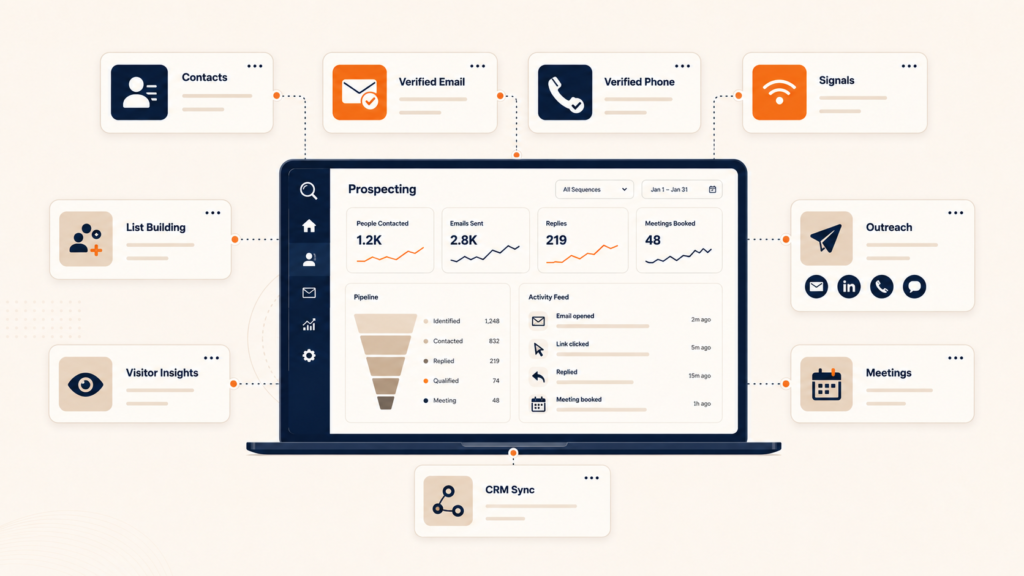
| TL;DR: Sales prospecting tools now handle everything from finding decision-makers and verifying contact details to managing emails, calls, and follow-ups. This guide covers 12 tools, including Apollo, ZoomInfo, and LinkedIn Sales Navigator. It also covers seven factors to evaluate before choosing the right option for your sales team. |
Finding the right prospects can take hours before the first email is sent. Sales teams can spend hours searching for decision-makers, only to find outdated job titles, bounced email addresses, or phone numbers that reach the wrong person. Even with accurate contact data, they still need to decide whom to approach, when to make contact, and how to manage every follow-up.
Choosing software can add another layer of difficulty. One platform may offer a large contact database, another may identify website visitors, and a third may focus on calls, emails, or active deals. Yet all of them appear under the same sales prospecting category.
To make that choice easier, we have organized 12 leading options by the job each one handles best. You can quickly identify the tools that match your needs, then review their features, integrations, pricing, strengths, and limitations based on publicly available information.
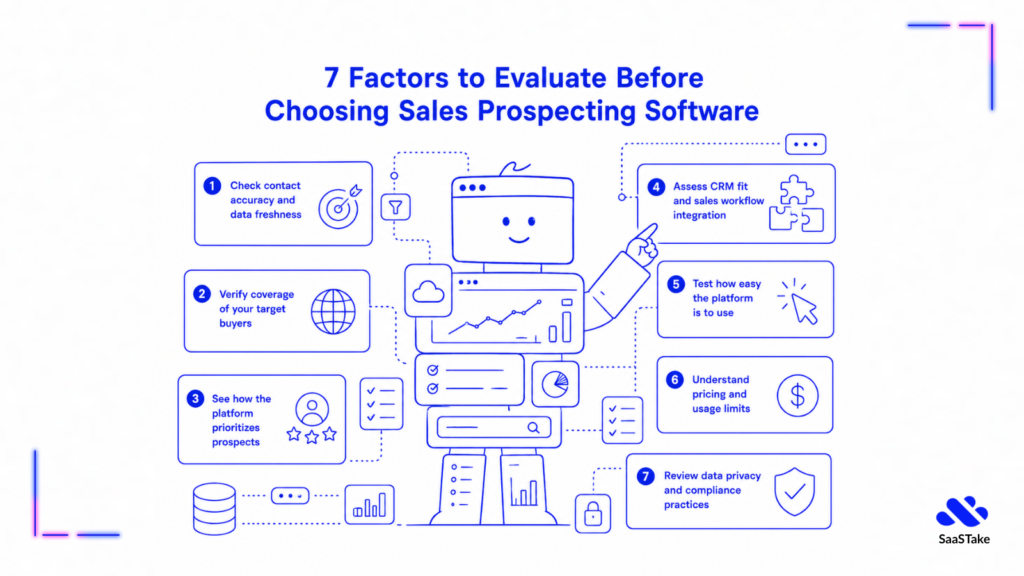
7 Factors to Evaluate Before Choosing A Sales Prospecting Software
A database with millions of contacts may sound impressive, but those numbers mean little if the details are outdated or the right buyers are missing. A useful platform should help sales teams find relevant contacts, provide reliable information, and reach out without adding unnecessary steps.
These seven factors can help you narrow your options and find a platform that fits how your sales team works.
1. Accuracy and Freshness of Contact Details
An email address or phone number is only valuable when it helps you reach the intended person. Outdated records lead to bounced emails, unsuccessful calls, and time wasted researching the same contact elsewhere.
You need to look at how frequently the platform checks its information and how it handles incorrect details. Some providers verify phone numbers, return credits for invalid emails, or combine several data sources to fill missing information.
| Question to ask: How often is the contact data updated, and what happens when the details are incorrect? |
2. Coverage of the Buyers You Want to Reach
A database containing millions of contacts may still have limited information about your ideal buyers. Coverage can vary depending on the industries, company sizes, roles, and markets you want to target.
You should test the platform using companies and job titles your sales team would genuinely pursue. This will give you a more useful picture than the total database size shown during a demo.
| Question to ask: How well does the platform cover the industries, companies, roles, and markets we regularly target? |
3. Help Deciding Who to Contact First
Finding hundreds of contacts creates another problem: deciding which ones deserve attention. Some platforms highlight website visits, job changes, hiring activity, funding announcements, or recent research that may suggest buying interest. Buyer research itself is changing too. As we found in our analysis of Brandi AI, potential buyers are increasingly using AI platforms to research companies and evaluate vendors before they ever speak to sales.
These details should make prioritization easier, not leave sales teams with another collection of alerts to interpret. The platform should clearly explain why a company or contact may be worth approaching.
| Question to ask: How does the platform help us decide whom to contact first? |
4. Fit With Your Sales Process and CRM
Different platforms handle different parts of prospecting. Some find contact details, while others identify website visitors, support outreach, or help manage active deals. The best fit should address a clear gap without repeating what your existing software already does.
It should also transfer contact details and updates to your CRM without frequent manual entry or duplicate records. You should check whether that connection is included or requires additional setup. CRM connections can also determine what happens after a sales event. PostcardMania’s SmartTouch uses CRM activity such as an unanswered proposal or stalled deal to trigger an individual postcard or letter.
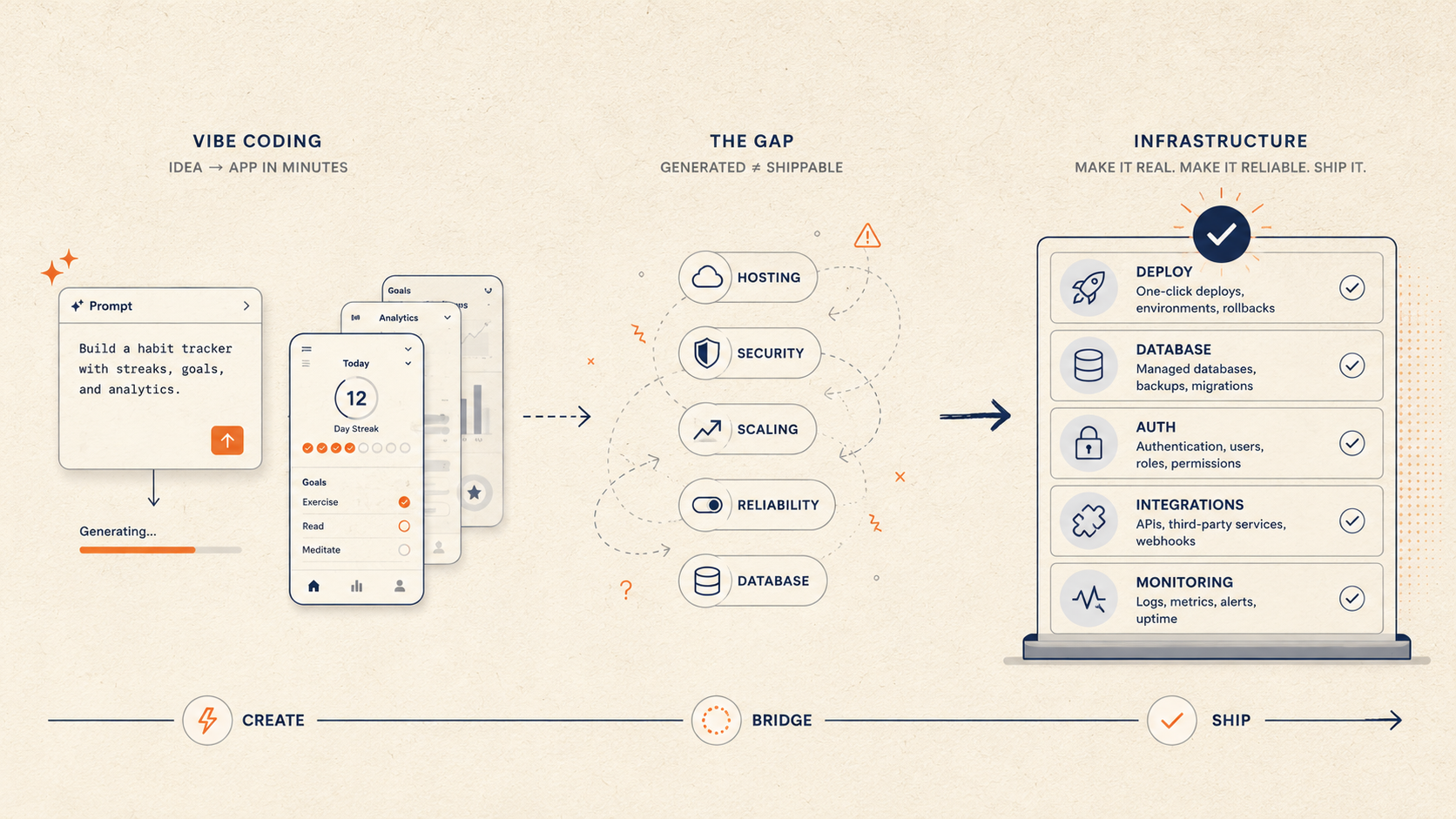
Some vertical CRMs are taking that a step further by acting on the information they hold. Flai’s AI CRM for car dealerships can follow up with customers, book appointments, and update dealership records after the conversation.
| Question to ask: Where does the platform fit into our sales process, and does it connect easily with our CRM? |
5. Ease of Use
Software designed to save time can have the opposite effect when searches, list building, and everyday actions are difficult to complete. Sales teams should be able to find contacts, review their information, and begin outreach without extensive training.
| Question to ask: Can our sales team find contacts and begin outreach without extensive training or technical help? |
6. Pricing and Usage Limits
The monthly price does not always reflect the full cost. Some providers charge by user, while others use credits for revealing contacts, exporting records, accessing phone numbers, or using particular features. AI capabilities can add another variable because the cost of running AI features can increase with usage.
You need to estimate the cost using your expected number of users and monthly searches, and also check how the price changes as your sales activity grows.
| Question to ask: What will the platform actually cost based on the users, credits, and features we need? |
7. Data Privacy and Compliance
Sales prospecting software handles personal and business contact information. The provider should explain where its data comes from, how people can request removal, and what steps it takes to meet relevant privacy requirements.
This becomes especially important when your business contacts prospects across markets with different data protection rules.
| Question to ask: How does the provider collect and manage contact data while meeting our privacy requirements? |
With these factors in mind, let’s examine the 12 sales prospecting tools and where each one fits best.
12 Top Sales Prospecting Tools for B2B Businesses in 2026
Sales prospecting tools can help B2B businesses find suitable buyers, recognize timely opportunities, and manage outreach more efficiently. Below, we look at 12 options through a practical lens: what each tool does especially well and which B2B businesses it suits.
- Apollo
- ZoomInfo
- LinkedIn Sales Navigator
- Cognism
- Clay
- 6sense
- Lusha
- Seamless
- Leadfeeder
- Nooks
- Outreach
- Salesloft
Now, let’s dive into each of these tools.
1. Apollo – Best for Growing Businesses That Want Prospect Data and Outreach in One Place
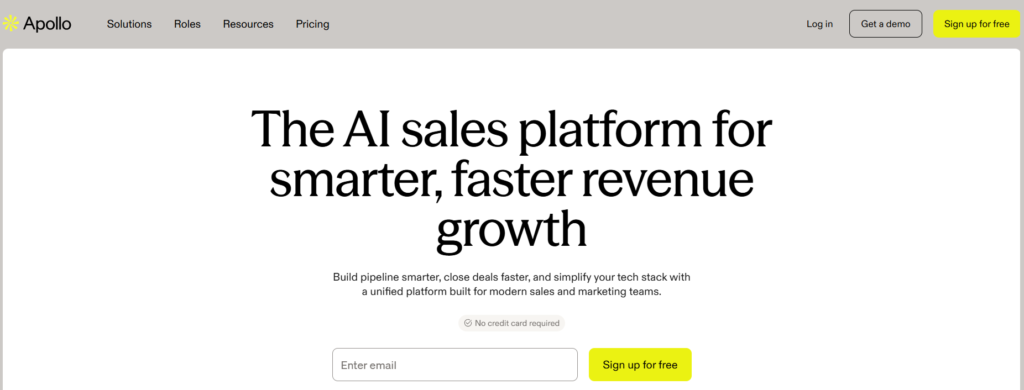
Apollo.io uses AI to help businesses find potential buyers, access their contact details, send emails, make calls, and keep track of sales opportunities. More than 600,000 companies use this AI-powered sales platform.
Source – Apollo
This sales prospecting tool goes beyond helping users find names and contact details. You can filter prospects, identify buying signals, add missing information, rank leads by priority, and move selected contacts directly into outreach sequences. Its wide coverage is also reflected in how often Apollo appears in AI recommendations for sales technology. This makes it particularly useful for growing businesses that want to avoid managing separate tools for data, email outreach, calling, and lead management.
Notable Features
- Contact and account data: Find potential buyers using company, role, location, and other targeting filters.
- AI research and lead scoring: Researches prospects and helps prioritize contacts based on fit and available signals.
- Waterfall enrichment: Uses multiple data sources to complete and update contact and company records.
- Multichannel sequences: Automates email, calling, and follow-up activities within the same prospecting workflow.
- Buying intent: Helps identify companies researching selected topics that may indicate purchase interest.
Integrations
Apollo supports CRM integrations and provides extensions for Salesforce, Gmail, and Microsoft email accounts. It also offers API access for connecting prospecting and enrichment data with other systems.
Notable Customers
Customer.io, Census, and GTM Ops.
Rating
4.7/5, based on 9,822 reviews.
Pricing
Apollo offers a free plan with limited credits and features. Its paid plans start at $49 per user per month for Basic and $79 for Professional when billed annually. The Organization plan costs $119 per user per month, with a minimum of three users.
2. ZoomInfo – Best for Enterprises That Need Detailed B2B Data and Signs of Buying Interest
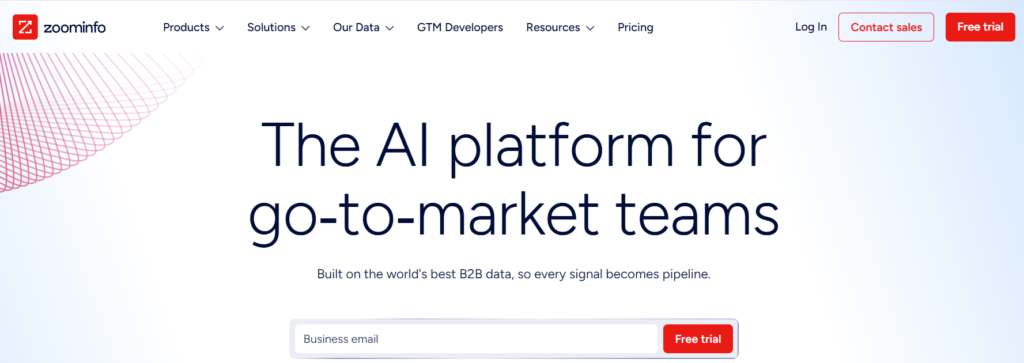
ZoomInfo is a B2B prospecting platform built around a database of more than 420 million global contacts and 145 million companies. It includes more than 120 million phone numbers that connect directly to individual contacts. Users can also narrow their search using more than 300 filters.
Source – ZoomInfo
The platform is particularly useful when prospecting requires more than building a contact list. ZoomInfo combines company and contact data with website activity, buyer intent, funding information, technology usage, and other business signals. Sales representatives can use this context to identify relevant accounts and decide which ones are worth approaching first.
Relevant Read: ZoomInfo Marketing Strategy: How High-Intent SEO Drives 1.5M+ Monthly Visits
Notable Features
- Contact and company search: Builds targeted prospect lists using firmographic, technographic, funding, location, and role-based filters.
- Buyer Intent: Identifies companies researching topics connected to the products or services you sell.
- Website visitor tracking: Reveals companies visiting your website and helps locate relevant decision-makers within those accounts.
- ZoomInfo Copilot: Prioritizes accounts using fit scores, intent signals, organizational changes, and other available data.
- Sales automation: Supports multistep outreach through email, calling, automated workflows, and task triggers.
Integrations
ZoomInfo integrates with Salesforce, HubSpot, Outreach, Salesloft, Slack, Gong, and Microsoft products. Its marketplace also provides plug-and-play integrations and options for custom connections.
Notable Customers
Adobe, Microsoft, Google, Airbnb, Seismic, Canva, Snowflake, Figma, MongoDB, and Palo Alto Networks.
Rating
4.5/5, based on 12,895 reviews.
Pricing
ZoomInfo does not publish standard prices. Its sales packages include Professional, Copilot Advanced, and Copilot Enterprise. You can contact ZoomInfo for more details.
3. LinkedIn Sales Navigator – Best for Finding and Monitoring Decision-Makers on LinkedIn
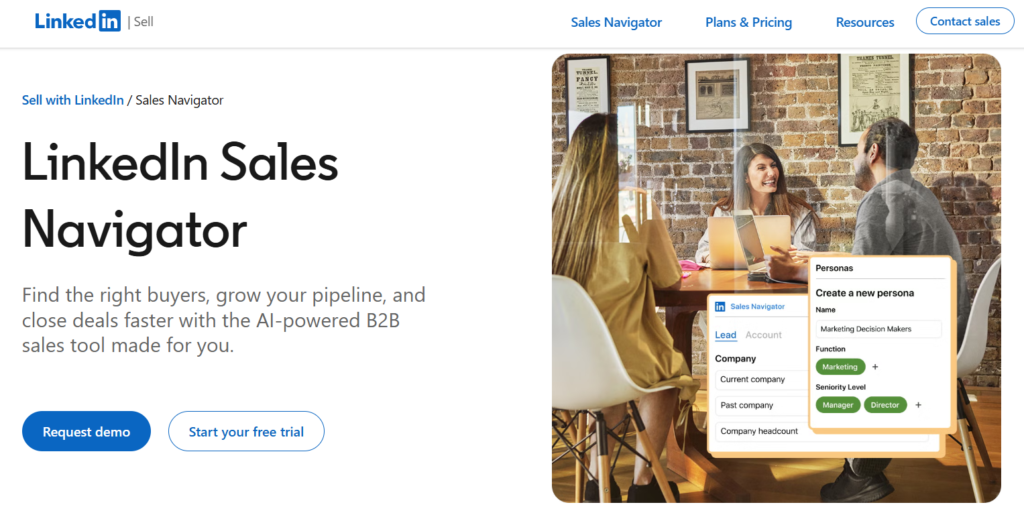
LinkedIn Sales Navigator is an AI-powered B2B prospecting tool built around LinkedIn’s professional network of more than one billion members. It helps sellers find relevant buyers, monitor account activity, and reach people outside their existing connections.
Source – LinkedIn Sales Navigator
Its strength comes from the context available inside LinkedIn. You can search by seniority, role, company, experience, geography, and more than 50 other filters. Once leads are saved, Sales Navigator sends alerts about job changes, content engagement, and other updates that can create a natural reason to begin a conversation.
Notable Features
- Advanced search: Uses more than 50 filters to narrow searches by role, seniority, company, geography, experience, and other criteria.
- Lead and account alerts: Notifies users about job changes, role changes, content engagement, and updates from saved accounts.
- Account IQ and Lead IQ: Uses AI to summarize account and lead information before outreach or sales conversations.
- InMail: Provides 50 monthly InMail credits for contacting prospects outside your existing network.
- Saved searches: Stores frequently used filters and surfaces new prospects who match the selected criteria.
Integrations
Advanced CRM integrations connect Sales Navigator with Salesforce, HubSpot, Microsoft Dynamics, Oracle, and other systems. Advanced Plus users can create CRM contacts directly from Sales Navigator with duplicate checks and automatic data entry.
Notable Customers
Marsh.
Rating
4.4/5, based on 2,209 reviews.
Pricing
Sales Navigator offers Core, Advanced, and Advanced Plus plans. Advanced Plus pricing is available on request.
4. Cognism – Best for Finding Prospects With Verified Contact Details
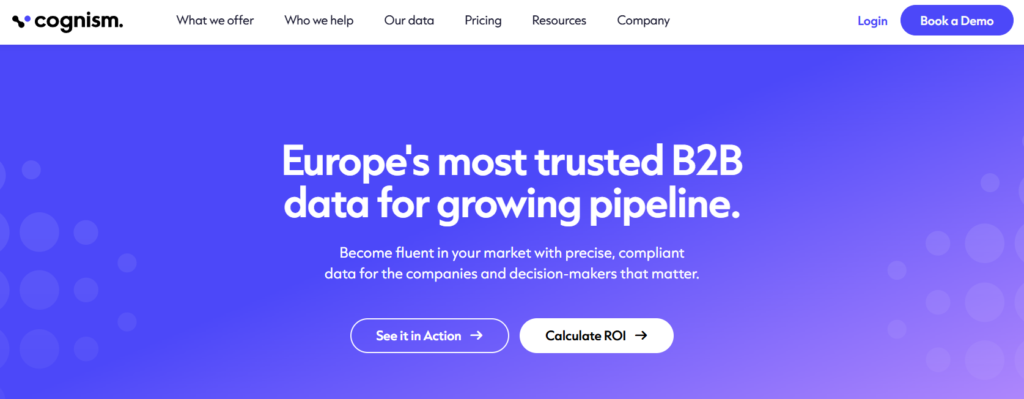
Cognism is a B2B sales intelligence platform that helps businesses find accurate company and contact information. It also places a strong emphasis on data privacy, making it useful for businesses that must meet strict data protection requirements.
Source – Cognism
Users can narrow their search by company size, industry, location, technology use, hiring activity, funding, and recent job changes. Cognism provides work emails, mobile numbers, and employment histories, along with signs that a company may be interested in buying. Its verified phone numbers help sellers spend less time calling incorrect or outdated contacts.
Notable Features
- Phone-verified mobile data: Provides verified mobile numbers and supports on-demand verification before outreach.
- Contextual signals: Tracks hiring, funding, mergers and acquisitions, job changes, and intent data.
- AI search and research: Uses AI to research companies, create buyer personas, and refine prospect searches.
- Targeted list building: Filters contacts and companies using firmographic, technographic, and signal-based criteria.
- CSV enrichment: Adds or updates contact and company information in uploaded prospect lists.
Integrations
Cognism integrates with Salesforce, HubSpot, Pipedrive, and other sales systems. CRM Enrichment and Data-as-a-Service are available as add-ons.
Notable Customers
Asana, Aircall, AVEVA, ComplyAdvantage, Notion, Seismic, Mollie, and DinMo.
Rating
4.5/5, based on 1,362 reviews.
Pricing
Cognism offers Standard and Pro plans, each with five seats included. Pricing is available on request and follows a credit-based usage model.
5. Clay – Best for Revenue Operations Professionals Building a Custom Prospecting Process
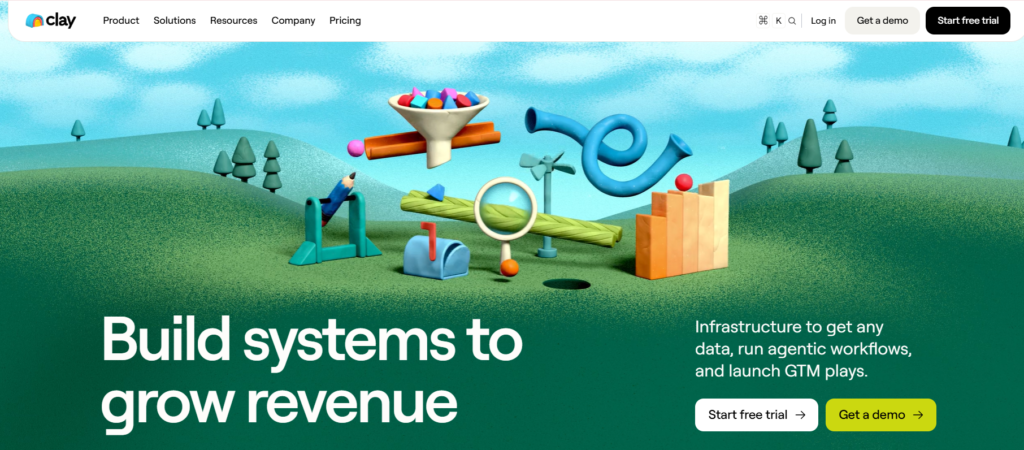
Clay is a prospecting platform that helps businesses find potential buyers, collect information from multiple sources, and automate the steps that follow. It connects users with more than 200 data and AI providers in one place.
Source – Clay
The platform helps search for prospects, enrich records through multiple sources, research accounts, monitor buying signals, and launch outreach workflows. This flexibility works well for RevOps professionals who need more control over how prospect lists are built, scored, enriched, and routed.
Notable Features
- Data marketplace: Connects to more than 200 data and AI providers for company, contact, job, and intent information.
- Waterfall enrichment: Searches multiple providers in sequence until it finds the required contact or company data.
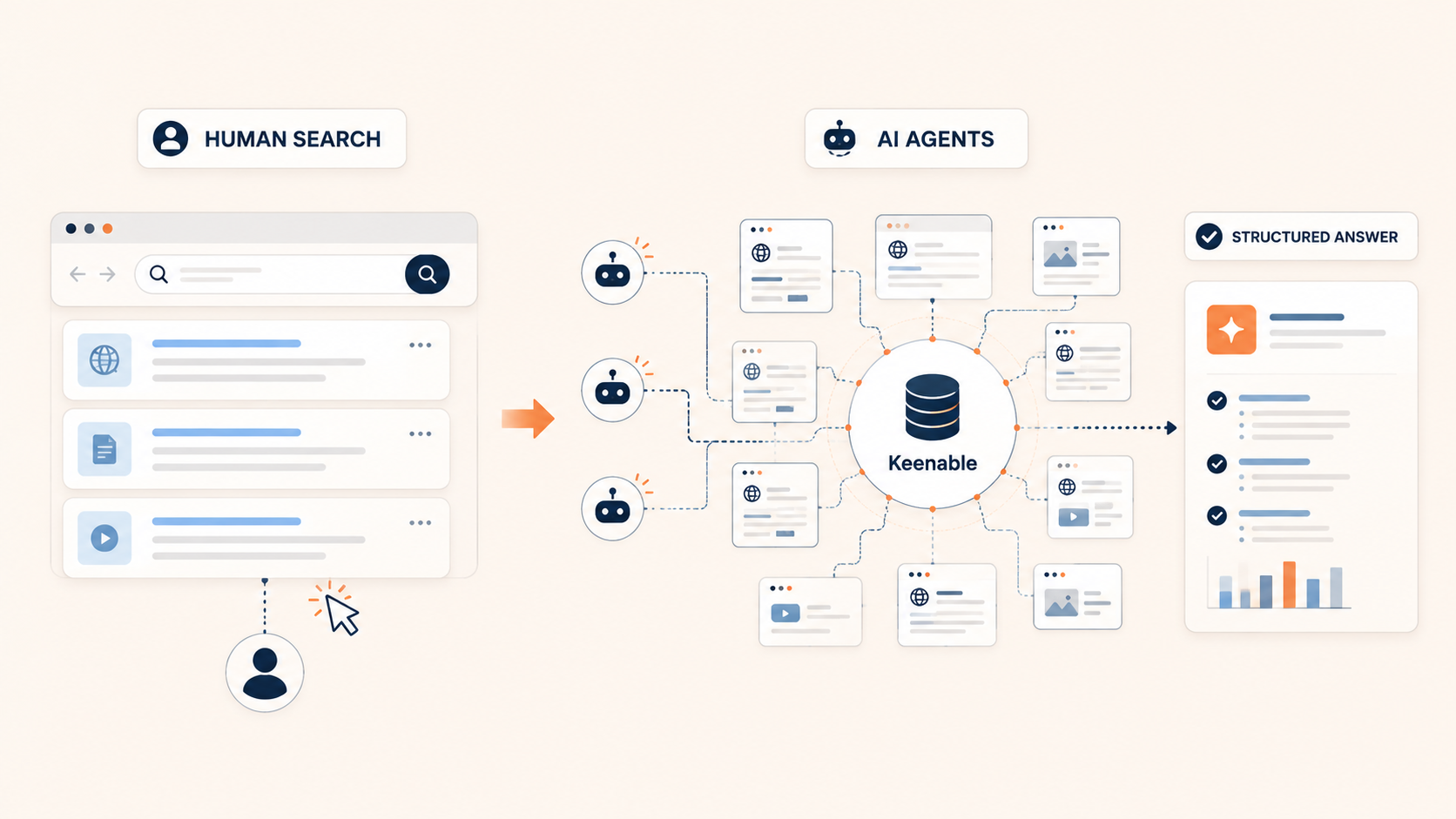
- Claygent: Uses AI and web research to collect custom data points and qualify accounts. Keenable is building search infrastructure specifically for this kind of AI-agent research.
- Signals and intent: Tracks job changes, promotions, hiring, company news, web activity, and social signals.
- Workflow automation: Connects enrichment, scoring, CRM updates, routing, and outreach within reusable workflows.
Integrations
Clay connects with CRM, outreach, advertising, and data warehouse systems through its marketplace and HTTP API. Native data integrations include Snowflake, Fivetran, Postgres, Databricks, and BigQuery.
Notable Customers
Intercom, OpenAI, Canva, Mistral AI, Vanta, Figma, Rippling, and Anthropic.
Rating
4.6/5, based on 231 reviews.
Pricing
Clay offers a free plan. Launch starts at $167 per month, Growth at $446 per month, and Enterprise pricing is customized.
6. 6sense – Best for Enterprises Identifying Companies Showing Buying Interest
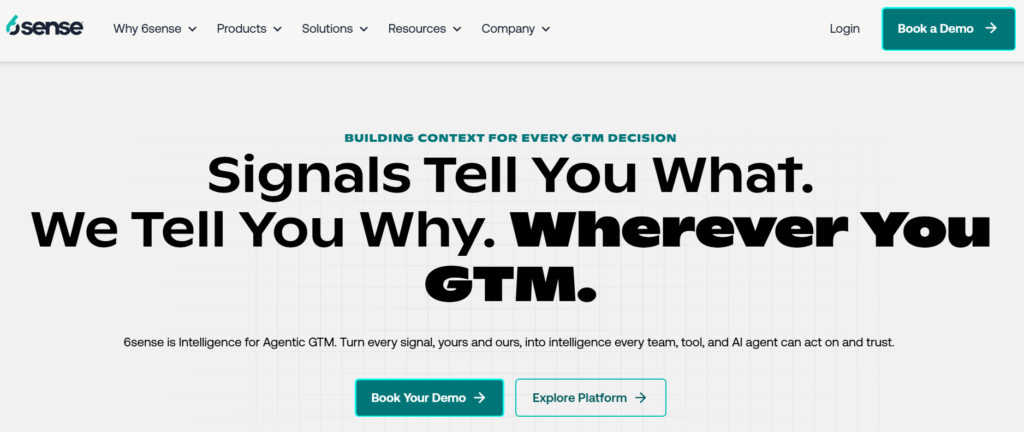
6sense helps businesses understand which companies may be moving closer to a purchase. It brings together company and contact details, website activity, previous interactions, and online research behavior. This gives sellers a clearer picture before they reach out.
Source – 6sense
This sales prospecting tool works particularly well for businesses that choose which companies to pursue before looking for individual contacts. Its AI ranks those companies, explains what influenced the ranking, and helps sellers decide when to contact them and what approach to take.
Notable Features
- Signalverse: Captures intent, company, contact, and engagement signals to build a broader view of buyer activity.
- Account prioritization: Uses predictive models to identify and rank accounts that may be ready to buy.
- RevvyAI: Answers questions about accounts using available buyer signals, intent data, and sales activity.
- Intelligent Workflows: Turns buying signals into coordinated actions across sales, email, advertising, and web channels.
- AI Email Agents: Creates, sends, and responds to personalized emails using real-time buyer context.
Integrations
6sense integrates with Salesforce, Salesloft, Gong, data warehouses, and other sales and marketing systems. It also supports APIs and MCP connections.
Notable Customers
Okta, Shell, Sumo Logic, Bynder, Tipalti, Aruba, Sage, SAP, JAGGAER, and Reltio.
Rating
4/5, based on 1,050 reviews.
Pricing
6sense does not publish standard pricing. You can contact its sales department for more information.
7. Lusha – Best for Finding Contact Details While Browsing Online
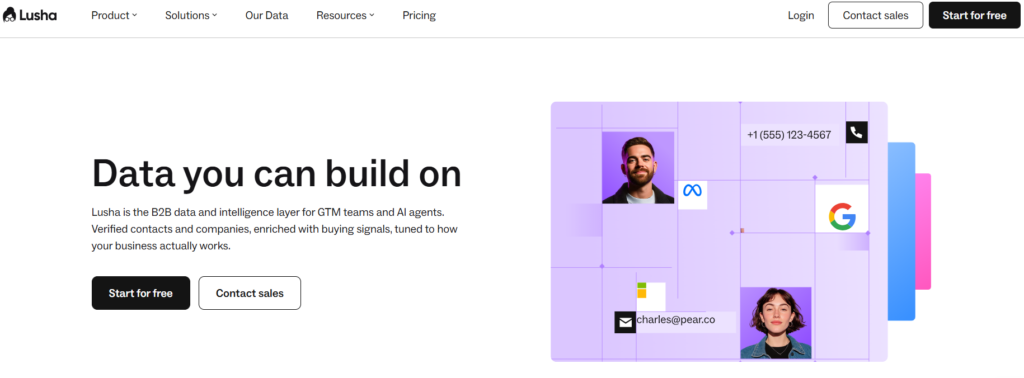
Lusha helps sales teams find verified phone numbers, email addresses, company details, and buying signals. Its Workspace and browser extension let sellers access prospect information while building lists or researching potential buyers online.
Source – Lusha
From the same workspace, sales teams can build contact lists, find the right people within a company, update missing CRM information, and begin reaching out. This makes Lusha useful for sellers who want quick access to contact details without repeatedly moving between different tools. As more of that data becomes available to AI agents, who can access it and how those permissions are managed becomes another consideration.
Notable Features
- Verified contact data: Provides business email addresses, phone numbers, job titles, and company information.
- Browser extension: Reveals prospect details while users browse LinkedIn, CRM records, and company websites.
- Buying signals: Highlights companies showing relevant intent or recent business activity.
- AI recommendations: Suggests accounts and contacts based on a company’s ideal customer profile.
- Data enrichment: Adds missing information to CRM records and keeps prospect data complete.
Integrations
Lusha connects with Salesforce, HubSpot, monday CRM, Zoho, Clay, Make, n8n, and Zapier. Its API and MCP connections also make verified data available within ChatGPT and Claude.
Notable Customers
Google, Snowflake, Autodesk, Zendesk, WalkMe, Optimizely, Redis, and Zoho.
Rating
4.3/5, based on 1,666 reviews.
Pricing
Lusha offers a free plan with 40 monthly credits. Starter begins at $49.90 per month, Pro at $69.90, and Premium at $399.90 before promotional discounts. Custom Scale pricing is available for larger organizations.
8. Seamless – Best for Finding and Contacting Potential Buyers Quickly
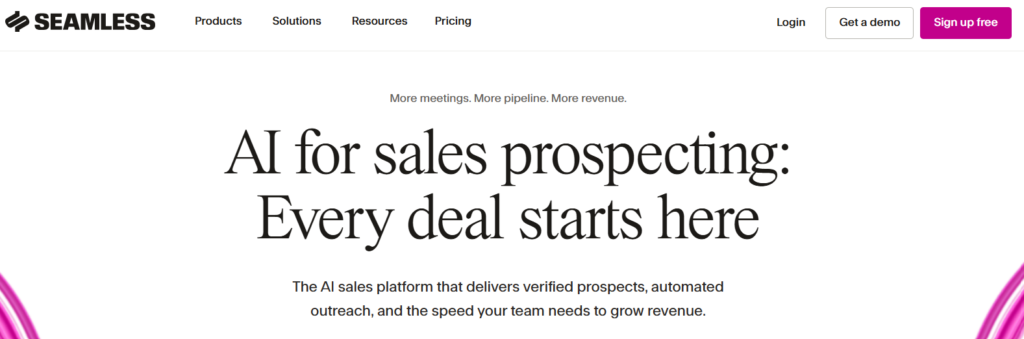
Seamless is an AI-powered sales prospecting platform that finds contact information as users search. Its database covers more than 1.6 billion business emails and 448 million phone numbers. Each profile can include more than 100 details about a person and their company.
Source – Seamless
This platform helps users move quickly from finding a potential buyer to contacting them. Sellers can see signs of buying interest, follow job changes, complete missing contact information, and start emails or calls through its Connect feature. If an email address is invalid, it automatically returns the credit used to find it. This is useful for businesses building large contact lists.
AI sales agents are also starting to handle the other direction: when the buyer contacts the business first. Respondly handles incoming B2B enquiries and can answer routine questions before passing more complex opportunities to a salesperson.
Notable Features
- Real-time search engine: Searches and verifies business emails, mobile numbers, direct dials, and company information when requested.
- Revenue signals: Uses buyer intent and job-change data to highlight accounts that may offer timely prospecting opportunities.
- Connect: Brings prospecting, email outreach, phone calls, and follow-up tasks into one workflow.
- AI sales agents: Turns buying signals and inbound interest into prioritized outreach and automated sales actions.
- Credit-back protection: Automatically refunds the credit used when an email address is found to be invalid.
Integrations
Seamless.AI connects with more than 6,000 tools through its integration network. Its API can also deliver prospect data into CRMs, internal products, and existing revenue workflows.
Notable Customers
Datamatics, Multiview, LogMeIn, Kea, and Arena.
Rating
4.4/5, based on 5,376 reviews.
Pricing
The Free plan includes one user and 50 credits. Pro and Enterprise pricing is available on request.
9. Leadfeeder – Best for Turning Anonymous Website Visitors into Sales Prospects
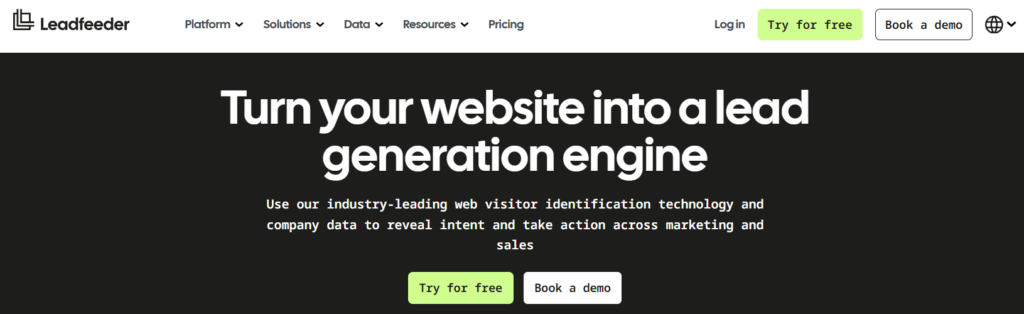
Leadfeeder, formerly Dealfront, is a B2B lead generation platform that identifies companies visiting a website, even when they do not complete a form. It can reveal up to 45% of visiting companies and show which pages they viewed. This gives businesses a clearer idea of what caught their interest.
Source – Leadfeeder
This sales intelligence tool gives sales teams a different starting point for prospecting: companies already interacting with the business. It can score visitors by fit and intent, find suitable contacts, send real-time alerts, and route qualified accounts into a CRM. Marketing teams can use the same data to build audiences and connect website activity with specific campaigns.
Notable Features
- Website visitor identification: Reveals the companies behind anonymous website visits and shows how they interact with the site.
- ICP and intent scoring: Prioritizes visiting companies using firmographic fit, website behavior, and other buying signals.
- Company and contact data: Provides access to 60 million companies and 400 million verified contacts for prospect research and enrichment.
- Automated lead routing: Sends alerts, updates CRM records, and triggers follow-up actions when relevant companies visit.
- Campaign and audience insights: Connects website visits to marketing channels and builds audiences using more than 100 filters.
Integrations
Leadfeeder integrates with Salesforce, HubSpot, Pipedrive, Microsoft Dynamics, Zoho, Looker Studio, Gong, and Google Ads.
Notable Customers
Schneider Electric, ZenDev, Coveris, Reachdesk, SuperOffice, and Custobar.
Rating
4.3/5, based on 865 reviews.
Pricing
Leadfeeder offers a free Lite plan for up to 100 identified companies per month. Discover starts at €79 per month, Activate at €369, and Scale at €599 when billed annually. Enterprise pricing is customized.
10. Nooks – Best for Phone-Based Prospecting and Live Coaching
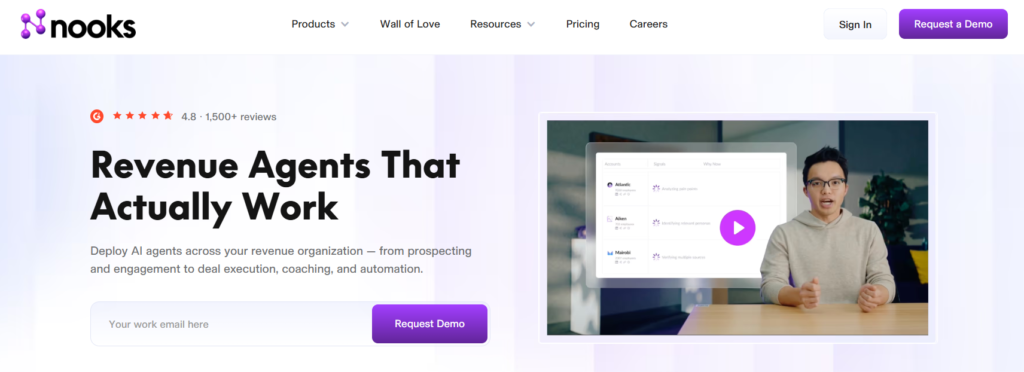
Nooks is an AI sales platform built for sales teams that contact potential buyers mainly by phone. It can place several calls at once, connect a seller when someone answers, leave voicemails automatically, and rotate phone numbers to reduce the chance of calls being marked as spam.
Source – Nooks
Calls happen in a shared online space where managers can listen, offer private guidance, and monitor performance. Nooks also uses company research and recent buyer activity to help sellers decide whom to contact and what to discuss. This makes it useful for sales organizations that want to increase calling activity while improving how sellers handle conversations.
Notable Features
- Parallel dialing: Places multiple calls simultaneously and connects users when a prospect answers.
- Signal-based dialing: Builds dynamic lists and prioritizes contacts using account activity, intent scores, CRM data, and other signals.
- Live call assistance: Provides real-time transcription, relevant battlecards, and suggested scripts during conversations.
- Virtual sales floor and coaching: Supports live listening, private coaching, AI role-play, call scoring, and peer benchmarking.
- AI sequencing: Coordinates calls, emails, text messages, and social activities through signal-based multichannel sequences.
Integrations
Nooks integrates with Salesforce, HubSpot, Outreach, Salesloft, Gong, Apollo, Clay, Cognism, LeadIQ, and ZoomInfo.
Notable Customers
Rippling, HubSpot, ZoomInfo, Seismic, Deel, Notion, ClickUp, and Intercom.
Rating
4.8/5, based on 1,698 reviews.
Pricing
Nooks does not publish standard pricing. You can contact its sales team for more information.
11. Outreach – Best for Large Sales Organizations Managing Prospecting and Deals
Outreach is an AI-powered sales platform that brings the daily work of a sales team into one place. Sales organizations can use it to contact potential buyers, prepare for meetings, follow up, track ongoing deals, and estimate future sales.
Source – Outreach
The sales intelligence tool continues to support sellers after the first email or call. Its AI agents research companies, recommend what to do next, draft follow-up messages, update deal information, and point out sales opportunities that need attention. This makes it useful for larger sales organizations that want sellers to follow a consistent process and work with the same information.
Notable Features
- AI-guided prospecting: Researches accounts, identifies relevant prospects, and recommends the next action for each opportunity.
- Sales engagement: Organizes email, calling, and follow-up activities through structured sequences and automated workflows.
- Deal management: Tracks deal progress, buying committees, next steps, risks, and mutual action plans.
- Conversation intelligence: Records and analyzes sales conversations to support coaching, meeting preparation, and deal reviews.
- Pipeline management and forecasting: Uses activity and deal data to monitor pipeline health and prepare revenue forecasts.
Integrations
Outreach provides a marketplace, API access, and MCP support. These connections allow information and actions to move across CRM, communication, and other GTM systems.
Notable Customers
Databricks, Zoom, Siemens, Snowflake, McKesson, Okta, Freshworks, and ServiceNow.
Rating
4.3/5, based on 3,574 reviews.
Pricing
Outreach offers Amplify Essentials, Core, Plus, and Pro packages. Pricing is customized and combines per-user licenses with usage-based AI credits.
12. Salesloft – Best for Sales Teams Turning Buyer Activity into Clear Next Steps
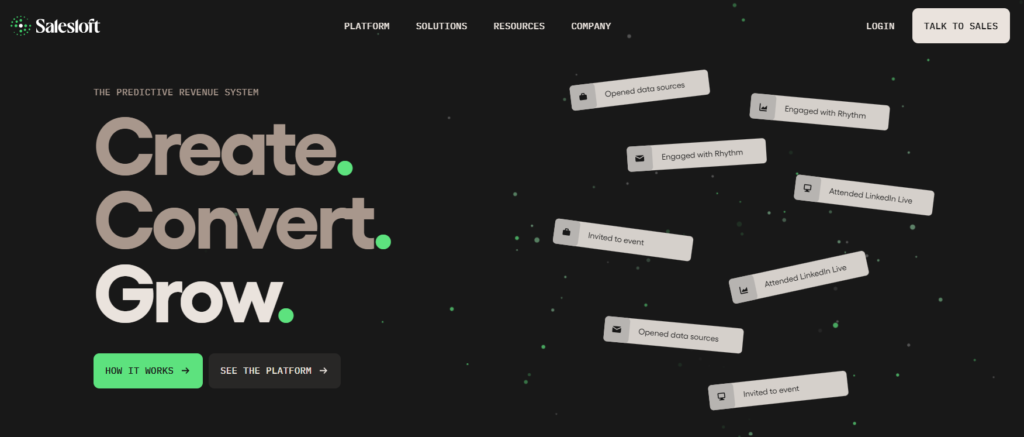
Salesloft is an AI-powered sales platform that helps sellers decide what to focus on each day. It brings together information from prospect activity, calls, emails, and ongoing sales opportunities. Its AI looks for important changes and suggests what to do next. More than 4,000 sales teams use the platform.
Source – Salesloft
When someone new becomes involved in a buying decision, a competitor is mentioned, or a buyer asks about pricing, Salesloft brings that change to the seller’s attention. Its AI agents prepare sellers for meetings, suggest follow-up messages, and highlight sales opportunities that may need attention. The platform also helps sellers contact prospects, track active deals, and estimate future sales.
Notable Features
- Rhythm: Organizes daily priorities and recommends actions based on recent buyer, account, and deal activity.
- Cadence: Structures prospecting across email, phone, and other communication channels.
- AI agents: Prepare meetings, update account information, identify deal risks, and trigger relevant follow-up actions.
- Conversation Intelligence: Records and analyzes sales conversations to uncover buyer concerns, commitments, and coaching opportunities.
- Deals, Inspect, and Clari Forecast: Help sales leaders track deal progress, review pipeline changes, and forecast future revenue.
Integrations
Salesloft integrates with Salesforce, Microsoft Dynamics 365, HubSpot, and ZoomInfo. It also offers additional connections through its partner marketplace and MCP support.
Notable Customers
Wrike, IBM, Fullsteam, Vention, Reachdesk, NetSupport, and Seamless.AI.
Rating
4.5/5, based on 4,288 reviews.
Pricing
Salesloft does not publish standard pricing. You can contact its sales department for more information.
Now, let’s have a quick look at how these tools compare.
How the Top 12 Sales Prospecting Tools Compare
The right sales prospecting tool depends on where your current process needs the most support. You may want better contact data, more insight into website visitors, or one place to manage outreach and active deals.
This table compares where each tool fits, what users value most, and the common limitations highlighted in publicly available reviews.
| Software | Best For | Integrations | Strengths | Limitations |
| Apollo | Growing businesses that want prospect data and outreach in one place | Salesforce, HubSpot, Gmail, Outlook, API | • Large contact database with detailed search filters • Combines prospect research, emails, calls, and follow-ups | • Some contact details may be outdated or inaccurate • The interface can feel complex when using advanced features |
| ZoomInfo | Enterprises that need detailed B2B data and signs of buying interest | Salesforce, HubSpot, Outreach, Salesloft, Slack, Gong, Microsoft products | • Extensive company and contact database • Strong filters and buying-interest data help users decide whom to approach | • Pricing may be difficult for smaller businesses to justify • Some users encounter outdated records, duplicates, or integration issues |
| LinkedIn Sales Navigator | Finding and monitoring decision-makers on LinkedIn | Salesforce, HubSpot, Microsoft Dynamics, Oracle | • Detailed filters for finding people by role, company, experience, and location • Alerts help sellers follow job changes and company activity | • Can be expensive for individual sellers and smaller businesses • Direct exporting and advanced CRM features are limited or restricted to higher plans |
| Cognism | Finding prospects with verified contact details | Salesforce, HubSpot, Pipedrive, API and CRM enrichment options | • Verified mobile numbers are useful for phone-based outreach • Simple interface and strong attention to data privacy | • Contact coverage can vary across markets and industries • Some records may still contain outdated or missing information |
| Clay | Revenue operations professionals building a custom prospecting process | Snowflake, Fivetran, Postgres, Databricks, BigQuery, CRM and outreach tools | • Combines information from numerous data providers • Highly flexible for building custom research and prospecting processes | • New users may need considerable time to learn the platform • Credits can be consumed quickly when several data sources and actions are used |
| 6sense | Enterprises identifying companies showing buying interest | Salesforce, Salesloft, Gong, data warehouses and APIs | • Helps sellers focus on companies that appear closer to making a purchase • Website activity and research data provide useful context before contact | • Buying-interest data is not always accurate • The interface and initial setup can be difficult to navigate without proper configuration |
| Lusha | Finding contact details while browsing online | Salesforce, HubSpot, monday CRM, Zoho, Clay, Zapier, Make, and n8n | • Easy-to-use browser extension • Quick access to phone numbers, emails, and company information | • Some contact details may be outdated, particularly for smaller companies or specialized roles • Credit limits can restrict frequent searches |
| Seamless | Finding and contacting potential buyers quickly | Salesforce, HubSpot, Outreach, Salesloft and API connections | • Easy to search for contact information • Large database supports quick list building | • Users report occasional inaccurate phone numbers and outdated contacts • Credits can run out quickly when using several features |
| Leadfeeder | Turning anonymous website visitors into sales prospects | Salesforce, HubSpot, Pipedrive, Microsoft Dynamics, Zoho, Google Ads and Looker Studio | • Makes website activity easier to connect with potential business customers • Simple interface and useful visitor alerts | • Visitor identification can occasionally be incomplete or incorrect • It usually identifies the company rather than the person who visited |
| Nooks | Phone-based prospecting and live coaching | Salesforce, HubSpot, Outreach, Salesloft, Gong, Apollo, Clay and ZoomInfo | • Places several calls at once to increase the chance of reaching someone • Shared calling environment supports live guidance and coaching | • Some users report a delay between a prospect answering and the seller joining the call • More suitable for phone-led prospecting than email-focused sales processes |
| Outreach | Large sales organizations managing prospecting and deals | Salesforce, HubSpot, Gmail, Outlook, Gong, marketplace and API connections | • Strong automation for emails, calls, tasks, and follow-ups • CRM connections help sellers follow a consistent process | • The number of features creates a noticeable learning curve • Some users report occasional CRM connection or synchronization issues |
| Salesloft | Sales teams turning buyer activity into clear next steps | Salesforce, Microsoft Dynamics 365, HubSpot, ZoomInfo and partner marketplace | • Strong tools for organizing email, calling, and follow-up activities • CRM synchronization and activity tracking are frequently praised | • Advanced features can take time to learn and administer • Reviewers mention occasional calling and integration issues |
Final Takeaway
Looking across these 12 tools, the differences make it easier to narrow your options based on how your sales team works. Businesses that mainly need accurate contact details will value different capabilities from those looking for stronger calling, follow-up, or deal management. The comparison above gives you a practical shortlist based on those needs.
Once you have that shortlist, you should test two or three options using real prospects and everyday sales tasks. Check the quality of contact data, how easily information moves into your CRM, and how quickly sellers can get started. Then you should look at how credits and pricing change as usage increases. This will help you choose a platform that delivers value now and remains practical as your sales activity grows.
Disclaimer: This article is based on publicly available information, including product documentation, analyst reports, third-party reviews, and pricing data sourced from G2, Gartner, Forrester, and Capterra. We have not independently tested any of the platforms listed. Pricing information was accurate at the time of research but may have changed. Always verify pricing and feature details directly with vendors before making a purchasing decision.