| TL;DR: B2B enquiries often arrive across marketplaces, WhatsApp, email, and web forms when sales teams are busy or offline. By the time someone responds, the buyer may already be speaking with another supplier. ScaleupAlly’s Respondly identifies genuine enquiries, answers questions using approved company information, and collects buyer requirements before passing complex opportunities to a salesperson. The product moves sales AI beyond helping teams draft replies and into handling the opening stage of the buyer conversation. |
Imagine this: A buyer sends an enquiry late in the evening asking about specifications, pricing, and delivery for a product you offer. By the time someone opens it the next morning, the buyer may already be speaking with another supplier.
For manufacturers and exporters, this is an easy way to lose business without ever formally losing a deal. Enquiries arrive through marketplaces, WhatsApp, email, and website forms. Each one needs a quick response, but answering properly may require product information, commercial rules, and input from someone who is already handling other work.
ScaleupAlly found the cost of that gap inside its own business. A 2025 internal sales audit led ScaleupAlly to estimate that slow replies had contributed to close to $2 million in lost sales pipeline. It then began seeing the same pattern across other businesses.
That experience pushed ScaleupAlly to look at a question many sales teams are still figuring out: what happens when the buyer expects an answer before a salesperson is available?
Online Marketplaces Brought More Buyers but Not Faster Replies
A first message from a buyer can now land on a marketplace like IndiaMART just as easily as on WhatsApp. The scale of these marketplaces is huge. IndiaMART draws about 90 million visitors a month and has around 220,000 sellers.
IndiaMART is also using AI within its own platform. It uses it to spot problem accounts and to handle buyer requests faster. The company also plans to double its spending on AI tools every six months.
However, connecting a buyer with a supplier is only the first step. Someone still has to reply, and that reply is often harder than it looks. An enquiry for machine parts or chemicals rarely has a simple price-list answer. The buyer may need details on sizes and materials, or on delivery dates and shipping costs.
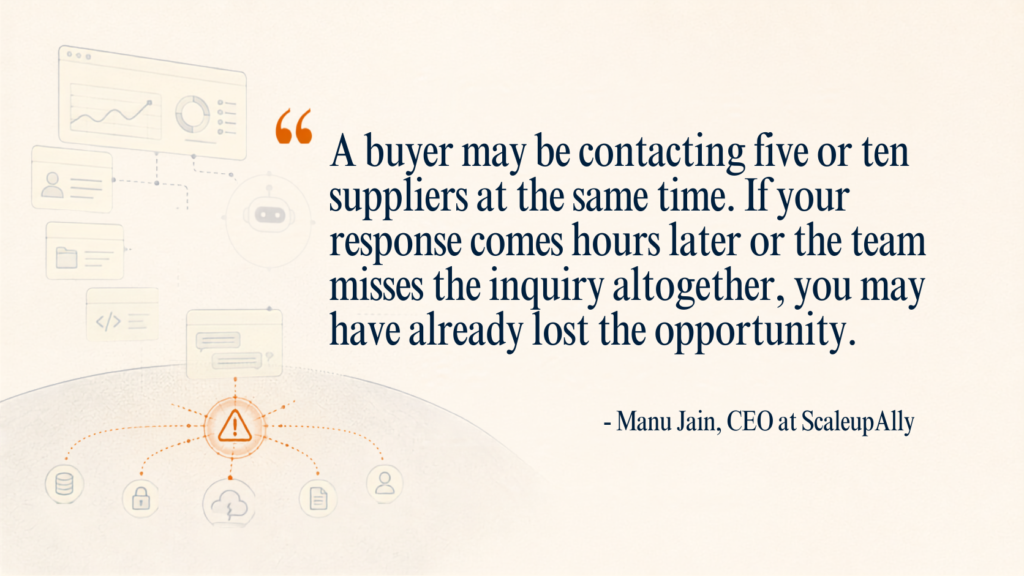
Manu Jain, CEO of ScaleupAlly, explains why the timing matters so much. He says:
The tricky part is that the first reply has to be both quick and useful. After all, a buyer may not wait around for an answer.
That is where ScaleupAlly sees an opening for AI. The company built Respondly, an AI sales agent, to handle those early buyer conversations, answering routine questions and bringing a salesperson in when the enquiry needs a person.
Respondly Handles the First Reply Before a Salesperson Steps in
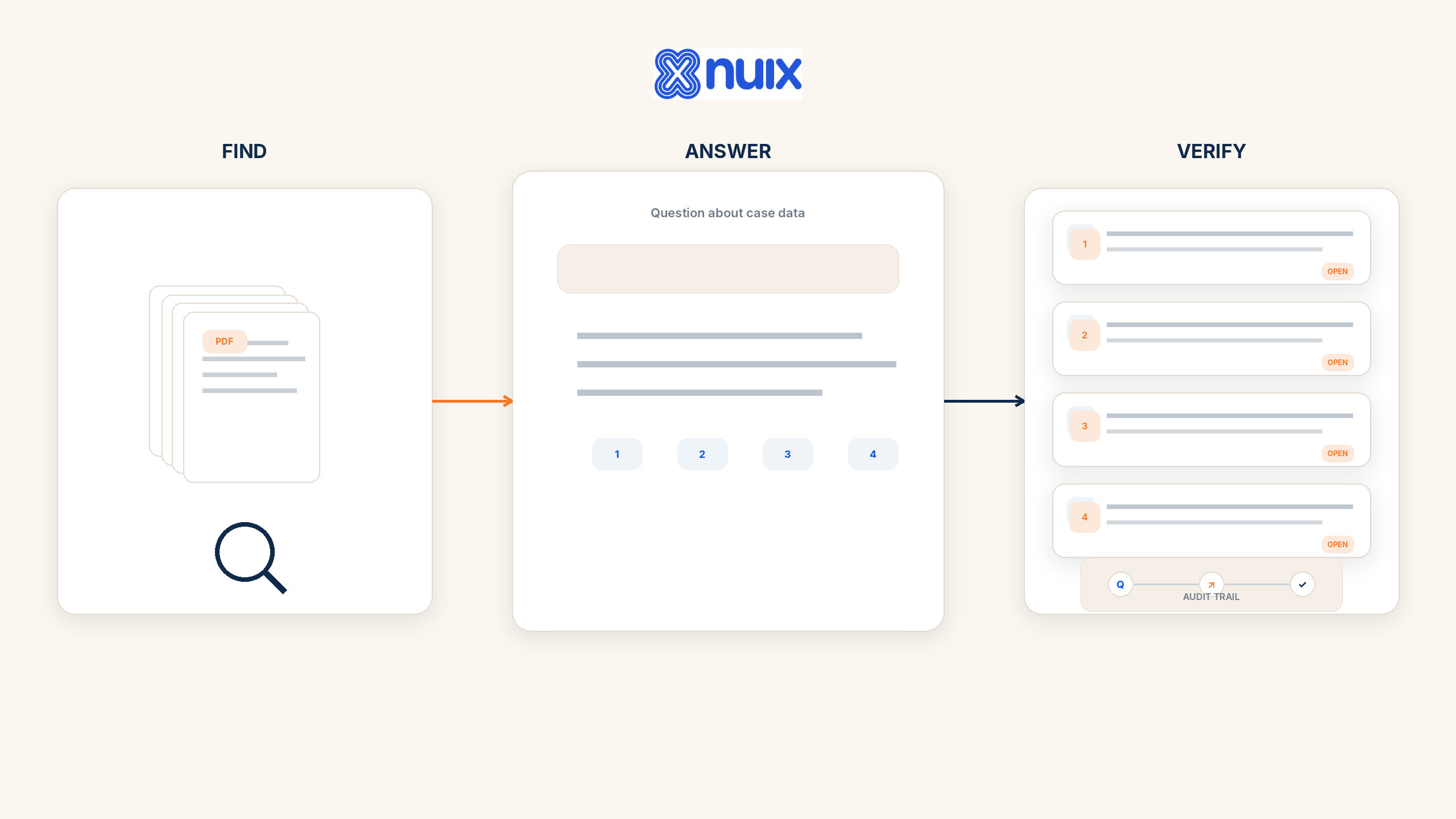
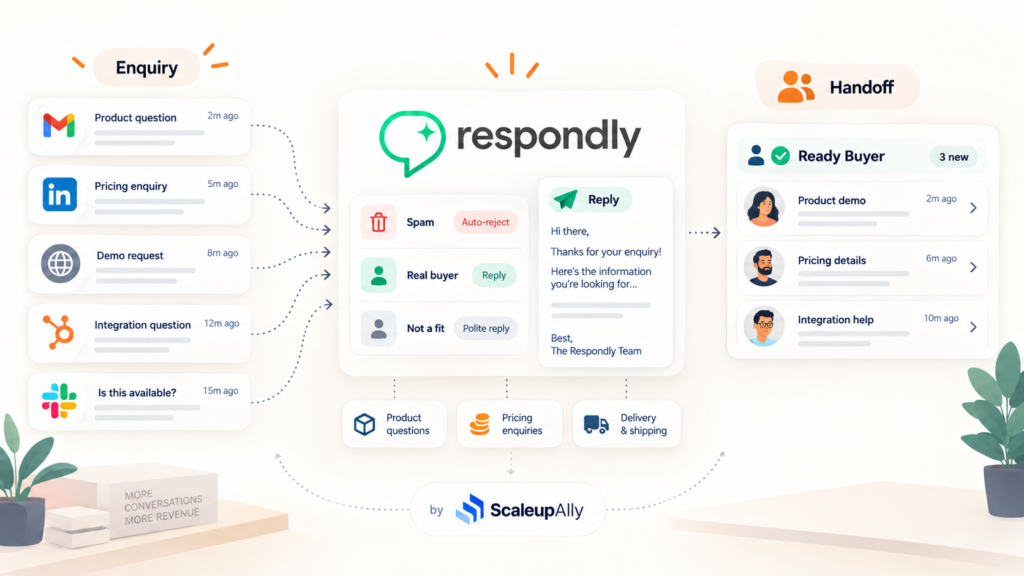
Respondly connects to the places where a business already receives enquiries. According to ScaleupAlly, it reads each new message and flags spam so genuine buyers are dealt with first. Those buyers can then get a reply within minutes.
Its replies come only from information the business provides. That can include product catalogues and technical documents, along with common buyer questions and company policies. The business also decides what Respondly can handle alone and when a person should take over.
The business also decides what Respondly can handle alone and when a person should take over. That balance between autonomy and human oversight is becoming an important distinction across agentic AI platforms.
A simple enquiry about a standard product might be handled without a salesperson stepping in. Respondly can share approved product details and ask how many units the buyer needs. It keeps a record of the conversation for the sales team.
A custom order or a large deal takes a different path. Respondly gathers the first details, then passes the conversation to a salesperson with everything it has learned. So when the salesperson steps in, they already have the basic context. The buyer does not have to repeat the same information.
Preserving that context matters after the handoff too. In banking, MHC NorthStar is built to help later communications reflect what happened in earlier customer interactions, even when those interactions sit in different systems.
That division is how Respondly is designed to work. The product is not meant to replace the sales team. Instead, it handles the first reply when a salesperson is not available. Automation is also moving further down the sales process. PostcardMania’s SmartTouch can turn an unanswered quote or stalled deal into a direct-mail follow-up after the initial conversation has already happened.
AI in Sales is Starting to Talk to Buyers Directly
Many of the first AI assistants that sales teams adopted worked behind the scenes. They summarised calls or suggested replies, but a person always decided what the customer saw. That is changing across sales prospecting tools too, as AI takes on more research, prioritization, outreach, and follow-up work.
Verizon offers a useful example. In 2025, the company said an AI assistant built on Google’s Gemini models was helping its service staff answer customer questions faster. Sales through its 28,000-person service team rose by nearly 40% after the rollout. Verizon attributed that increase to the period after the AI assistant was introduced.
Even so, the assistant helped employees during live conversations. Verizon retrained its service agents to spend more time selling. Respondly brings AI further forward in the process by replying before a salesperson joins the conversation.
That can be useful when an enquiry lands at midnight or when a small team is stretched thin.
A Fast Reply Only Helps When it is Also Correct
Speed is central to Respondly, but speed alone is not enough. A supplier who gives the wrong price or the wrong delivery date can lose a buyer’s trust for good. After all, a fast answer is only useful if the information in it is right.
For businesses handing buyer conversations to software, trust becomes an important consideration. Jain adds:
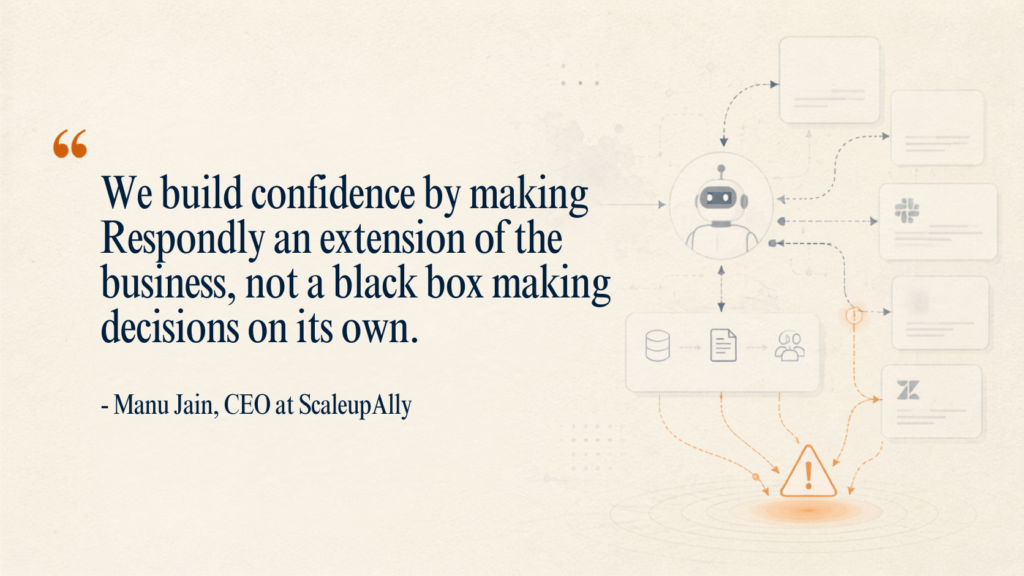
Businesses can review the conversations Respondly handles and update its information or rules when something changes. In practice, that means someone still needs to keep the information behind the AI up to date. Product details and prices need to stay current. Someone also has to decide which questions are routine and which need a person.
Respondly can retrieve an approved answer quickly, while the business remains responsible for the information it provides. The same balance appears in dealership conversations. Flai’s AI CRM for car dealerships can handle routine calls and appointments, while more complicated or upset-customer cases can still move to dealership staff.
Salespeople Start the Day With Buyers Who are Ready to Talk
Jain expects the biggest change to show up in how sales teams spend their time. “When a salesperson starts their day, they’re not starting with an inbox full of unanswered inquiries,” he said.
Instead, they can see what each buyer asked for and which questions Respondly has already answered. They can also see why the conversation was passed to them. Preserving that context matters when work moves between systems and people. MaxIQ is tackling a broader version of the same problem, bringing fragmented sales and customer workflows into one journey.
That leaves more time for work software cannot easily do. A salesperson can focus on a custom requirement or on agreeing terms with a large buyer.
The approach also fits where many smaller businesses are with AI today. A 2026 Vi Business study drawing on engagement with more than 250,000 MSMEs found that 57% saw AI as important to growth. A quarter had already started using it. For those businesses, Respondly offers one specific use for AI without requiring them to overhaul their entire sales process.
The First Reply is Becoming Part of the Sales System
For years, the first reply to an enquiry was treated as admin work. A salesperson got to it between calls, once more urgent work was done.
Respondly treats that reply as an early part of the sales process. The model combines a faster first response with rules around what the AI can tell buyers. That matters in industries where a single enquiry can lead to a large order.
Sales AI is now moving from drafting replies for salespeople to sending replies on their behalf. The approach depends on businesses setting clear limits around what their AI agent can say. Ultimately, the first reply becomes another part of the sales process, with the business deciding what AI can handle and when a salesperson needs to step in.