| TL;DR: A bank’s automated reminder can ignore what a customer agreed to during a support call. MHC NorthStar brings communications from different systems into one place, helping banks link messages to customer actions. Shawn Phillips sees AI helping teams spot missing or outdated information, while people remain responsible for the final decisions. The goal is for each message to reflect the customer’s situation and make the next step clear. |
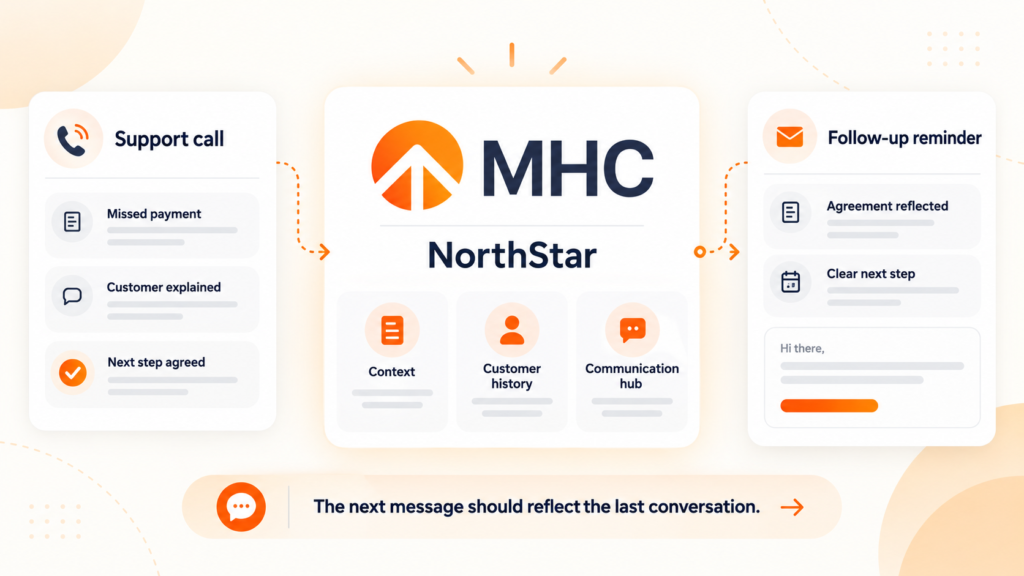
A customer calls their bank about a missed payment. They explain the situation and agree on what to do next. The following morning, an automated reminder arrives. It says nothing about that conversation.
The balance and the due date may be correct. However, the customer is left wondering whether the agreement they made before still stands.
Banks have spent years making these messages faster and easier to send. A reminder can reach thousands of customers without anyone preparing it by hand. Knowing what happened before that reminder was sent is a different task.
That is where MHC sees a gap, and it is what NorthStar, its customer communications platform, is designed to address. At FinovateFall, Shawn Phillips, MHC’s Enablement and Product Evangelist, saw the conversation shifting from AI-generated content to what happens around that content.
The missed-payment reminder is exactly that kind of coordination problem. For banks, it points to a wider question: how can messages from different systems reflect what is happening with the customer?
A Support Call Should Help Shape the Next Message
Banking messages have long run on a calendar. A payment reminder goes out because a due date is near, regardless of what the customer told the bank the day before.
Scheduled messages still have their place, since statements need to arrive on time. The trouble starts when the calendar is the only thing deciding what goes out.
Phillips argues that banks need to look beyond calendar-based messages and pay more attention to what happens between them. A support interaction can be one of those events. It can provide context that a due date alone cannot. And that context can matter when the next message goes out. He says:
In the missed-payment example, the customer agreed on a next step during the call. A follow-up could confirm that step and explain what happens afterward. A routine reminder, sent as if that call never happened, leaves the customer wondering which message to follow.
Phillips says this also changes how banks should judge their communications. Checking that each message was generated and delivered is no longer enough. Banks also need to ask whether the whole sequence makes sense to the person receiving it.
That continuity matters during support too. Inbenta is working on keeping the customer’s context intact when someone moves from self-service to a live agent, so getting more help does not mean starting the journey again.
One Customer Conversation Can Span Several Systems
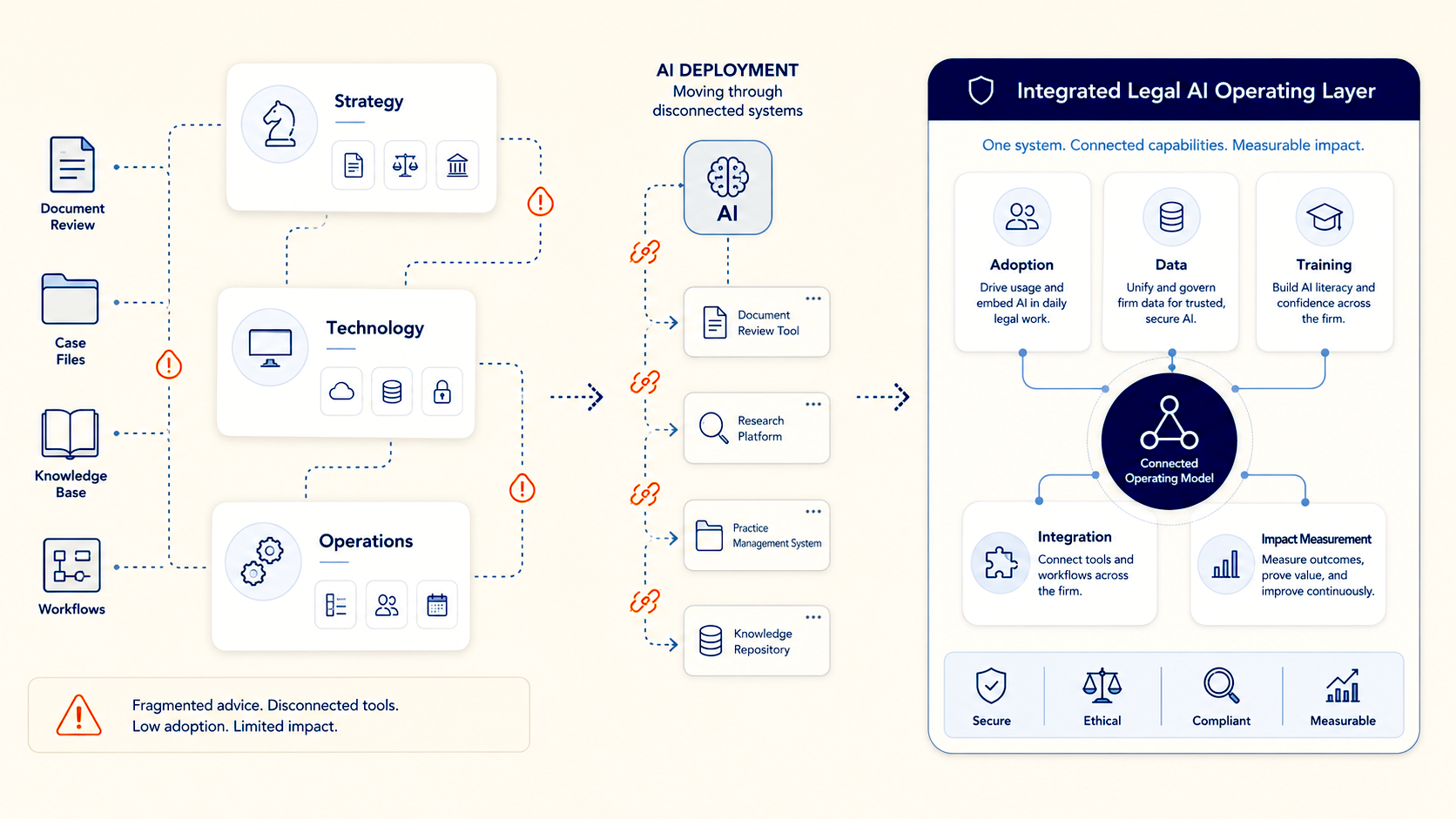
Behind a bank’s departments are systems that were rarely designed to work together.
The software that logs a support call is often separate from the software that manages a loan. Both hold details that should shape what the customer hears. Yet each may send messages on its own, unaware of what the other has said.
And this is where things get complicated. These systems also change at different speeds. A bank might replace one platform this year and keep another for a decade, so replacing everything at once is rarely realistic. After all, a bank cannot simply rip out every system whenever one part of its technology stack changes. As Phillips puts it:
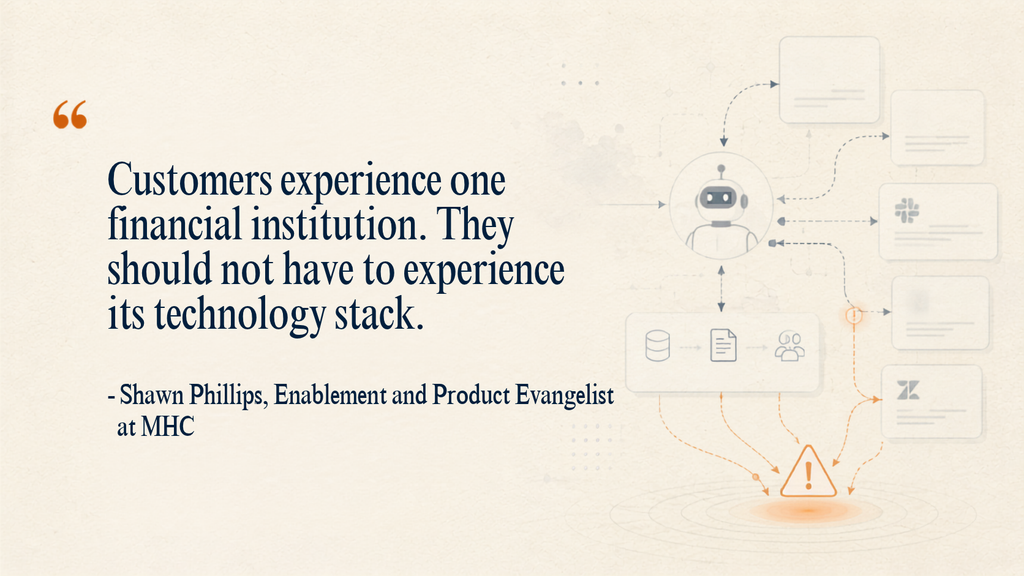
MHC’s answer is to bring those systems together through a single hub. With MCH NorthStar, a bank can manage customer messages in one place, regardless of which system they start in. So, when one platform gets swapped out, the bank doesn’t have to rebuild how it talks to customers.
A Madison Advisors AI-augmented CCM market study describes the mechanics behind that approach. NorthStar connects with existing business software and manages steps such as routing documents for approval. The study also describes customer inputs triggering new documents.
In practice, that means a customer action can trigger the next communication. When a customer provides information, for example, it can start the next step through the bank’s existing systems.
Event-triggered communication is also appearing outside banking. PostcardMania’s SmartTouch can turn events such as an unanswered proposal or stalled deal into an individual follow-up mailing.
MHC is Taking the Same Approach into Lending
MHC’s May 2026 partnership with Odessa shows what this looks like in lending.
Odessa makes software for asset finance, including loan and lease servicing. Through the partnership, Odessa’s clients can build MHC NorthStar communications directly into their lending and servicing workflows.
For an equipment lender, the relationship with a borrower runs long after the financing is approved. And the communication doesn’t stop there, either. Every servicing notice depends on details held in the system that manages the agreement. When a regulation or product changes, the wording the borrower sees may need to change too.
According to the announcement, business users can quickly update disclosures and notices when those changes come in. The partnership is also aimed at delivering orchestrated journeys and reducing the manual work of keeping lending communications current.
The idea is to make sure the information in the lending system carries through to the communication the borrower receives.
AI’s Bigger Task May Be Figuring out What to Say
As more communications come together, the people managing them face another question. Have they covered everything the customer needs to know?
Phillips uses the example of a financial institution launching a product. There may be dozens of communications across the customer’s journey. Producing each one quickly still leaves someone to check whether all those messages make sense together.
The harder question, he adds, is: “What should we be communicating in the first place?”
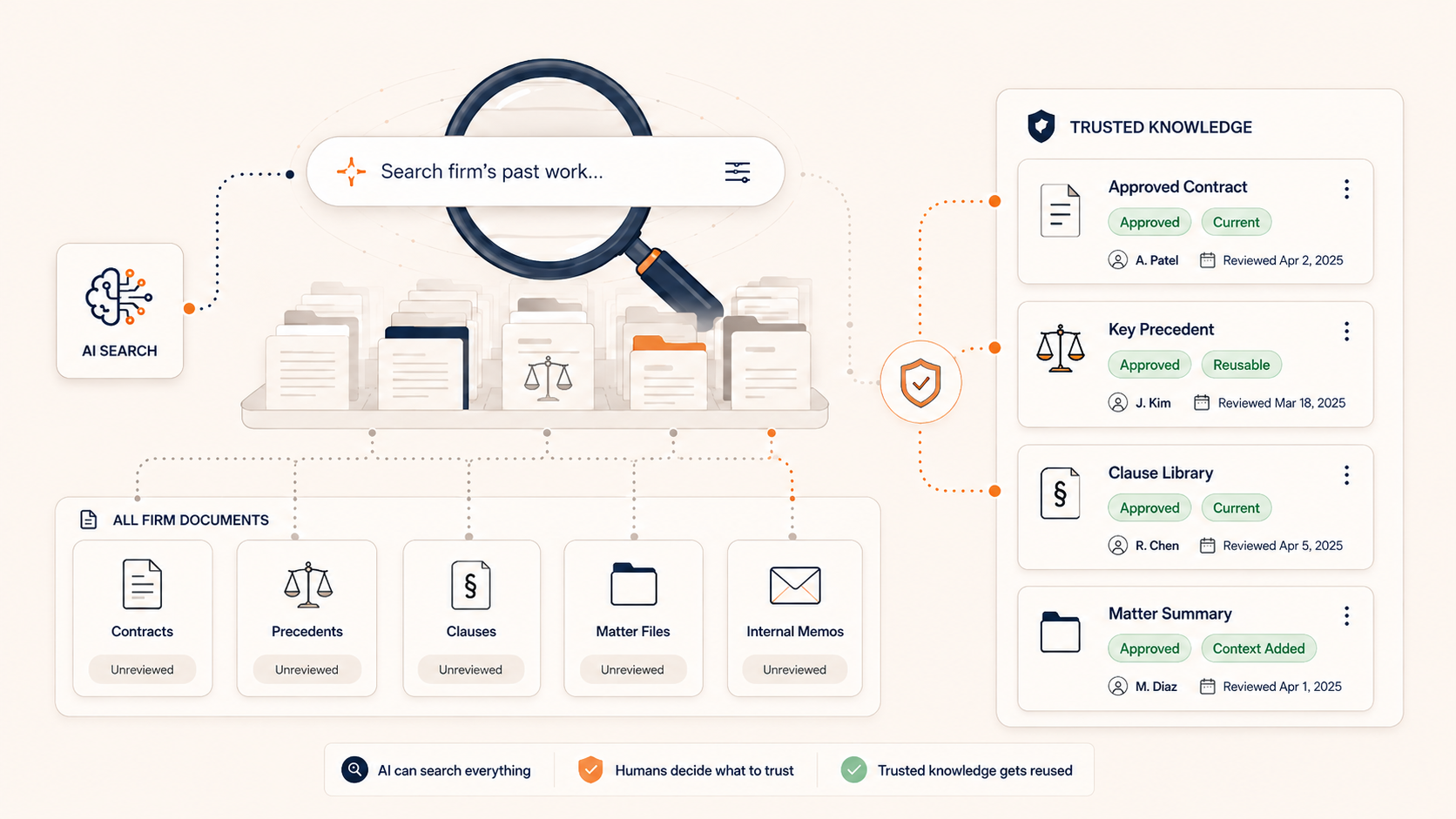
He sees AI helping business users identify missing explanations and find content that has become outdated. It could also help them examine whether different messages repeat or contradict one another.
Some of the groundwork is already visible in document management. The Madison Advisors study describes AI Assist examining older document libraries and consolidating similar documents into a single template. Its content tools also help users refine wording.
Phillips sees the bigger opportunity elsewhere. AI could help business users see what customers have already received, spot gaps, and decide what still needs attention.
That does not mean handing the whole process over to AI. However, he still puts people in control, as communications must pass through the institution’s approval and regulatory checks. AI could help business users review the work and make changes, while those controls stay in place.
That use of customer context to shape what happens next is also appearing in AI email marketing tools, where behavior and previous interactions can influence the message, timing, or channel used.
The Next Message Has to Move the Conversation Forward
Phillips’s argument points to a broader test for communications software: does each message reflect what has already happened with the customer? That is the problem NorthStar is designed to address.
For the customer who called about a payment, the result should be simple. Tomorrow’s message should help them follow through on yesterday’s agreement, without another call to find out whether the bank remembers it.