| TL;DR: Companies often renew smaller software contracts without checking price increases or unused licenses because purchasing teams lack time. Vertice’s Ana negotiates these purchases and renewals using the customer’s software usage, vendor history, and pricing data from other deals. Buyers choose what they want to achieve and whether to review each exchange or let Ana negotiate independently. This could help businesses question more renewal offers before committing to another year, while considering contract length, future needs, and relationships with their vendors. |
A software contract comes up for renewal. The business still needs the product, so another year of spending gets signed off.
However, keeping the product does not necessarily mean keeping the same bill. Prices can rise when a vendor repackages its plans. Licenses bought during a hiring push can sit unused long after hiring slows. Checking those details takes time, and a company with hundreds of applications rarely has enough of it.
Vertice believes companies would review more renewals if negotiating them took less time. On September 8, the procurement software company launched Ana, an AI negotiation agent that plans each negotiation and handles the back-and-forth with vendors.
The launch raises a question: how much software spending goes unchecked simply because buyers lack the time to negotiate?
The Same Software Can Come with a Bigger Bill
Software cost increases aren’t limited to Vertice’s customers. Zylo’s 2026 SaaS Management Index found average annual SaaS spending among organizations in its dataset rose 8% to $55.7 million. Yet the average portfolio stayed flat at 305 applications.
For businesses using SaaS procurement software, this raises a question: why are bills climbing when the number of applications hasn’t changed?
Zylo, a SaaS management platform, links part of the rise to vendors changing how they bundle their products. Its report also found that 78% of IT leaders faced unexpected charges tied to AI features or usage-based pricing.
AI usage can make those costs especially difficult to trace. WitnessAI’s AI cost management tools connect AI spending to the employees, agents, and tasks driving it, rather than leaving companies with only the final bill.
For buyers, this means last year’s contract can no longer tell them what the next renewal will cost.
Microsoft offers a concrete example. Its higher Microsoft 365 business prices took effect July 1, and existing customers move to them at their next renewal. Microsoft ties the increase to added features, including Copilot Chat and extra security tools.
Buyers must now decide which added features they need and how many employees will use them.
Procurement Teams Cannot Reach Every Contract
Procurement teams handle more than software renewals, and their workloads are growing.
The Hackett Group’s 2026 research expects procurement workloads to rise 8% this year, even as headcount and operating budgets shrink. With fewer people to handle more work, procurement staff must prioritize certain purchases over others.
Procurement staff tends to prioritize large or strategic contracts. A smaller renewal rarely gets the same attention; negotiating it takes hours of research and emails.
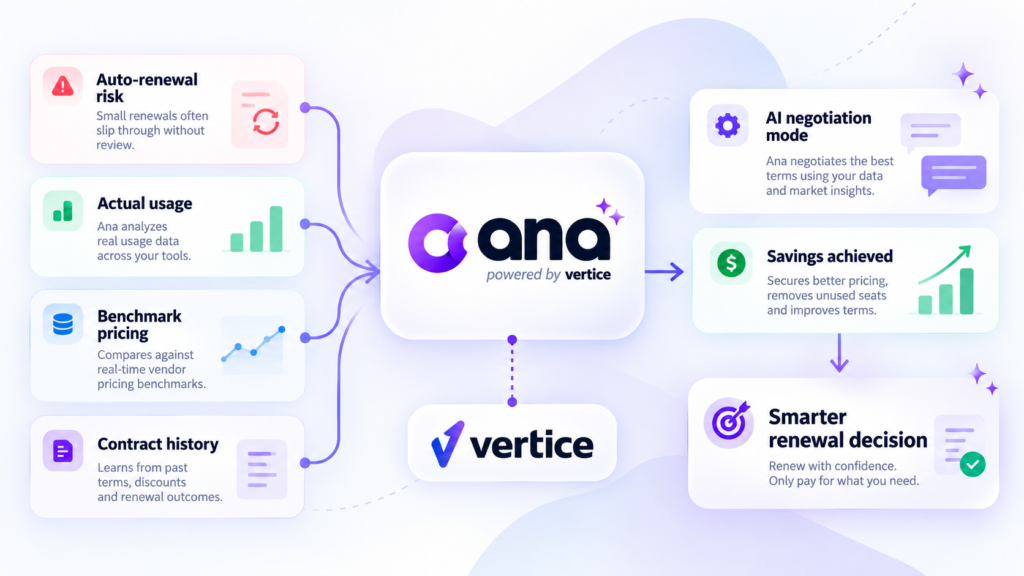
Vertice says one in seven software contracts renews automatically without oversight. For smaller purchases, which it calls tail spend, that figure rises to three in four.
A single tail-spend contract may be too small to stand out on its own. Together, though, those contracts add up to a substantial bill.
Vertice designed Ana with that tail spend in mind.
Ana Answers Vendor Pushback with the Customer’s Own Data
Vertice already manages purchase requests and tracks contracts. Its procurement specialists also negotiate with vendors on customers’ behalf. Ana automates parts of that process, allowing Vertice to negotiate more renewals at once. This approach to software contract negotiation gives Vertice a way to extend its reach beyond the deals its specialists can handle individually.
Customers tell Ana what matters most, such as price or contract length, and share their history with the vendor. Ana uses that information and Vertice’s pricing data to plan its approach and respond to the vendor’s offers.
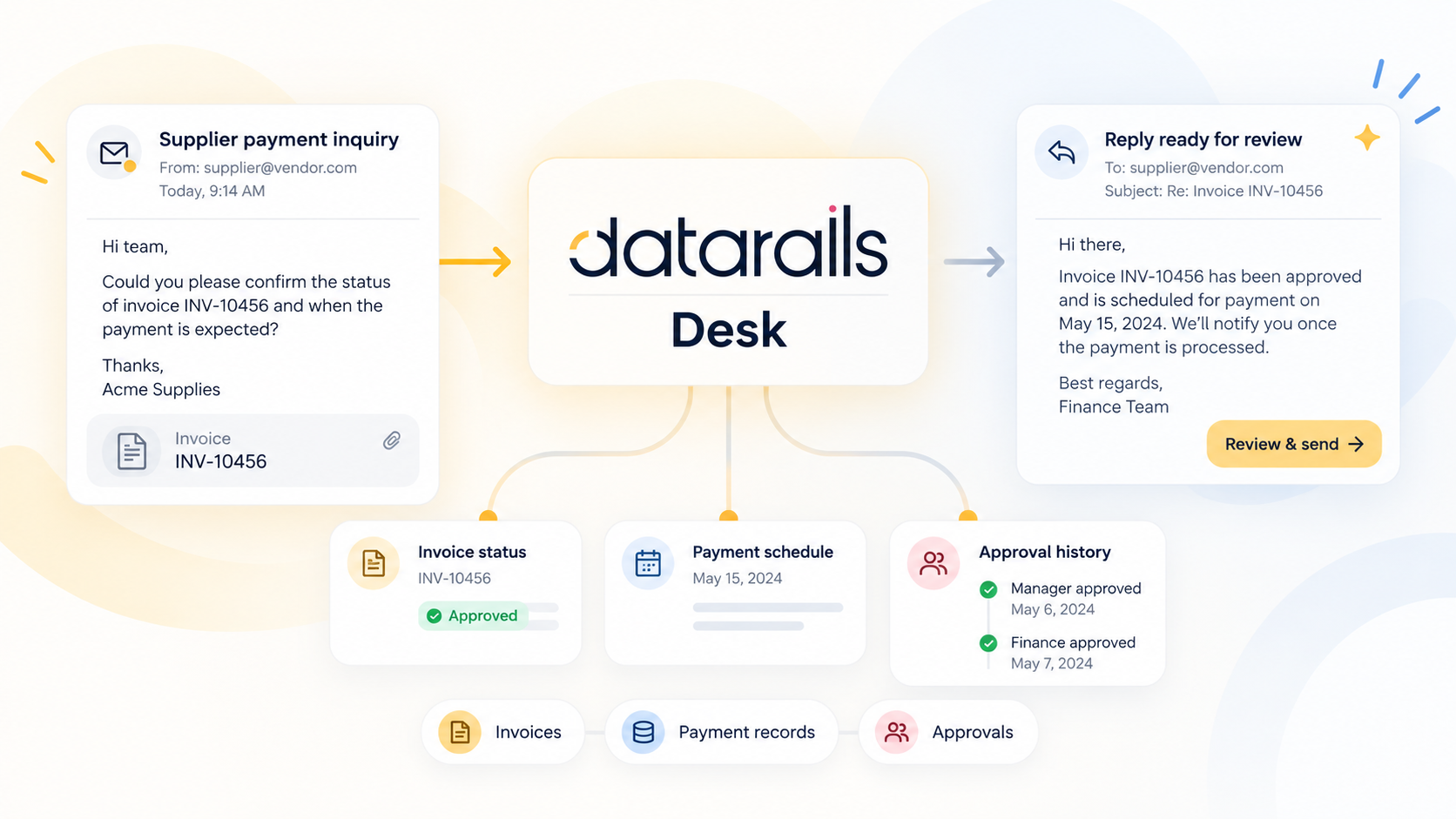
A similar pattern is appearing in finance conversations. Datarails Desk uses invoice and payment records to prepare replies to suppliers and other requesters, while an employee reviews the response before it goes out.
Vertice says Ana has completed more than 4,000 negotiations covering $500 million in spending. On average, it has saved customers 18% and cut renewal cycles by 15 days.
In one case Vertice shared, a vendor asked for 20% more licenses at renewal. Ana pushed back with usage data showing the customer was using the software less, not more. According to Vertice, the deal closed 11.8% below what the customer paid the year before.
The vendor wanted a bigger commitment. The customer’s own data made the case for a smaller one.
A Discount is Only Part of a Good Agreement
AI agents are beginning to handle more supplier negotiations, where price is only one part of the deal. Pactum’s June product update, for example, describes agents bargaining over delivery lead times as well as unit prices.
Ana focuses on software purchases. Vertice says it draws on data from more than 250,000 negotiated contracts and two million price points across over 32,000 software vendors. For SaaS contract negotiation, this pricing data gives buyers a reference point when assessing a vendor’s offer.
The thing is, customers don’t just need a lower price. They need a deal that reflects how they actually use the software.
Knowing the going rate helps, but it doesn’t settle what a good deal looks like. A lower price can come with a longer commitment. Fewer licenses can cut spending but leave less room to grow.
So buyers must weigh those savings against what they’re committing to and how easily they can change course later.
After each exchange, Ana updates its forecast of the likely outcome and records its reasoning in a searchable audit trail. Buyers can use that record to see how the negotiation developed and what trade-offs shaped the agreement.
Buyers Set the Tone and the Limits
How buyers negotiate can also affect their relationships with suppliers.
“Great procurement isn’t as simple as squeezing the other side,” Vertice founder and CEO Eldar Tuvey said in the launch announcement. Ana’s adjustable tone lets buyers take a softer or firmer line depending on the purchase.
The way an agent negotiates may affect the outcome. A preprint examining more than 180,000 AI-to-AI negotiations found that warmth was associated with stronger outcomes across its key measures. The negotiations came from a research competition, not live software renewals. Still, the findings don’t establish how AI agents perform in live procurement, but it raises a question worth testing: does an agent’s tone affect the terms it secures?
At the same time, giving an agent more freedom to negotiate also means deciding which decisions it can make without approval. An AI agent may be cleared to discuss a discount without being cleared to accept a longer contract.
Other AI systems are drawing that boundary according to the consequence of the decision. Attain IP’s CEO Tim Barker describes giving AI more autonomy when an action is easy to verify and reverse, and tightening oversight as the stakes rise.
Researchers at MIT’s Center for Transportation and Logistics describe companies allowing AI to negotiate within defined limits while reserving critical decisions for human approval.
Ana’s copilot and autonomous modes let buyers decide how closely they review each negotiation. It can also hold vendors to the customer’s internal policies. According to Vertice, it enforced one such data protection policy on a new vendor. The vendor had to provide evidence of its SOC 2 Type II certification and identify the other companies that would handle the customer’s data.
Small Renewals Get a Negotiator Too
What Vertice offers with Ana is coverage. Renewals once too small to justify the effort of negotiating no longer have to go through untouched.
Buyers can check whether a proposed increase reflects their actual usage and what comparable customers pay. Vendors, in turn, can expect to justify those increases more clearly.
Gartner predicts that 90% of B2B buying will be intermediated by AI agents by 2028. As that shift arrives, more renewal quotes will meet an AI agent’s questions instead of a quick sign-off.