| TL;DR: A small business owner may ask AI tools which bills to pay before payroll, but the answer depends on how much cash is in the bank. Paywhere connects banks and credit unions to AI tools like Claude so customers can check balances and prepare payments in the same chat. Before any money goes out, an authorized person approves the payment on the bank or credit union’s own page. |
Small business owners have started taking their money questions to AI assistants. Some sound simple, like whether they can make payroll on Friday. But the answer depends on the cash in the account and the bills due before then. If a customer pays late, an owner may have to push back a supplier payment to cover it.
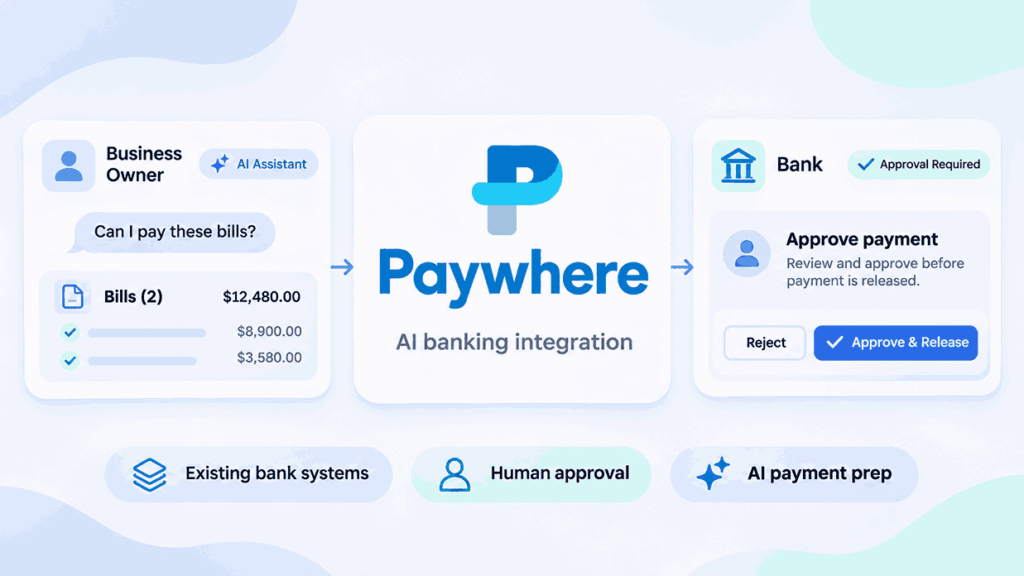
An AI assistant like Claude can work through that math, but the money itself still sits with the bank. Paywhere bridges the two with AI banking integration for banks and credit unions.
It connects an institution’s existing systems to the AI assistants its customers already use. That lets an owner check balances and prepare a payment without leaving the chat. The final approval still happens on the institution’s own page. However, by the time a payment reaches that page, the customer has already decided who to pay, how much, and when.
The Books are Already Moving into the Chat
Half of the employer firms surveyed in the Federal Reserve Banks’ 2025 Small Business Credit Survey reported uneven cash flow. For those businesses, questions about payroll and late-paying customers can come up week after week.
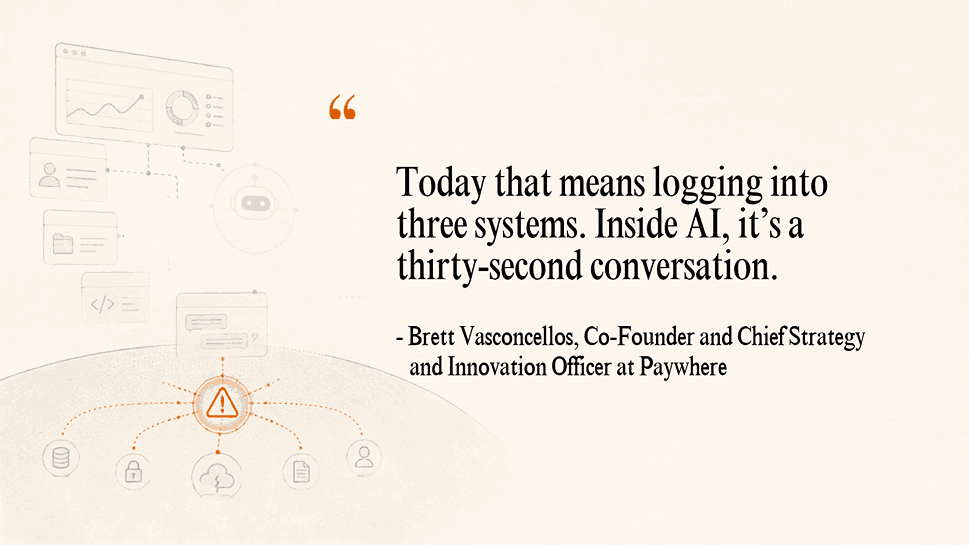
As Brett Vasconcellos, Paywhere’s co-founder and Chief Strategy and Innovation Officer, told SaaSTake, those questions need both the books and the bank:
You can see how some of that work can happen in one place with Claude for Small Business. Its payroll planning workflow compares QuickBooks figures with incoming PayPal settlements. Claude can use that information to forecast cash and prepare reminders for overdue invoices. ChatGPT offers something similar through its QuickBooks integration, which shows owners what customers owe them and what they owe suppliers.
Once an owner knows how much cash is available, they can decide which bills to pay. That’s where Ramp’s integration with Claude and ChatGPT comes in. It lets users look up bills and vendors from the chat. They can also handle certain approvals, within the permissions their business assigned them in Ramp. That lets fintechs handle payment-related activities before the owner even opens the bank’s portal.
How Paywhere Handles AI Bill Payment with Human Approval
Paywhere showed what happens when the bank joins that conversation. At FinovateFall, it demonstrated its AI Banking Storefront with a small business payment run.
The customer checked balances in Claude, then asked it to pay bills. Claude prepared three payments totaling $10,900. The batch included a wire and two ACH payments, a common type of electronic bank transfer. To approve them, the customer left the chat for the financial institution’s confirmation page. Less than two weeks later, on September 23, Paywhere made the platform commercially available to banks and credit unions.
The assistant prepares the payments, but the institution still enforces the customer’s existing transaction limits. As Vasconcellos explained, those limits carry over to the AI assistant:
“An agent should never have more authority than the person who connected it. If a bookkeeper can approve payments up to $10,000, their AI assistant shouldn’t be able to push through a $50,000 wire.”
Beyond those existing limits, Paywhere also lets the institution set lower limits for payments an AI agent starts on its own, without a person watching. Vasconcellos sees outbound payments as the point where an AI agent’s misunderstanding or a convincing fraud attempt can do real damage. Paying a new vendor is one of those moments. On the institution’s approval page, a person can check the recipient and amount before the money leaves.
The need for that kind of oversight also comes up in fraud prevention. Feedzai’s Farol AI Agent addresses a related problem on the fraud side, helping financial institutions investigate suspicious activity while keeping human reviewers involved.
The Account Can Stay Open While the Business Moves Elsewhere
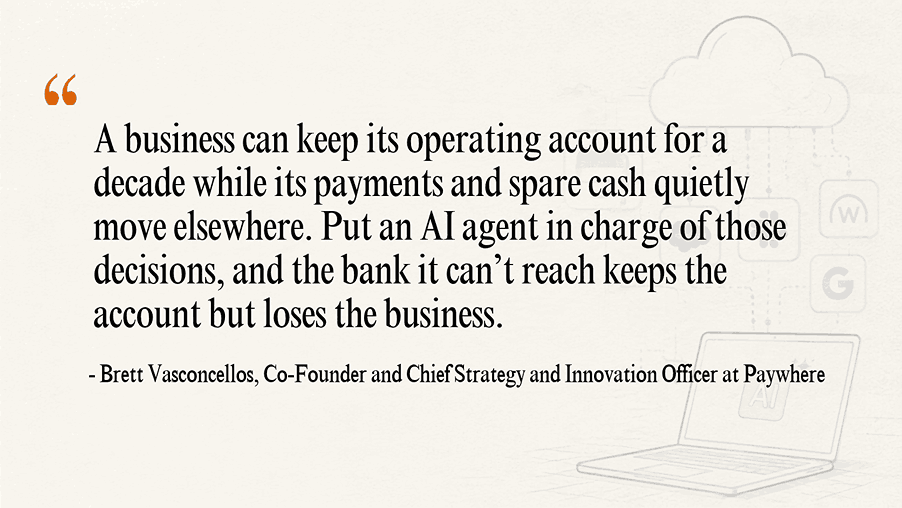
This payment handoff also shows why banks need to be involved before customers reach the payment stage. For Vasconcellos, banks risk losing payment activity to fintechs when customers decide whom to pay and when through other platforms. As he puts it:
There’s a precedent for this shift. Cornerstone Advisors’ 2025 research recap estimated that more than $3 trillion in deposits had flowed into fintech-led investment platforms in recent years. Vasconcellos argues that fintechs gained ground by showing up where customers already spent time.
The same pattern could play out with AI. So far, he says, some banks block outside AI agents, while fintechs plug into AI on their own terms. SEON is taking a similar embedded approach to fraud prevention, bringing risk checks into the systems and AI tools businesses already use.
In his view, customers have already picked their assistant. An AI banking channel for banks and credit unions should let them bring it to the bank they already trust.
There’s another reason banks may want to be part of these conversations. An AI banking channel also gives banks insight into why customers perform certain financial activities. A balance check in a portal tells the bank what the customer did. A request in Claude can also tell the bank why. The owner might be checking the balance because they’re deciding whether to hire two technicians and buy a $15,000 truck. Or they might want to know whether a supplier payment can wait. Vasconcellos says Paywhere has built patent-pending technology to identify that purpose.
The Payments Industry is Getting Ready for AI Agents
Banks aren’t the only ones preparing for this shift. The card networks are already preparing for AI agents that spend money. In April 2025, Mastercard announced Agent Pay and Visa introduced Intelligent Commerce. Both are designed to let verified AI agents make card purchases on a customer’s behalf.
Banks and credit unions weighing AI assistant integration with their core banking systems also need ways to verify that transactions originate from authorized AI agents. They have to know a request came from the customer’s AI agent and not from someone posing as one. The patent-pending work Vasconcellos described covers fraud as well as intent. According to Paywhere, the platform reads the signals that separate a real agent from a fake one. Activity that crosses a risk threshold gets flagged to the bank.
For the owner, all of that happens out of sight. They still have to decide what gets paid before Friday. If that decision starts in an AI assistant, Paywhere is betting the bank can be part of the conversation before it’s made.