| TL;DR: Lawyers preparing a business dispute need more than examples of similar cases. They need to understand why those cases were decided that way and whether the reasoning supports their argument. Jus Mundi is expanding Jus AI to help with that analysis and bring specialist research into drafting tools. It also wants firms to draw on their past submissions when preparing new cases, while lawyers remain responsible for the arguments they make. |
Imagine a contractor finishes a project, only for the client to refuse payment because the work ran late. The contractor argues the delay started when the client changed the plans. With neither side backing down, they take the dispute to arbitration, where an independent panel decides it outside court.
Digging through earlier arbitration decisions, the contractor’s lawyer finds an earlier decision involving a similar delay. The earlier panel sided with the contractor, which looks promising. However, what actually persuaded it, and would the same reasoning hold up here?
Jus Mundi built its business around helping lawyers find decisions like this one. With Jus AI, its AI research assistant, it now wants to help answer that question too, bringing arbitration research AI into the process. It can explain what those decisions say and show the sources behind the answer. Whether that analysis earns a place in the argument depends on more than getting the citation right.
Getting Arbitration Rulings to Lawyers Takes More Than Search
Before any analysis can happen, a lawyer needs the earlier decision in hand. The thing is, in arbitration, that is not a given, since past rulings don’t always reach the next lawyer who needs them.
The International Chamber of Commerce’s 2021 publication agreement with Jus Mundi shows how that access gets built. Under it, parties can object to publication, and the ICC reviews each document before release.
Those checks let approved decisions become searchable without publishing material the parties have asked the ICC to keep private. They also show why building an arbitration database requires access to the institutions that hold those decisions, not just good search technology.
Rida Ahmed, Jus Mundi’s marketing manager, told SaaSTake that wider access is central to the company’s ambition. The goal, she said, is a field where “depth of insight is determined by expertise, not team size or budget.”
However, the company now wants to do more than help lawyers find those documents. Ahmed said it’s now focused on helping lawyers understand those materials alongside the rules and legal issues involved in a dispute.
Lawyers Can Now Ask Questions Across ICC’s Library
In January 2026, ICC announced that lawyers could research its Dispute Resolution Library through Jus AI. Practitioners who subscribe to both services can tell the tool to work only with ICC publications, such as its guides and reports.
The move builds on the partnership that began with ICC award publication in 2021. Instead of just finding a publication, a lawyer can now ask a question across those sources and check what the answer cites.
Lawyers clearly want that kind of help with preparation. A major 2025 arbitration survey by Queen Mary University of London and White & Case drew 2,402 responses. Of those surveyed, 54% named time savings as a reason to use AI more, with cost reduction at 44%. So, those numbers help explain why lawyers are turning to tools that can handle some of the research behind a case.
For Jus Mundi, that also makes its collection more useful as lawyers rely on it for more of their research.
Arbitration Research is Moving into the Tools Lawyers Already Use
Preparing a case usually means moving back and forth between research and a working draft. In practice, Jus Mundi’s integrations aim to bring its research into the tools where that drafting happens.
Its July 2026 Claude connector is one example. Eligible subscribers can query Jus AI’s Light Mode from inside Claude and open the underlying sources. For more extensive research, the company’s own arbitration research platform is still the place to go. A March announcement with Legora pointed in the same direction. That integration was planned for later in the year.
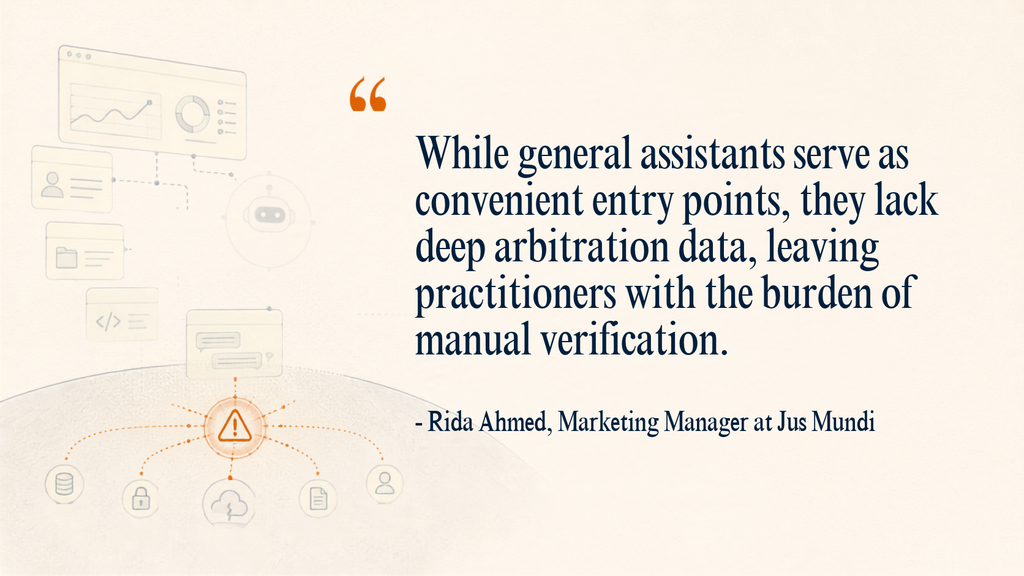
Claude and Legora are broad tools that lawyers use for all kinds of work, not just arbitration. Ahmed sees that broad reach as both their strength and their weakness. According to her:
That is where Jus Mundi’s integrations come in. They let lawyers access its arbitration research from the broader tools they already use.
The company isn’t alone in this. In August 2026, Thomson Reuters announced a new CoCounsel Legal experience that brings research and drafting together in one place. It also expanded access through Claude.
Taken together, these moves point to a bigger role for legal research providers after lawyers find the relevant sources, right through the drafting process.
The Source Still Has to Support the Argument
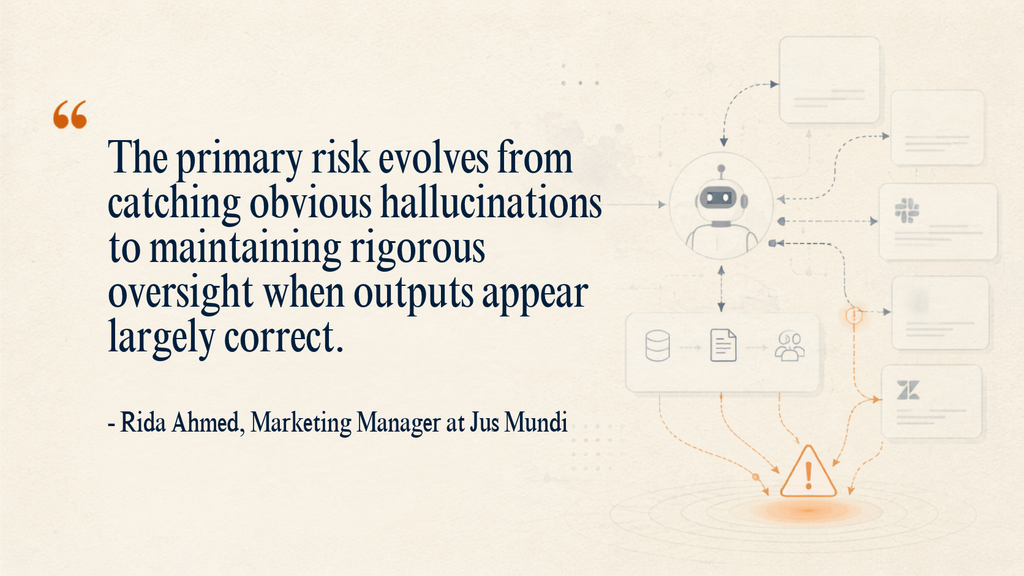
As AI research tools improve, Ahmed expects lawyers to spend less time checking for obvious errors and more time scrutinizing answers that appear correct. She says:
Independent research backs up that concern. A study published in the Journal of Empirical Legal Studies tested commercial AI legal research tools in 2024. Among the errors it found were real sources cited for claims they did not actually support.
That verification problem extends beyond legal research. Nuix is approaching legal AI around the same need to trace an AI-generated answer back to the evidence behind it, so reviewers can check whether the conclusion holds up against the underlying documents.
According to Ahmed, 52% of practitioners surveyed in a Jus Mundi study identified strategic judgment as an area where human value is growing.
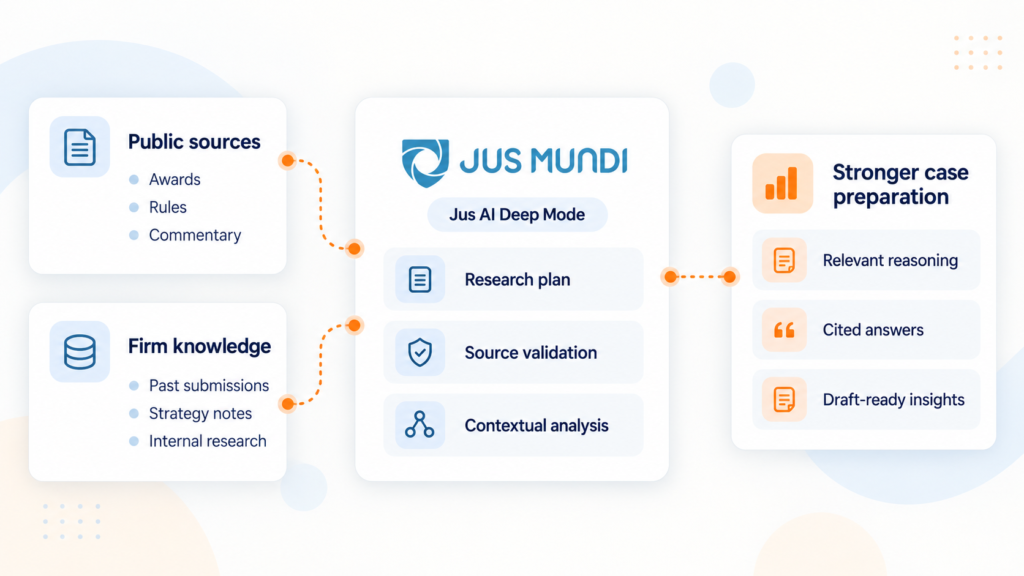
That leaves room for AI to help prepare the work lawyers judge. Ahmed said Jus Mundi’s Deep Mode starts with a research plan and validates sources as it goes. When a request is unclear, it asks the lawyer for clarification.
The aim, she said, is to produce work a senior lawyer can review and build on, rather than redo from scratch. That emphasis on reviewable AI output is showing up elsewhere in legal work too. Attain IP is designing its patent AI around giving professionals evidence they can check before relying on the result.
From the Arbitration Library to the Firm’s Own Files
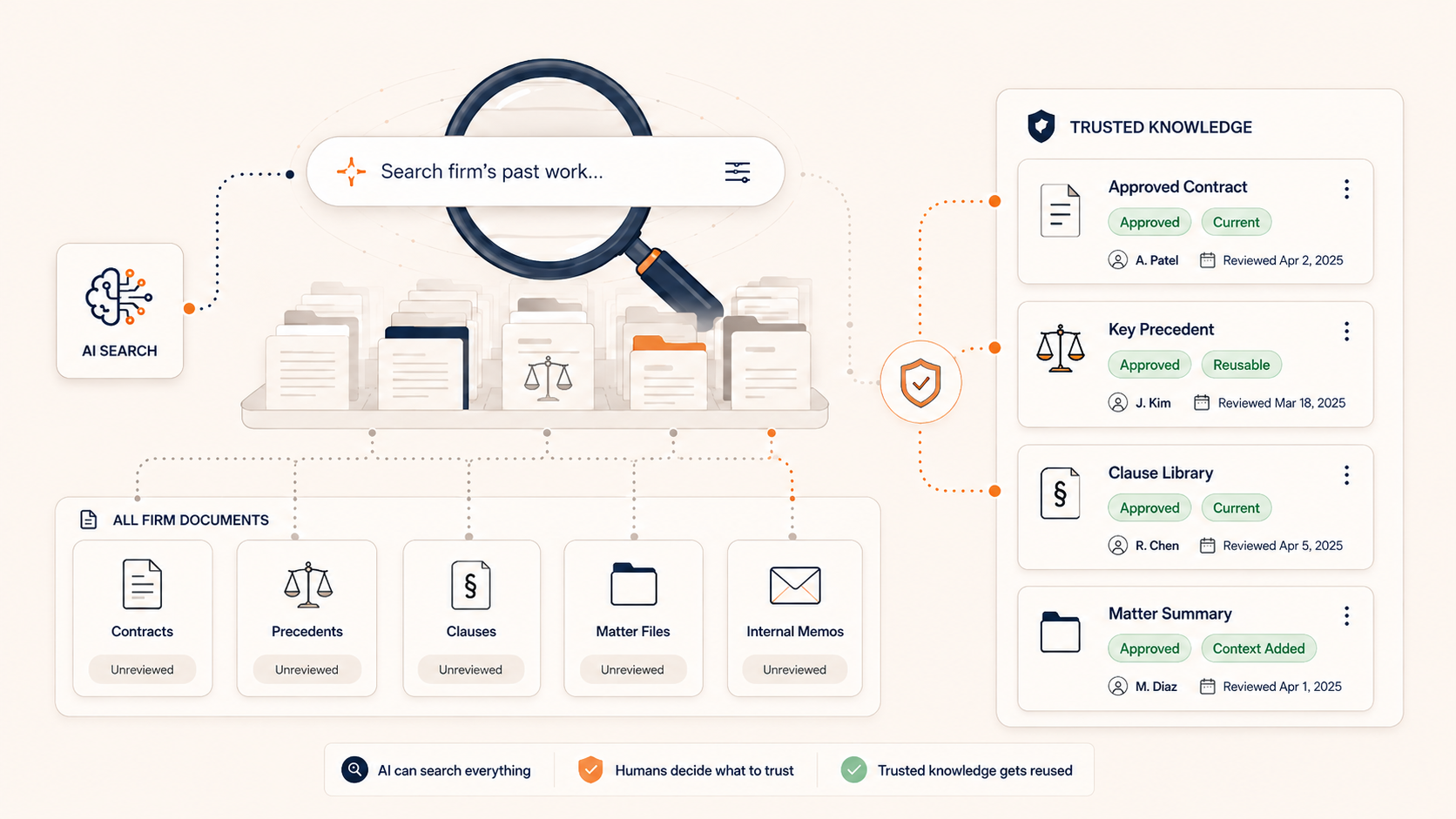
Jus Mundi’s next target sits inside the law firm itself. Ahmed pointed to past submissions and strategic notes that often stay locked in old folders or in one person’s memory.
The idea is simple: let lawyers start a new matter with that history already at hand. That moves it further from the library and closer to the case file.
For the contractor’s lawyer, that could mean opening the earlier decision alongside the firm’s own past arguments on similar delays. Jus Mundi wants to be more than a place lawyers look things up. Its goal is to become part of how a firm remembers.