
| TL;DR: When several marketing campaigns target the same prospect, marketers must decide which message goes first and what should wait. Phave uses AI to select and time messages for each person. It considers their activity and the colleagues involved in the purchase. Marketers set the goals, consent rules, and contact limits. The aim is to keep outreach relevant and coordinated without requiring teams to configure every possible campaign path in advance. |
Imagine a prospect who downloads a product guide and signs up for a webinar in the same week. The company now has follow-up emails lined up for both, plus a product email that was already scheduled for her. Each email makes sense on its own. However, receiving all three on the same day makes the company look like it has no idea what it’s already sent her.
Someone now has to decide which email takes priority and when the others should follow.
Marketo co-founder Jon Miller is tackling that problem with his new company, Phave. Its AI marketing automation platform for B2B lead nurturing is built to replace platforms like the one Miller helped create.
Traditional platforms follow rules that marketers configure in advance. Phave, instead, promises to decide which message each prospect should receive next, while staying within the limits set by the marketer. So, how does Phave decide what each prospect should receive next?
Campaign Rules Can’t Decide Which Email Comes First
Phave launched publicly in September 2026 after two years of building in private. Miller founded it with Nick Bonfiglio, who previously led product and engineering at Marketo. Having seen how these platforms work from the inside, both founders are now betting that B2B marketing automation needs a different approach.
In a rule-based platform, a marketer might set up a rule that sends an email whenever someone downloads a guide. That works until the prospect also registers for a webinar or shows interest in another product. Marketers then have to add more rules to decide which campaign takes priority or when someone should be excluded from one.
In the announcement, Miller said:
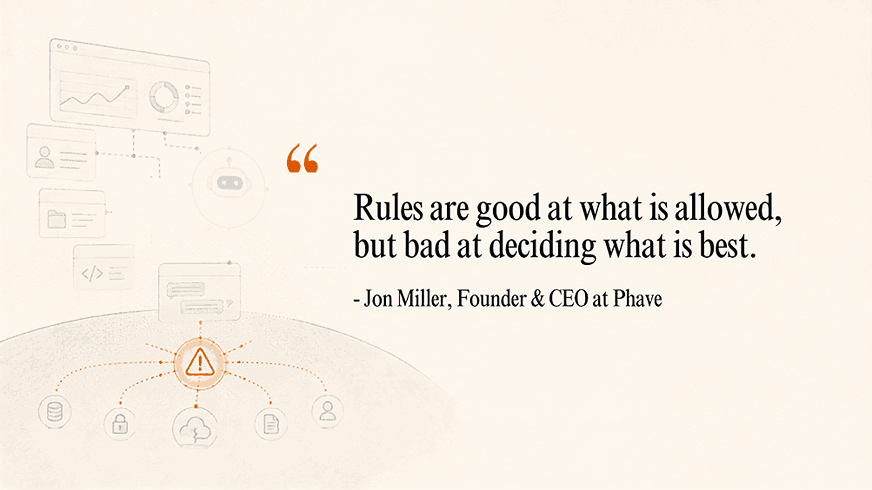
In his view, rules should still handle limits like consent and quiet hours. However, picking between two good emails, however, takes judgment that a rule can’t provide.
Getting that choice wrong costs more than extra setup work. In a Gartner survey of 632 B2B buyers, 73% said they actively avoid suppliers who send irrelevant outreach. After all, a poorly timed or irrelevant email could therefore put a potential customer off before a conversation even begins.
Maestro Builds A Separate Email Sequence for Each Prospect
Phave hands that judgment to an AI called Maestro. Rather than sending every prospect through the same campaign sequence, it builds what Phave calls a Playlist for each person. Each Playlist contains selected messages, arranged by order and timing.
The marketer sets a goal, such as booking a demo, and specifies how frequently the prospect can be contacted. Maestro reviews the approved campaigns and selects the messages it believes will bring the prospect closer to that goal. Phave uses a music analogy to explain the approach: marketers create campaigns like artists release albums, and Maestro mixes them into different playlists for individual prospects.
For example, Maestro might send the webinar reminder first because the event is only days away. The product email could wait until after she attends. A colleague checking whether the product fits the company’s systems might receive a technical guide instead. Both prospects receive emails from the same campaigns, but in a different order.
AI email platforms are also moving beyond copy. Our comparison of AI email marketing tools covers tools that can shape timing, audience, and the next step in a journey.
Personalization in AI lead nurturing software often stops at the wording, such as a subject line or a first name. Phave takes a different approach, adapting the entire sequence of messages each prospect receives. It also considers how their colleagues interact with the company’s campaigns.
Yet, access to AI hasn’t solved this for many marketers. Salesforce’s February 2026 research found that 75% of marketers had adopted AI, yet 84% admitted to running generic campaigns.
Every Campaign Gets Checked Before An Email Goes Out
Choosing the right email doesn’t help much if two other campaigns reach the same person that day.
Phave says Maestro coordinates nurture messages across campaigns before anything goes out. Its Air Traffic Control feature checks planned messages against frequency limits and quiet hours to prevent excessive or poorly timed emails. Meanwhile, marketers can also use a forward calendar to review upcoming messages for individual prospects or accounts.
When comparing B2B lead nurturing software, ask vendors to demonstrate what happens when one person qualifies for three campaigns. The demo should reveal which message goes first and what happens to the others.
Customer communication software faces a similar coordination problem. MHC NorthStar helps make sure the next message reflects what has already happened with the customer.
The challenge becomes even greater as accounts get bigger. Bruce Eidsvik, chief growth officer at Servion Global Solutions, has experienced this firsthand. Reaching the right people across an account with four global locations was nearly impossible using their traditional platform.
According to Eidsvik:
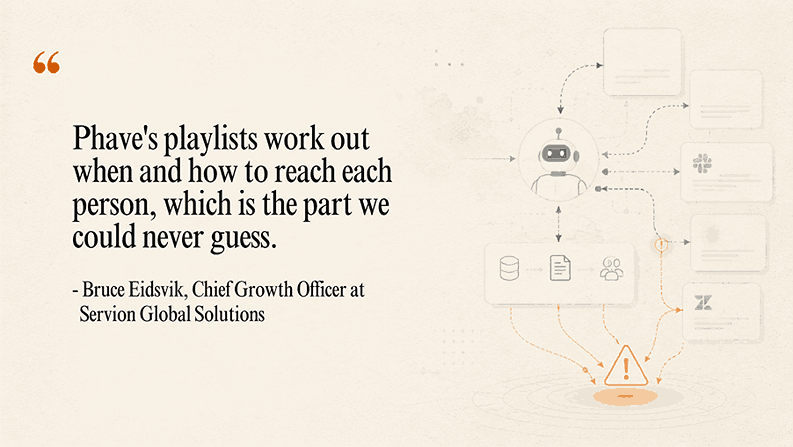
He added that Servion has more than doubled the amount of marketing it runs.
Every Prospect is Part of a Bigger Buying Group
Our prospect is unlikely to make this purchase alone. What their colleagues read, download, or ask about can offer just as much insight into the potential deal.
In B2B purchases, the people involved in evaluating and approving a product are often referred to as a buying group. Forrester’s analysis of its Buyers’ Journey Survey puts the average number of people involved at 13. Each of them can have different responsibilities and different reasons to support or question the purchase. An IT lead may want security details, while a finance leader wants to understand costs. So, sending both the same emails may leave one or both without the information they need to evaluate the product.
If five people at one company start opening emails and visiting the website, it could mean one purchase or several unrelated projects. Effective buying group marketing software needs to distinguish between these situations before treating all the activity as part of one potential deal.
Phave tracks each buying group as its own record, with a separate score and stage in the buying journey. It identifies group members by matching their roles to the buying committee defined by the marketer. It can then show which decision-making roles are yet to be represented.”
A single company can have several groups at once. One group might represent an existing customer considering an additional purchase, while another is still evaluating the product for the first time. Phave says Maestro also selects messages based on where each buying group stands, rather than treating every prospect’s activity in isolation.
Marketers Still Decide What the AI is Allowed to Do
Phave’s AI also handles some of the work involved in setting up campaigns. Marketers can create campaigns and audiences by describing them in plain language instead of building them by hand. They can do this inside Phave or through an AI assistant they already use, such as Claude or ChatGPT. Based on the brief, Maestro can draft the emails and schedule when they should be sent.
However, creating the email is only part of the process. Marketers still need to decide who can receive it and under what conditions.
Phave leaves these decisions to marketing operations, which defines consent requirements and contact limits for Maestro to follow. These are the kinds of decisions Miller believes should remain governed by fixed rules. At the same time, Maestro also follows individual user permissions, restricting its actions to what each person is authorized to do.
Maestro also reviews campaign performance each night and identifies prospects who may need more relevant content to move closer to the campaign goal. It can then create campaigns to address those content gaps.
The more decisions marketers hand to AI, the more important it becomes to understand what the software can do without their approval. Buyers should ask which of the AI’s actions need approval and how to stop one that goes wrong.
Marketo Users Now Have Two Paths to AI Nurturing
Marketers looking for a Marketo alternative for B2B lead nurturing now have another option to consider. They can also stay on Marketo and add AI capabilities through Adobe’s new offering. Adobe, which has owned Marketo since 2018, launched Marketo Optimizer five days after Phave to personalize each buyer’s next step. However, its documentation still lists account-level and buying group context as planned additions to the feature.
Phave’s annual plans start at $36,000. Pricing depends on the number of people receiving messages each month, rather than the size of the contact database. All plans include coordination across campaigns. The optional Maestro Playlists add-on also sends messages during periods when a prospect isn’t already part of an active campaign. Phave compares campaign coordination to adaptive cruise control and Maestro Playlists to self-driving.
Moving from Marketo doesn’t require customers to rebuild their marketing operations from scratch. Every customer gets an engineer for the migration, which Phave says takes 4 to 12 weeks from Marketo. The old platform keeps running until launch day.
During a demo, buyers evaluating AI marketing automation software for B2B lead nurturing should ask to see two Playlists side by side. Our prospect’s sequence next to a colleague’s shows how Phave adapts to each person.
Ultimately, Phave is built on a simple conviction: marketers should be able to set the goal without scripting every step toward it. For our prospect, that means receiving a coordinated sequence instead of three emails in one day. For marketers, it means spending less time configuring individual campaign paths and more time reviewing the decisions the software makes.