
| TL;DR: Finding a defect on a battery production line is often quicker than figuring out what caused it. Engineers may spend hours comparing machine readings, material batches, and production logs. Niobia’s battery manufacturing analytics software brings those records together and, when the evidence is inconclusive, suggests what to test next. Buyers can use a recurring defect to see whether the software helps engineers confirm the cause and verify a fix faster. |
A camera catches a streak on a roll of battery foil, and the engineer has to make a call before anyone knows what caused it. Which rolls should be set aside? Can the coating line keep running? The streak showed up at the coater, though the problem might have started earlier, when the material was mixed.
Global lithium-ion battery manufacturing capacity grew roughly 30% in 2025, according to the International Energy Agency. Yet installed capacity doesn’t guarantee that factories can reach their intended output. The agency notes that most facilities can take more than five years to approach their designed output. Calls like this one come up again and again during that climb.
Niobia, a Startup Battlefield finalist, is developing AI software that helps engineers investigate production failures across battery manufacturing processes. In a demo of battery manufacturing analytics software, the most revealing moment may come when the records point to no obvious cause.
Detecting a Defect isn’t the Same as Explaining It
On the coating line, the camera did what it was designed to do and flagged the streak as soon as it appeared. However, identifying the flaw doesn’t tell the engineer what caused it or where in the process it originated.
Battery electrode coating defect detection systems, like that camera, flag a flaw as the foil passes through the line. Battery test analytics, meanwhile, can pick up unusual patterns in how finished cells charge and discharge. However, a camera image or a cell’s charge-discharge profile alone won’t necessarily explain where the production problem began. Engineers need to connect those signals to upstream material batches, equipment readings, and production records to investigate the cause.
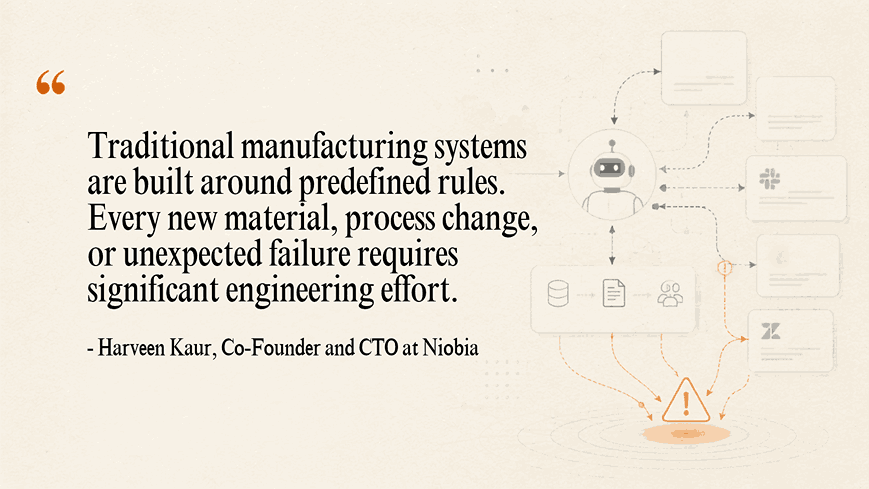
That’s often where the investigation slows down. Engineers may spend hours comparing equipment logs, material records, and production history to work out where the streak originated. As Harveen Kaur, Niobia’s co-founder and CTO, puts it:
A plant that already catches defects but struggles to identify their causes needs stronger root-cause analysis capabilities. On the other hand, one that discovers defects only after cell testing has a different problem. It may need better inspection earlier in the process.
Buyers evaluating battery manufacturing quality control software should choose a recurring defect that has already caused production problems.
In a 2025 study on coated battery electrodes, the small, isolated flaws researchers tested had no significant effect on cell behavior. Line defects and particle contamination did, affecting how much charge the cells held over repeated cycles and how they responded to heat. So, the best test case isn’t whichever flaw the camera caught last. It’s a recurring defect that costs the plant time or material.
A Good Demo Traces One Defective Roll Back Through Production
Once buyers have chosen a defect, the demo should start with the camera’s alert and trace the roll back through production. For the streak, the software should identify which material batch went into the affected roll.
It should also show whether other rolls were made from that batch and pull up the matching equipment readings and operator records. Software engineers investigate incidents in much the same way, pulling evidence from different systems before they can confirm what went wrong.
However, production records don’t always tell the whole story. Buyers should ask vendors what the software can establish from the available data and how it handles gaps in the evidence.
This is where Niobia’s approach comes into the picture. The company brings together production records that would otherwise sit across different systems. Its Managed Database connects equipment readings with material and production data, and Lab OS lets engineers trace a batch through its history. In practice, that history can narrow the search, but it has limits. Kaur says:
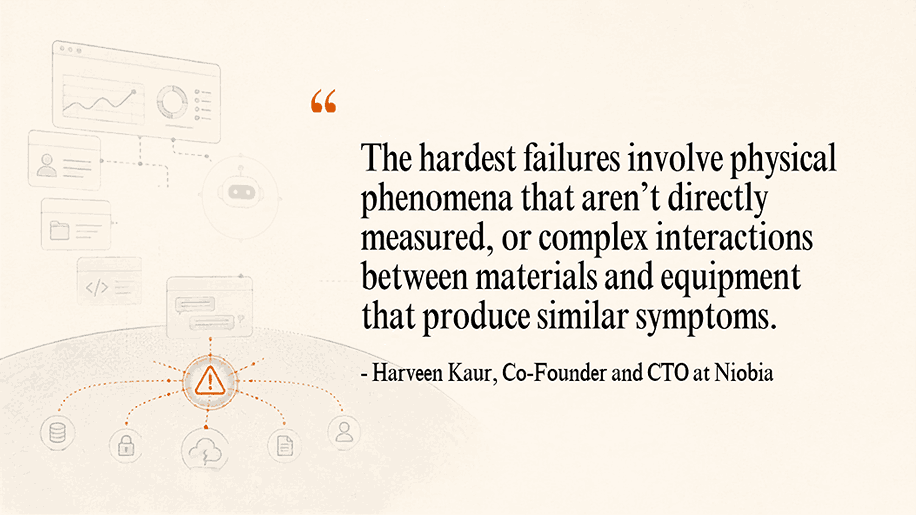
According to her, these challenges grow when manufacturers scale a process from laboratory experiments to industrial production. At that stage, entirely new kinds of failure can emerge.
The Real Test Comes When Two Causes Fit the Same Defect
The records might point to two possible explanations for the streak: a change in the material mix or a problem at the coater. Neither has been ruled out, so the engineer needs more evidence before deciding what to investigate next.
For buyers evaluating battery manufacturing root cause analysis software, this is an important capability to test. Can the system show which records support each explanation and what extra check could tell them apart?
Kaur says Niobia evaluates each hypothesis against the plant’s production records and the physics of the manufacturing process. It then identifies the evidence supporting or contradicting each explanation.
“When the available evidence isn’t sufficient, Niobia recommends targeted experiments to distinguish between competing causes,” she says. “Engineers can then evaluate the strength of the evidence, eliminate alternatives, and approve corrective actions based on their potential risks.”
For the streak, that could mean a test on the next batch that separates a mixing problem from a coater issue. A strong demo should end with a test like that, one the plant’s engineers could run themselves.
A Pilot Run Should Track How Long Each Defect Takes to Fix
A demo shows what the software can do, but a pilot shows whether it helps engineers fix defects faster. Rather than testing several problems at once, the fairest test runs the software on one line, using the same defect the plant brought to the demo.
Each time the streak returns, the pilot should record four points: when the camera flagged it, when engineers confirmed the cause, when they implemented the correction, and when a subsequent test verified the result. These timestamps separate investigation time from the time needed to implement and verify the fix. Compared with the plant’s existing process, they show where the software saves time and where engineers still need to wait for another production run.
A pilot should also establish who approves corrective actions, particularly when they involve equipment changes. Niobia says its Edge AI can write an approved correction back to the equipment. However, Kaur says decisions involving worker safety or major equipment risks should remain under engineering authority. The same applies to changes outside validated operating conditions.
Detection shows engineers where a defect appeared, but the harder work is finding where it started. When the next roll comes off the line, the engineer should know why the streak appeared and whether it is gone.