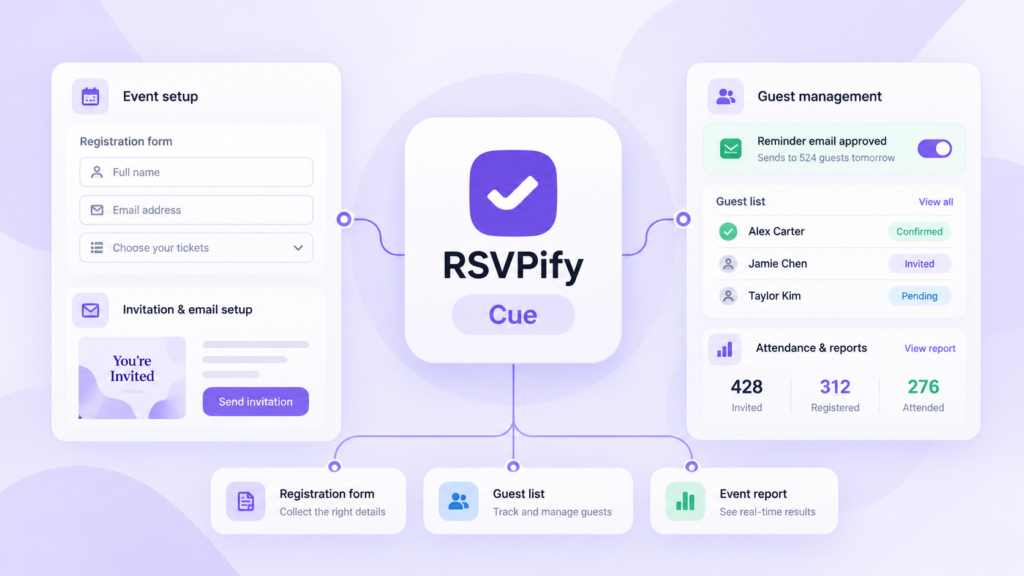
| TL;DR: Managing an event involves building registration forms, tracking guest responses, sending reminders, and reporting results. RSVPify’s Cue uses event records to help organizers handle these tasks through plain-language instructions. A connector makes the same tools available through external AI assistants, while workspace memory helps reuse familiar preferences. Organizers review and approve changes before they reach guests. The aim is to reduce routine administration while keeping planners in control of communications and the guest experience. |
An event invitation can take seconds to draft with AI. Getting it ready to send takes much longer.
Someone still has to build the registration page and choose the questions guests will answer. The branding needs a final check, and the follow-up emails need a schedule. As replies come in, the organizer has to track who is coming and what each guest needs. After the event comes the report on attendance and revenue.
A chatbot can handle the writing. The rest depends on what the event software can see and do.
RSVPify, which makes event management software, wants AI to take on more of that work. It has launched Cue, an assistant inside its platform, and a connector that lets outside AI tools work with its event records.
Event planners are already using AI to help with their work. The bigger question is how much of an event’s planning and administration they can trust it to handle.
Budget Pressure Makes Administrative Work Harder to Absorb
With budgets under pressure, event planners have more reason to cut down on administrative work.
In a Skift Meetings survey of 111 corporate event planners, 79% said their costs had risen at least 5% from the year before. Yet 47% said their budgets had stayed flat, and 19% said theirs had been cut. The survey doesn’t represent the entire event industry, but it highlights the pressure planners face when costs rise without a matching increase in funding.
Software cannot negotiate away rising catering or venue costs. It may, however, cut the hours planners spend on registration forms and guest emails.
Many planners already use AI. In a September 2025 survey of 80 event professionals by Convene, an events industry magazine, 65% of planners used AI tools. Research and marketing copy topped their list of uses.
Both uses help planners decide what to communicate. RSVPify wants its AI to take the next step by creating registration forms and email campaigns inside the platform.
The Assistant Needs Access to the Event Itself
RSVPify’s platform manages events from invitations to on-site check-in. With Cue, organizers can describe what they need instead of navigating the platform themselves.
In an interview with SaaSTake, Hannah Swanson, RSVPify’s vice president of marketing, explained how far Cue is meant to reach.
Her examples range from designing invitations to pulling together detailed event reports.
Consider a reminder campaign. The organizer needs to identify invitees who haven’t registered, send them the correct registration link, and write a message that encourages them to respond
According to RSVPify, Cue can use the live guest list to pick the reminder’s recipients and draft the message for approval.
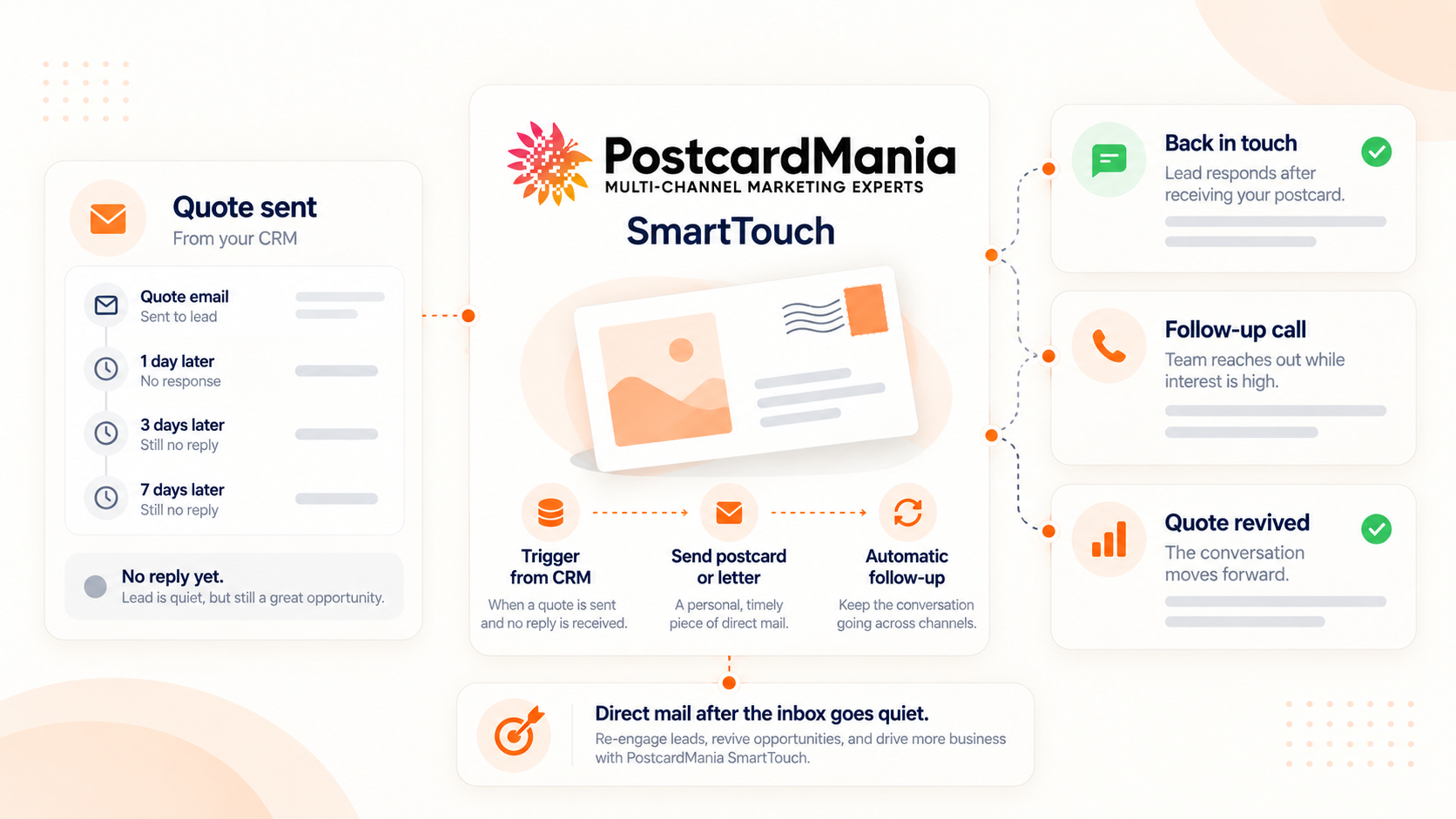
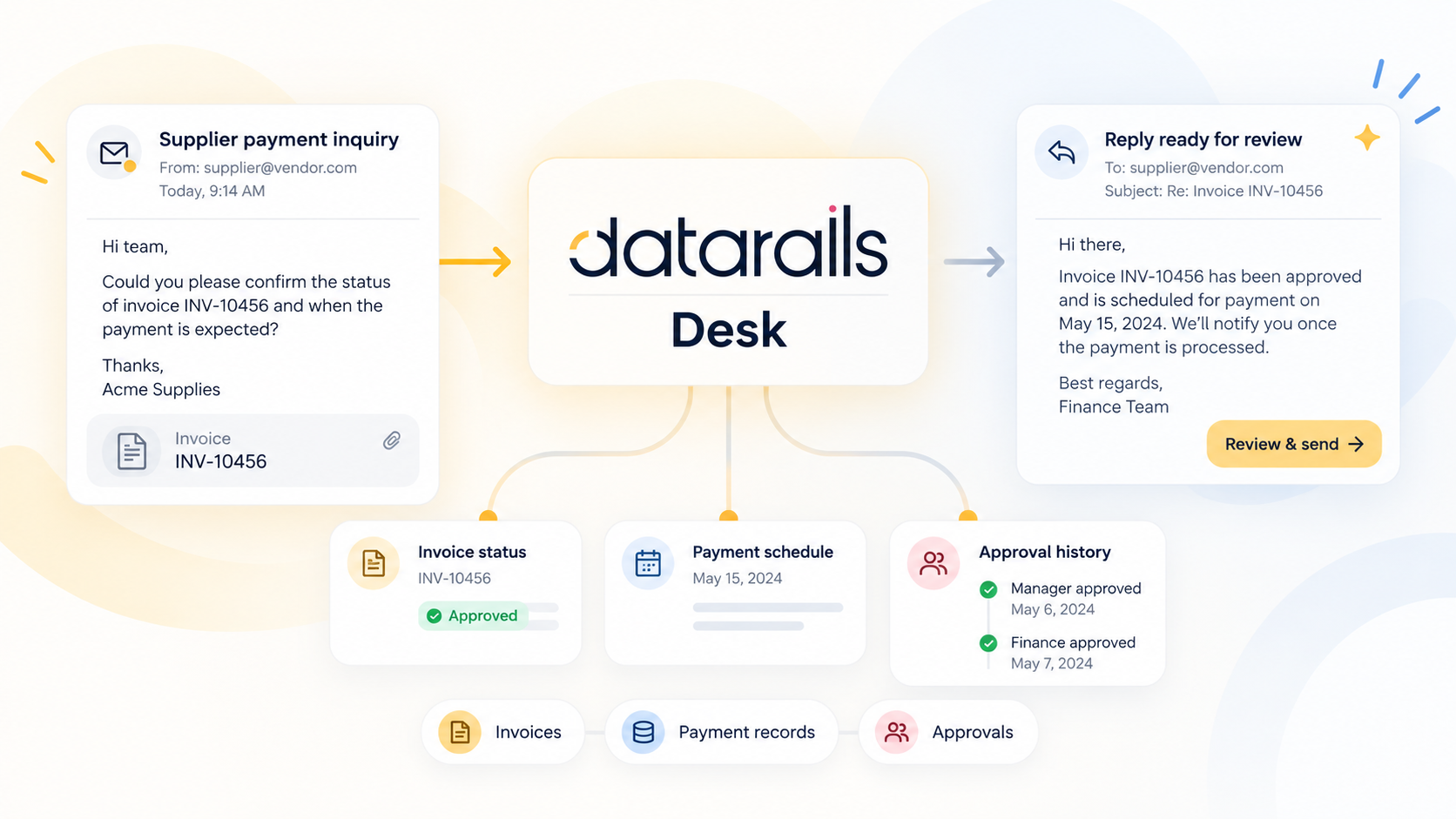
Finance software is using the same pattern with a different kind of record. Datarails Desk pulls invoice and payment data into a request, drafts a reply from those records, and leaves an employee to review it before sending.
RSVPify also says its AI tools can draft registration forms and branded event websites for review. Organizers can then review the proposed pages before publishing them.
Organizers Can Choose Where That Conversation Happens
Cue works inside RSVPify. The second tool, a Model Context Protocol (MCP) connector, brings RSVPify’s features into other AI assistants. MCP is a common standard that lets an AI assistant use another software system’s data and tools.
Workplace software is moving in the same direction. Robin lets managers plan office changes inside Claude, using workplace maps and attendance data alongside information from other business systems.
RSVPify says Cue and the MCP connector use the same underlying tools. Cue also guides users through tasks in RSVPify and remembers preferences for each workspace. Swanson said:
Swanson also sees the two tools as a way for organizers to bring event management into the wider AI workflows they’re already building. Tools such as Gmail and Salesforce still need to be connected separately, with the appropriate permissions.
On October 1, RSVPify announced that the MCP connector had joined Claude’s connector directory. Both tools are available only on RSVPify’s Enterprise plan, with Cue still in early access.
Familiar Preferences Could Make the Next Event Easier to Prepare
Organizers who run events regularly often reuse the same branding and registration settings. Swanson said Cue remembers these preferences so they don’t have to set everything up from scratch each time.
Over time, she said, Cue can learn which registration questions an organization typically asks, when it sends emails, and which metrics matter most in its reports.
As Swanson put it:
One way to judge Cue is to see how much editing its first drafts actually need.
Organizers also need to be able to change those saved preferences. An email schedule that suits an annual conference may be too frequent for a small customer dinner.
RSVPify says users can edit what Cue remembers about their workspace. Cue can keep adding to that memory, but it does not overwrite what a user has entered.
Smarter Assistants Make Human Approval More Important
Other event software companies are building similar assistants. In July, Cvent announced AI assistants that create events and handle attendee change requests. Several of those features were scheduled to ship later in the year.
As these assistants take on more work, organizers need to know exactly what can reach guests without their approval.
RSVPify says nothing reaches guests or goes live until a person approves it, and every AI action is logged. An external AI assistant connected through MCP can access only the events and data available to that user’s RSVPify account. Administrators can also switch off AI access to guests’ personal information.
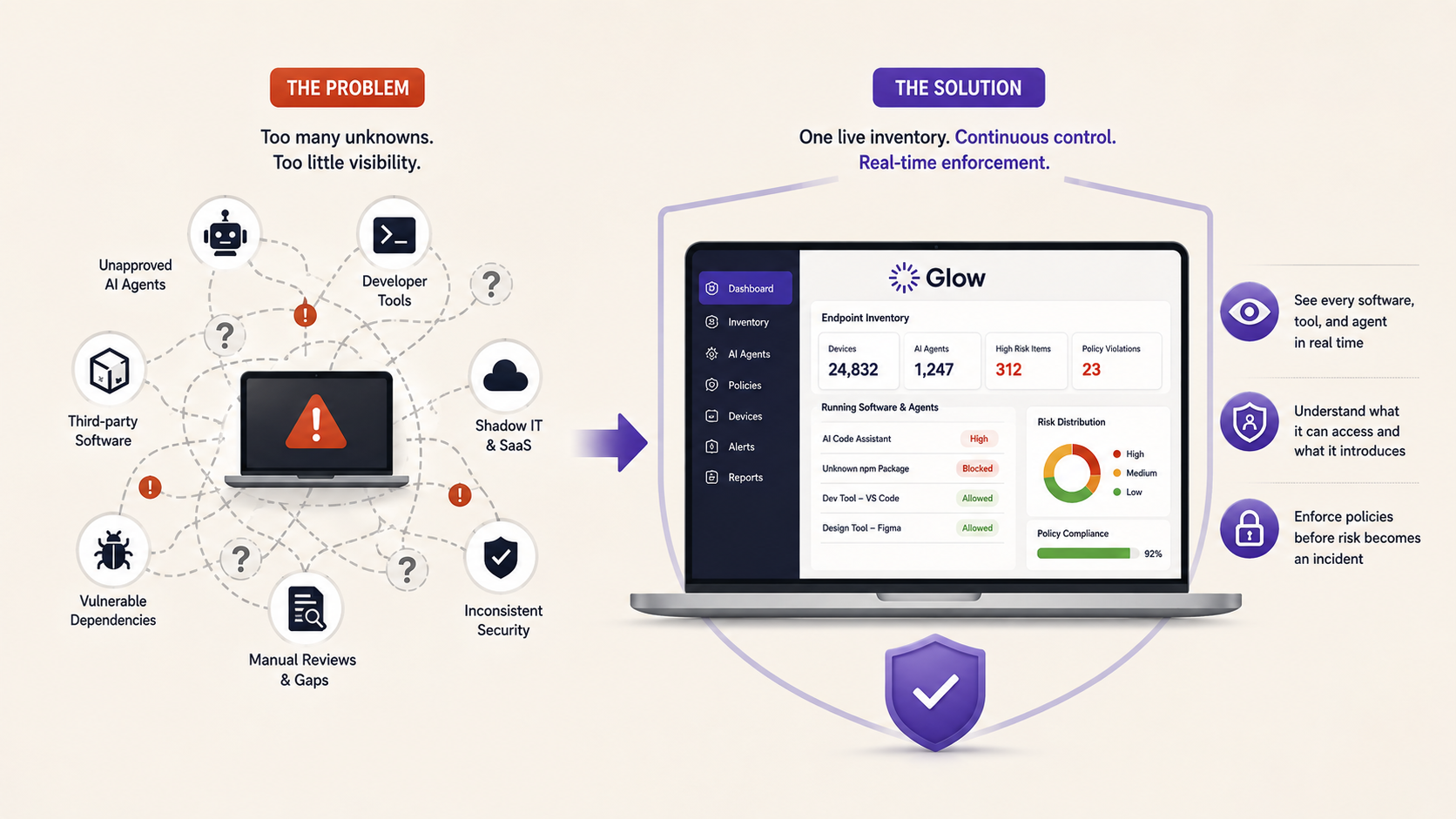
Enterprises are putting similar controls around other AI use. WitnessAI lets companies set policies that determine how sensitive requests are handled and which AI models are allowed to receive them.
Reports still need human interpretation. Attendance and revenue figures tell organizers part of the story, but they don’t reveal whether a customer event strengthened relationships or led to future sales.
The organizer still has to weigh those numbers against what the event was meant to achieve.
The Admin Work is Moving Into Conversation
Event software companies are starting to let organizers manage more tasks through AI assistants instead of navigating screens and forms. The real benefit will depend on how much routine work these assistants can handle without creating more work for organizers.
For RSVPify, the test will be whether Cue’s first drafts and automated workflows are reliable enough to reduce the work planners have to do, rather than simply shifting that work from creating events to checking them.