| TL;DR: Rearranging an office means checking desk availability, attendance patterns, and hiring plans before anyone moves. Robin lets workplace managers explore seating changes in Claude using office records and other business information. Managers review proposed layouts before Robin publishes approved changes and notifies employees. Its map editor helps administrators keep floor plans current. Together, these tools let software handle more preparation and updates while managers remain responsible for deciding whether a new arrangement meets employees’ needs. |
A company decides two departments should sit together. The third floor looks like it has room, so the move seems simple enough.
Then the workplace manager takes a closer look. Some desks belong to people who rarely come in, while others are shared by employees whose office days overlap. The seating plan needs redrawing, and the new layout still has to leave space for upcoming hires.
So before a single chair moves, the manager has to piece together who comes in when and who sits where.
Robin, which makes workplace software for booking desks and rooms, wants to take that groundwork off the manager’s plate. In September, it gave admins a faster way to keep office maps current. In October, it went further and let workplace managers plan the move itself inside Claude.
That raises a practical question: how much of an office move can software handle before a person has to step in?
Employers are Asking More of the Offices They Already Have
Employers want people in the office more often. In CBRE’s 2026 survey of 97 U.S. companies, 89% required at least three office days a week, up from 78% in 2025. Only 14% were making major improvements to their space.
So more people are coming into offices that largely haven’t changed.
The problem is that office attendance isn’t spread evenly across the week. CBRE’s global benchmarking found people used 53% of office space on average in 2025, up from 38% the year before. On peak days, usage averaged 80%. An office can look half empty on paper and still run out of desks when people come in on the same days.
The real question is whether there’s enough room on the busiest office days.
Some companies are already turning to AI to help with office space planning. In the same CBRE survey, 23% said AI already affects their space planning, and another 30% expect it to within two years.
Updating the Map Creates Work of Its Own
When a company changes its office layout, the map employees use to book desks and find rooms has to be updated too. Ciara Peter, Robin’s senior vice president of product, sees map maintenance as one part of a bigger problem.
She told SaaSTake:
Robin’s September 10 announcement brings that work in-house. It added a CAD file uploader and a map editor to the platform. Admins can upload a floor drawing, and Robin’s AI turns it into a map in seconds. If the drawing replaces an older one, the desks and rooms already set up carry over, though some may need repositioning.
Keeping workplace records current can be especially difficult at large companies. JLL described a global financial services firm managing 24.5 million square feet, where each business unit maintained its own records. Those records often fell out of date before changes were logged. Robin’s map editor gives admins a way to update office maps themselves.
Robin is Moving Space Planning into Claude
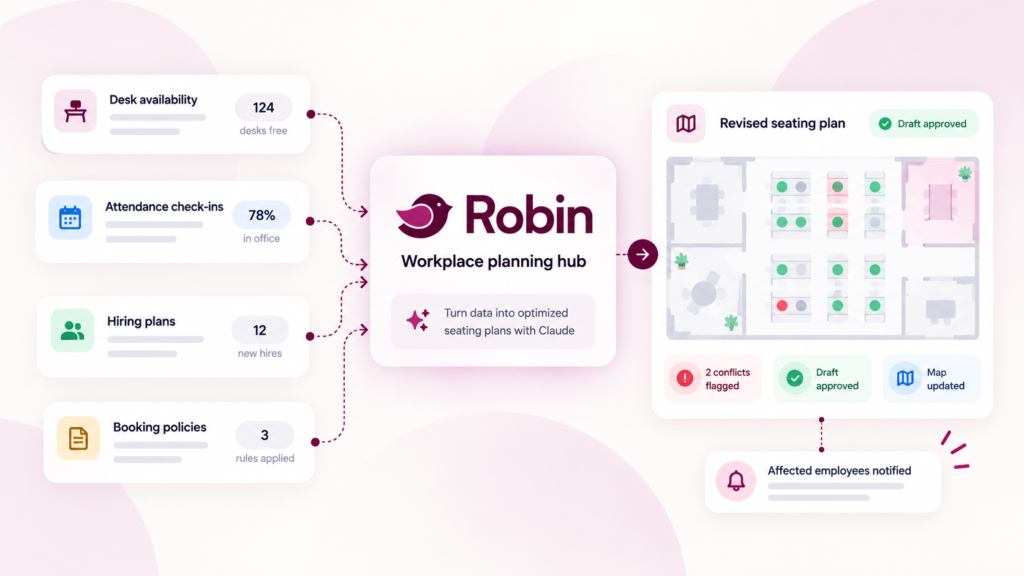
On October 6, Robin introduced a new approach to AI space planning, allowing workplace managers to plan office changes directly in Claude using the maps and usage data already stored in Robin.
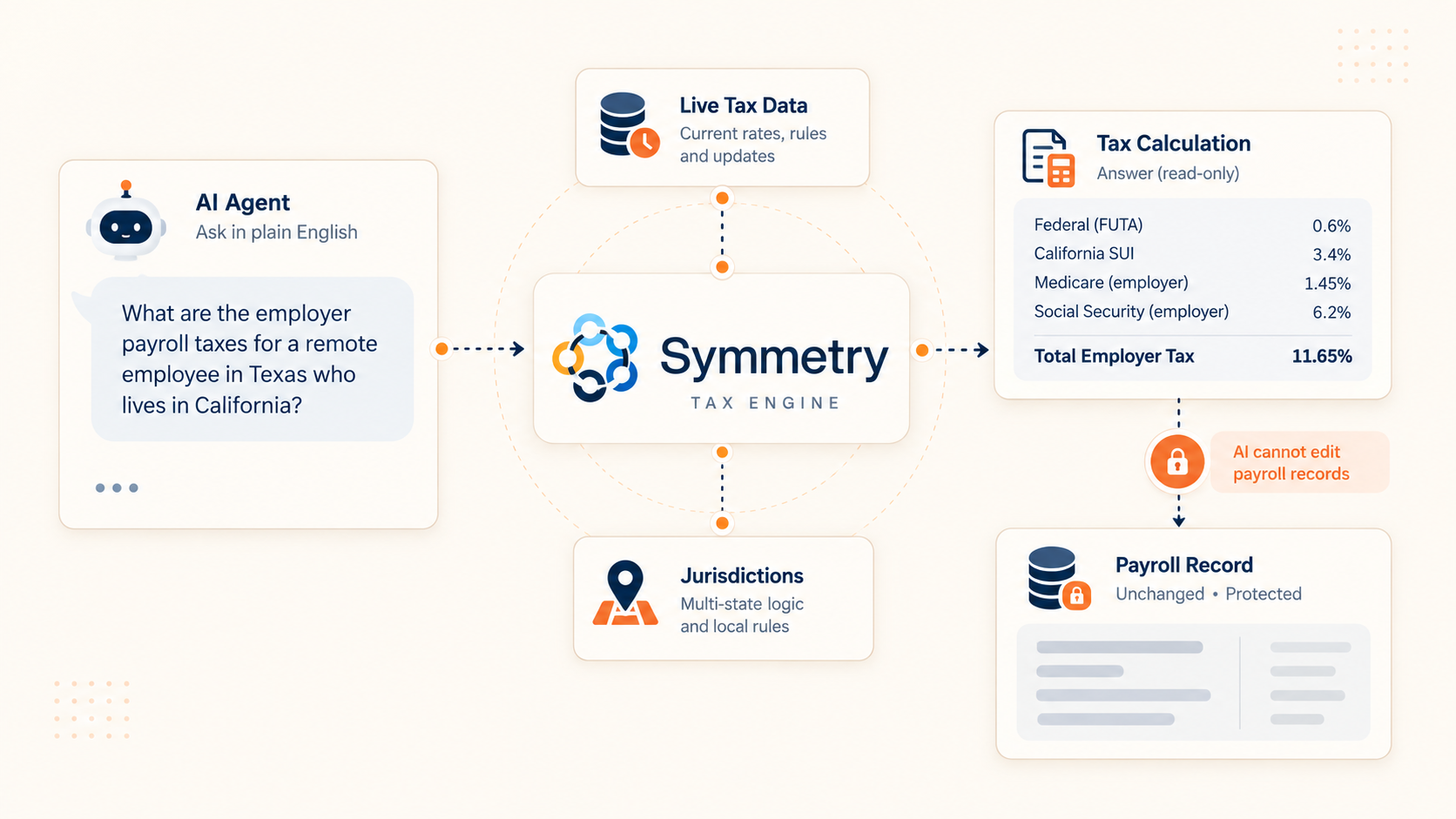
Claude can also use information from other systems, such as new-hire records in Workday and lease costs from finance tools or spreadsheets. Company research is being similarly connected to AI assistants. Market Logic’s DeepSights MCP lets employees bring proprietary research into general AI tools while preserving source references and access permissions.
Peter describes the shift this way:
In practice, the manager describes the change they want, and Claude proposes a plan for them to review. Robin says the system identifies new hires who need desks and shows which desks have become available. Managers can also upload a screenshot of an existing seating plan. Claude turns it into a working draft and flags potential conflicts.
That brings several planning steps into one conversation, from identifying available desks to drafting a layout. Managers can then review the proposed arrangement before approving changes.
Planning Only Works When the Data Reflects Real Use
Even a well-designed plan can fail if the underlying data is unreliable. Many companies still have work to do on that front.
In its May benchmark release, JLL found that only 7% of organizations rated their own data capabilities as excellent. More than 70% had not started piloting AI to plan how they use their office space.
Robin works from data it already collects. For enterprise AI, getting to the right business data is often part of the deployment problem itself. Squirro’s work with AI agents shows how system connections, permissions, and data access become part of making an agent useful inside a real organization.
Peter said the company has “connected space planning with the operational reality of the workplace.”
According to Robin, its planning can draw on attendance and check-ins, not just seating records. A seating chart shows who is assigned a desk, while check-ins show who actually uses it.
Consider desks that haven’t recorded a check-in in 30 days. With the October launch, a manager can open them up for anyone to book, or reseat a department closer together. Managers can also use occupancy data to decide which floors should house each department, accounting for peak attendance rather than average daily usage.
Those plans still depend on accurate floor maps. Robin’s September update lets admins maintain those maps themselves.
People Approve the Plan Before Anything Moves
People still have the final say over proposed changes. Robin can make changes through Claude only within the signed-in user’s permissions and the company’s booking policies.
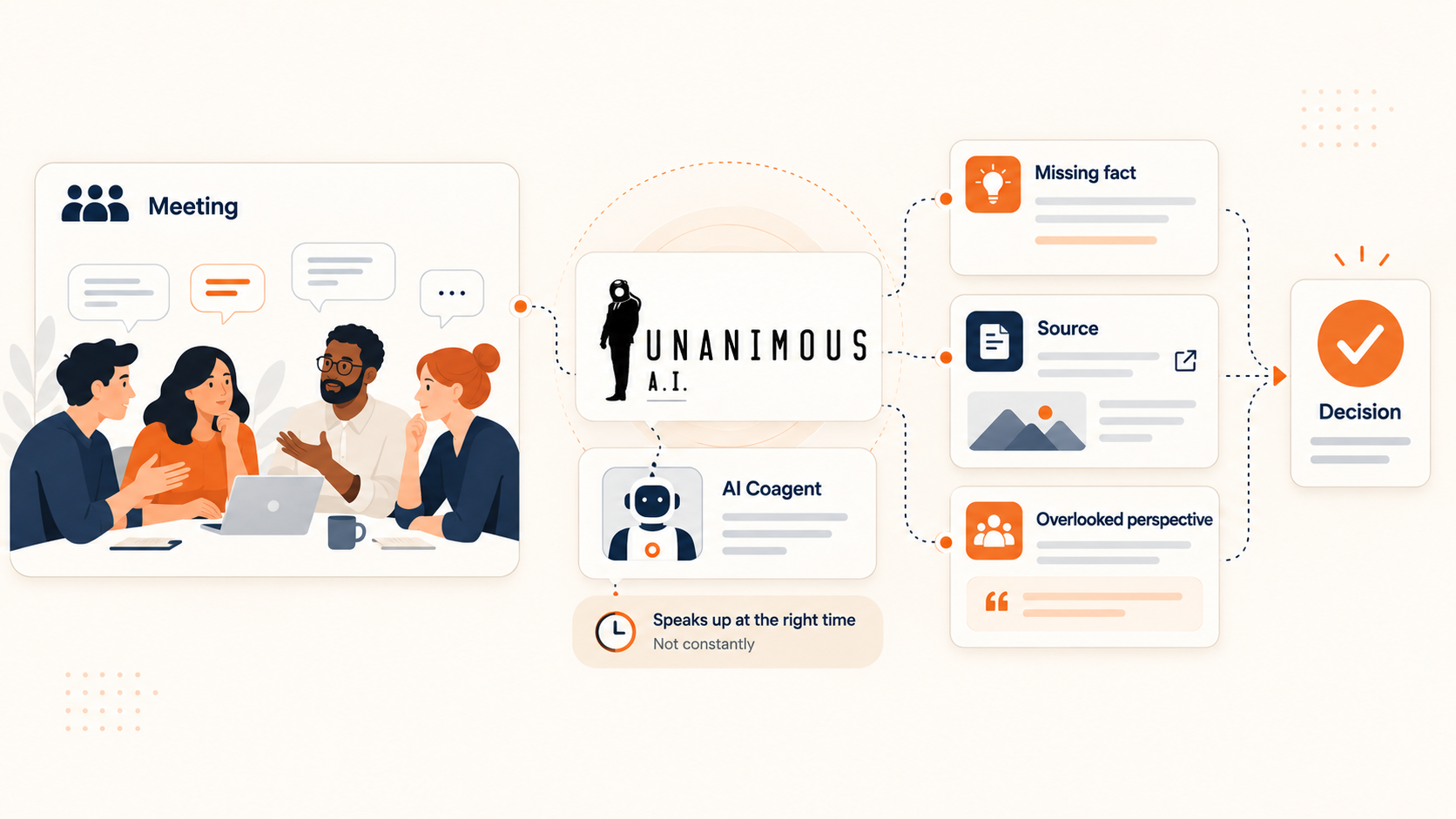
Seating changes start as drafts, so the live floor plan stays untouched. Claude shows exactly what a draft would change, including any bookings it would cancel. Managers can also invite colleagues to review the draft before publishing it. AI-supported workflows are keeping a similar review step in other industries. Majesco’s Immersive AI lets agents handle routine work within defined limits while employees review exceptions and approve work that still needs human judgment.
Once the manager approves a plan, Robin publishes the updated map and notifies affected employees of their new seats.
The manager’s role shifts from building the plan to reviewing it. Whether a department should move is still their decision, but more of the legwork behind it now falls to the software.
Workplace Software is Moving Out of Its Own App
Peter expects this approach to extend beyond office moves. If people can get their work done inside Claude or Slack, she sees less reason to make them open a separate workplace app. She believes dedicated interfaces will still be useful for complex setup and administrative tasks.
“Our measure of success isn’t how much time customers spend in Robin,” Peter said. “It’s how much work Robin gets done for them.”
If more workplace platforms follow Robin’s lead, keeping office data accurate and carrying out approved changes could become central to their value.