| TL;DR: Insurers can use AI to sort claims faster while policyholders still wait for an employee to approve the next step. Majesco’s Immersive AI brings agents into insurance software, where staff can review their work and handle exceptions. However, claims can still get held up when employees repeat checks or search different systems for the information they need. Insurers also need to train employees to oversee agents and rethink how work moves between them. That connects Majesco’s software changes to a broader business challenge: turning faster tasks into faster customer responses. |
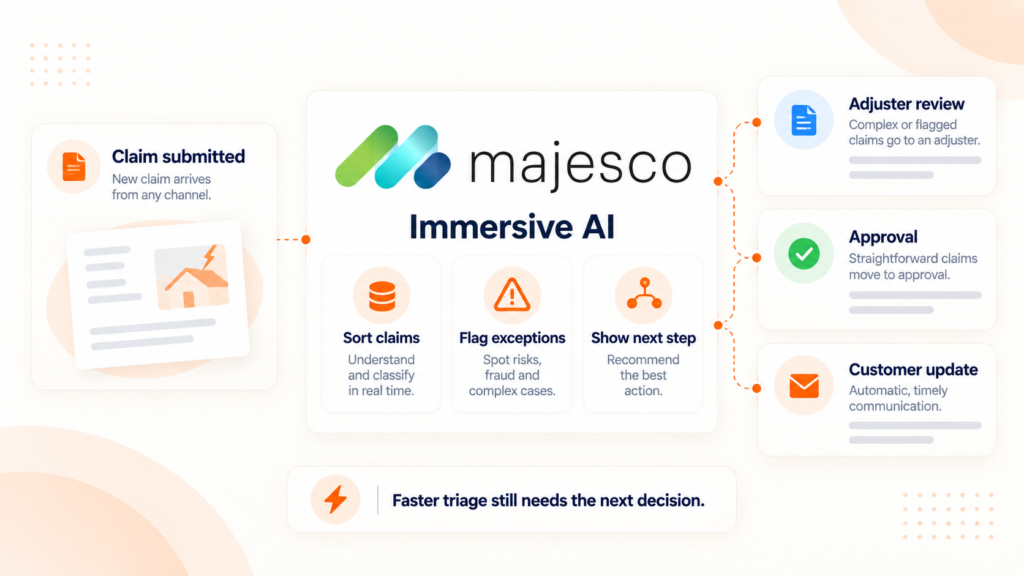
A homeowner submits an insurance claim after a storm damages their roof. An AI agent sorts it and sends it to the right department. The claim then waits for an adjuster to approve the next step, leaving the homeowner unsure when repairs can begin.
AI has sped up the sorting, but insurance AI agents still depend on an employee for the next step. Majesco, which provides software for managing insurance policies and claims, brings employees and AI agents into the same workflow through Immersive AI.
However, changing the software is only part of changing how the work gets done. In an interview with SaaSTake after NAMIC’s Annual Convention, Chief Strategy Officer Denise Garth explained what else insurers need to rethink.
Mutual Insurers Got Stronger, but Their Costs Outpaced Premiums
Mutual insurers, which are owned by their policyholders, entered 2026 on stronger financial footing. According to the 2026 Mutual Factor report from NAMIC and Aon, their financial cushion grew 16.2% that year.
Yet their running costs, not counting claims, grew faster than the premiums they collected. Those costs went from 24.7% of premiums in 2024 to 25.2% in 2025. Early figures through June 2026 put that number higher than a year earlier, though mutuals saw a smaller rise than others.
Garth believes AI could help determine which insurers come out ahead. A year ago, she predicted that insurers that redesign their operations around AI could operate far more efficiently by 2030. The gap, she said, would top 20 cents of every premium dollar. She repeated that forecast in the interview, citing emerging results from insurers already making the shift.
“While insurance is risk averse, it should be apparent that not changing creates greater risk for the company,” Garth said.
Mutuals are now in a stronger position to change how claims get handled. Ultimately, the question is whether they will invest in that change.
Faster Tasks Do Not Automatically Mean Faster Claims
An AM Best survey published in April asked more than 150 insurers and managing general agents how they use AI. Nearly 60% expected AI to reshape how they do business within one to three years. Just 41% were already using it in their main operations.
Garth sees a similar pattern across the industry. Many leaders expect AI to reshape insurance, but in practice, few have made it part of their daily work. She added:
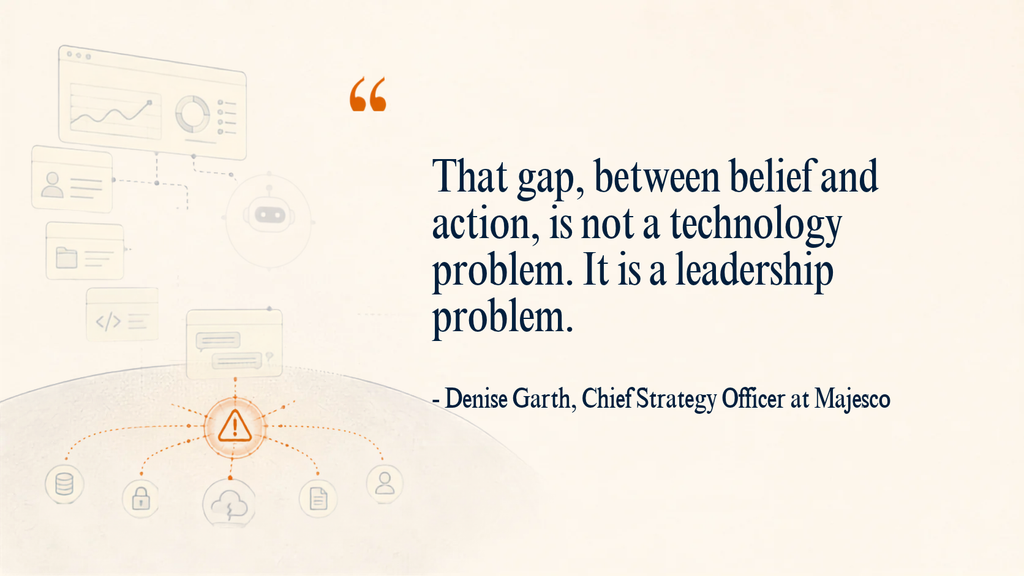
Among those already using AI, 63% saw small gains in employee productivity and satisfaction, while 11% saw big ones. AM Best’s researchers said it is still too early to know how much AI will save insurers. They expect the savings to take years to show up.
Two major obstacles were messy data and older systems that are difficult to connect. An adjuster might have AI help with the claim while the information needed to settle it sits in different systems. Someone still has to decide which systems need to connect and which parts of the process need to change.
For Garth, those changes need funding behind them. Otherwise, insurers may speed up individual tasks without changing the rest of the process.
The same gap appears in customer service. Inbenta is looking beyond whether AI produced the right answer to whether the customer actually completed what they came to do.
Old Habits Can Follow Employees into New Systems
Garth calls another obstacle “behavioral debt.” It is the old habits and workarounds people keep using simply because they are used to them. According to her:
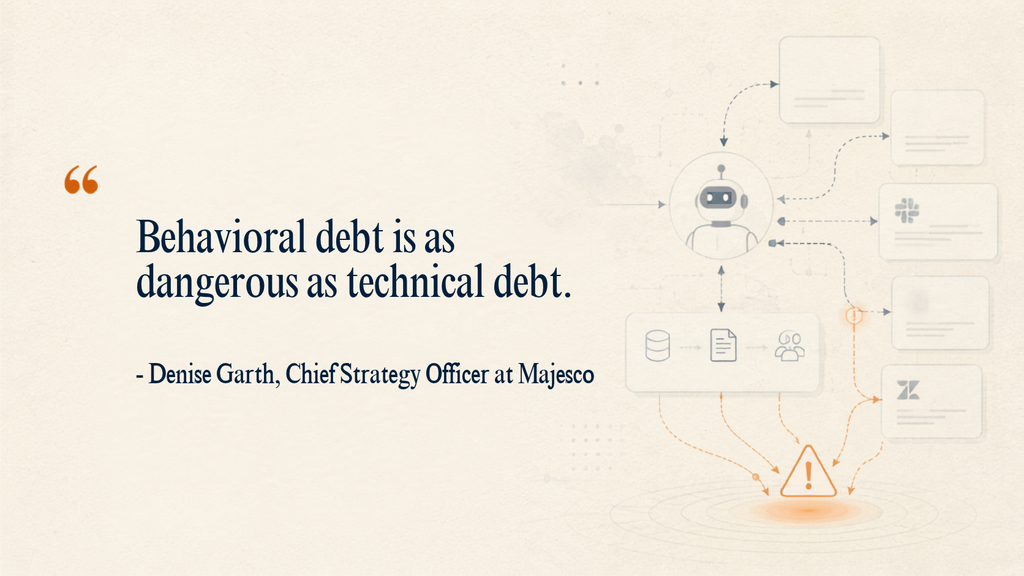
In claims, that might mean adjusters double-checking work outside the new system or passing files along the same slow route as before. You see, fixing that means preparing employees for new responsibilities.
However, employee preparation has not kept pace with the technology. In an Aon study of 130 insurance organizations, 48% were already using AI widely across the business. Yet only 19% said they could hire and keep enough people with AI skills. They also ranked adaptability and the ability to lead others through change among the most important skills for the next three years.
Garth wants insurers to keep their employees and train them to oversee AI agents. That means knowing when to trust an agent’s work and when to step in. Managers then have to decide which checks are still needed and who takes over when a claim needs a person.
Those choices determine whether AI removes a step or adds another review to an already busy day.
That question becomes harder when routine work contains exceptions employees barely notice anymore. Caddi has found a similar problem in legal operations, where apparently simple workflows can hide judgment calls that only become visible when someone tries to automate them.
Majesco Puts AI Agents Inside the Software Insurers Already Use
Majesco’s Fall ’26 release brings that supervision into the software employees use every day. The company argues that insurance software now needs to support employees working with AI, not just employees working on their own.
Its Immersive AI shows employees what agents have done and handles routine tasks within defined limits. Employees can check that work and carry on from where the agent stopped.
In life and health insurance, the release adds agents that sort incoming documents and emails. Majesco says the agents handle routine work when they are confident in the result. When a task falls outside those limits, the agent sends it to an employee and explains why. Employees then decide whether to accept the result or investigate further.
That handoff between agents and employees is also appearing in other regulated workflows. Finzly has used AI agents in banking operations to help resolve exceptions, while keeping people involved for compliance and control.
The release also records what each agent does and lets insurers require an employee to approve its work. Those controls matter more once software starts taking action instead of simply making suggestions.
Regulators are watching that shift too. State insurance regulators, through their national association, have built a tool to review how insurers use AI and what checks surround it. As of March 2026, 12 states were testing it, with adoption expected at the association’s fall meeting this year.
For insurers, that means being able to explain what an agent did and who approved it.
The Payoff Shows Up When the Homeowner Hears Back
Garth suggests judging AI by what customers notice, like how long a quote takes or whether one call solves their problem. Those measures show whether a delay has gone away or simply moved to the next step.
Majesco is betting that an insurance AI platform works best when it is built into the software insurers already use, rather than added as another tool. That shifts the question from which AI tools to buy to how insurers should change the work around them.
For the homeowner with the damaged roof, a claim sorted in minutes is a good start. After all, knowing when repairs can begin is what they will remember.