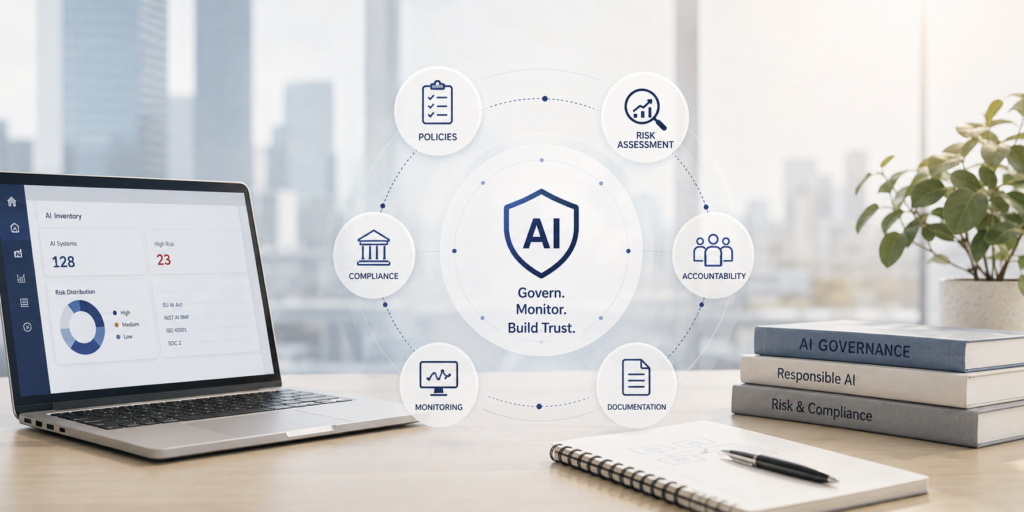
| TL;DR: AI governance platforms help enterprises track, assess, and control AI systems across teams, regulations, and risk levels. But with most platforms making near-identical claims, picking the wrong one is a costly mistake to undo. To help you find the right fit, this guide covers 10 platforms including Credo AI, IBM watsonx.governance, and Microsoft Purview. It also walks you through six factors you can evaluate before you shortlist. |
Most companies don’t go looking for an AI governance platform until something forces them to do it. It could be in the form of a failed audit, a regulatory inquiry, or a board that suddenly wants to know exactly which AI models are making decisions and why.
By that point, the search gets rushed. You’re evaluating vendors under pressure, and most platforms sound identical: risk scoring, model monitoring, policy enforcement. The features blur together, and the demos aren’t built for someone trying to operationalize compliance across dozens of AI use cases, not just check a box.
Meanwhile, the number of AI use cases inside most enterprises keeps growing, and so does the pressure to show that someone is actually responsible for how those models behave. That’s why, in this article, we will cover the top AI governance platforms worth evaluating, what each does well, where it falls short, and who it’s the right fit for.
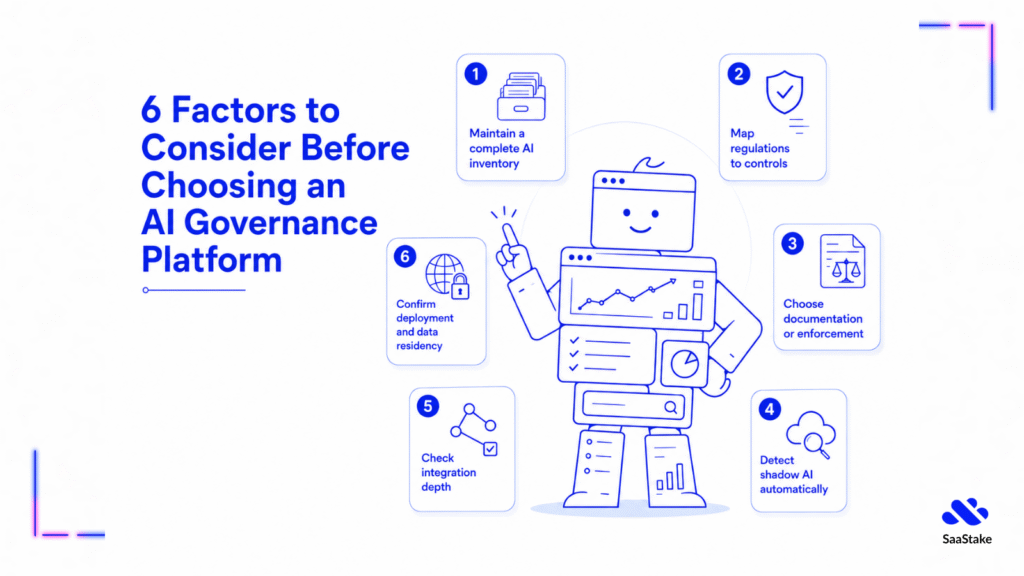
6 Factors to Consider Before Choosing an AI Governance Platform
Here’s the thing: an extensive feature list is not enough. Buyers also need to check how the platform maps regulatory requirements to internal controls and backs that up with evidence.
The six factors noted below can help you make the right choice.
1. AI Inventory and Registry Coverage
A platform that only tracks the models your data science team built misses most of what’s running. Shadow AI, embedded copilots, and AI features inside other tools often go unnoticed.
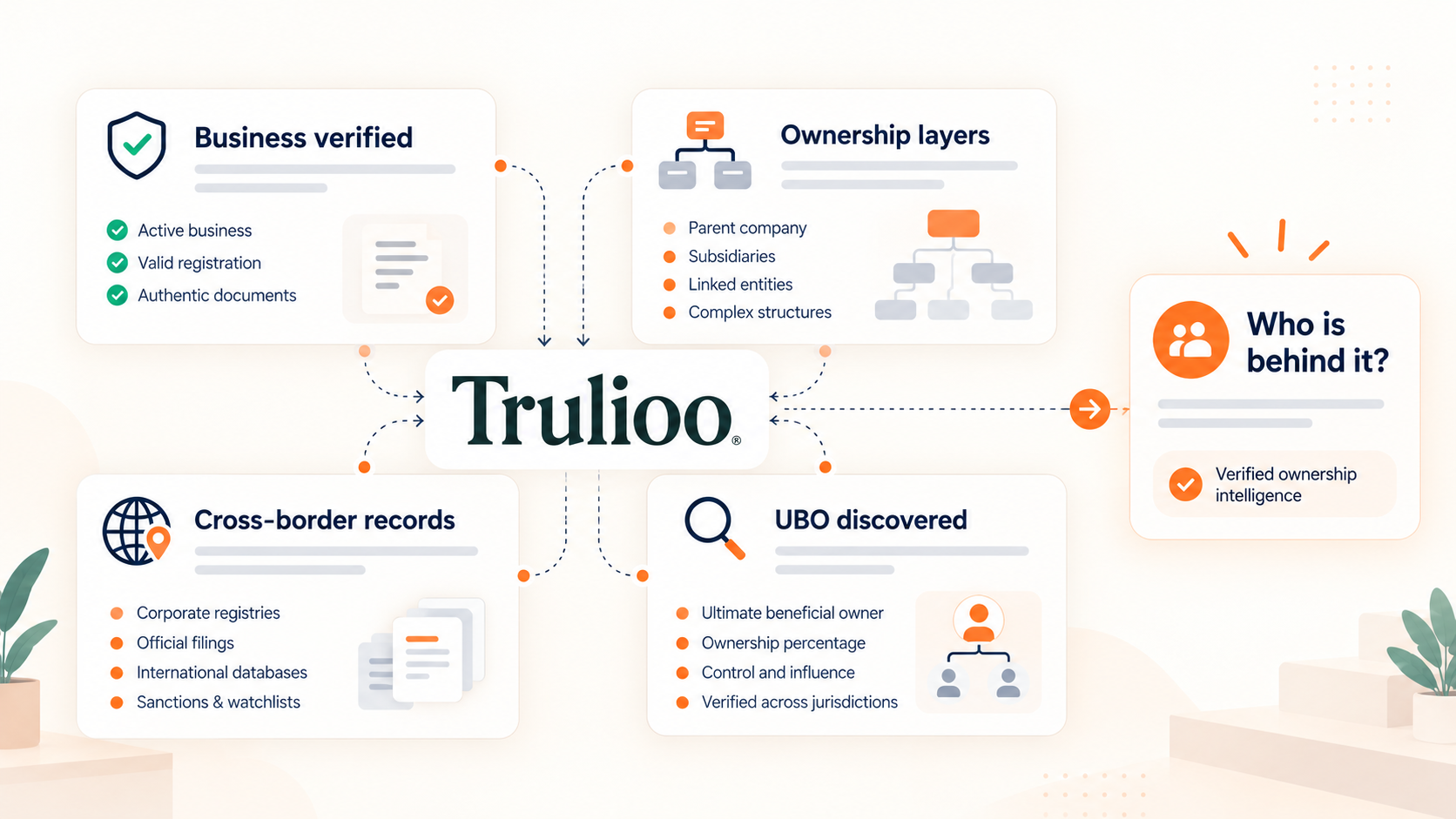
Spotting these systems is only the first step. The registry also needs to record who owns each one, what data it can access, and what stage of its lifecycle it’s in. Ownership is becoming particularly difficult with autonomous agents. Oak is finding that enterprises may know exactly what an AI agent can access while still being unable to identify the person accountable for it. A list of AI system names without that context isn’t an inventory. It’s just a spreadsheet with extra steps.
| Question to ask: Can you show me how a new AI system is recorded and tracked throughout its lifecycle? |
2. Regulatory Framework Mapping
Platforms differ significantly in which regulations, standards, and frameworks they actually cover. The gaps show up fast once an auditor starts asking questions.
Some platforms map directly to the requirements your business is actually exposed to. For instance, these may include the EU AI Act, NIST AI RMF, or ISO/IEC 42001. Others cover a narrower list and leave the rest to you. If mapping a new requirement still means manual spreadsheet work, the platform may not be reducing enough of the compliance workload.
The same issue appears when enterprises deploy several agents. Squirro’s AI agent catalog is designed to let later deployments build on compliance work already completed, rather than repeating the entire review for every new agent.
| Question to ask: Walk me through how a new or updated requirement gets reflected in our compliance mapping, and how long that usually takes. |
3. Documentation Versus Real-Time Enforcement
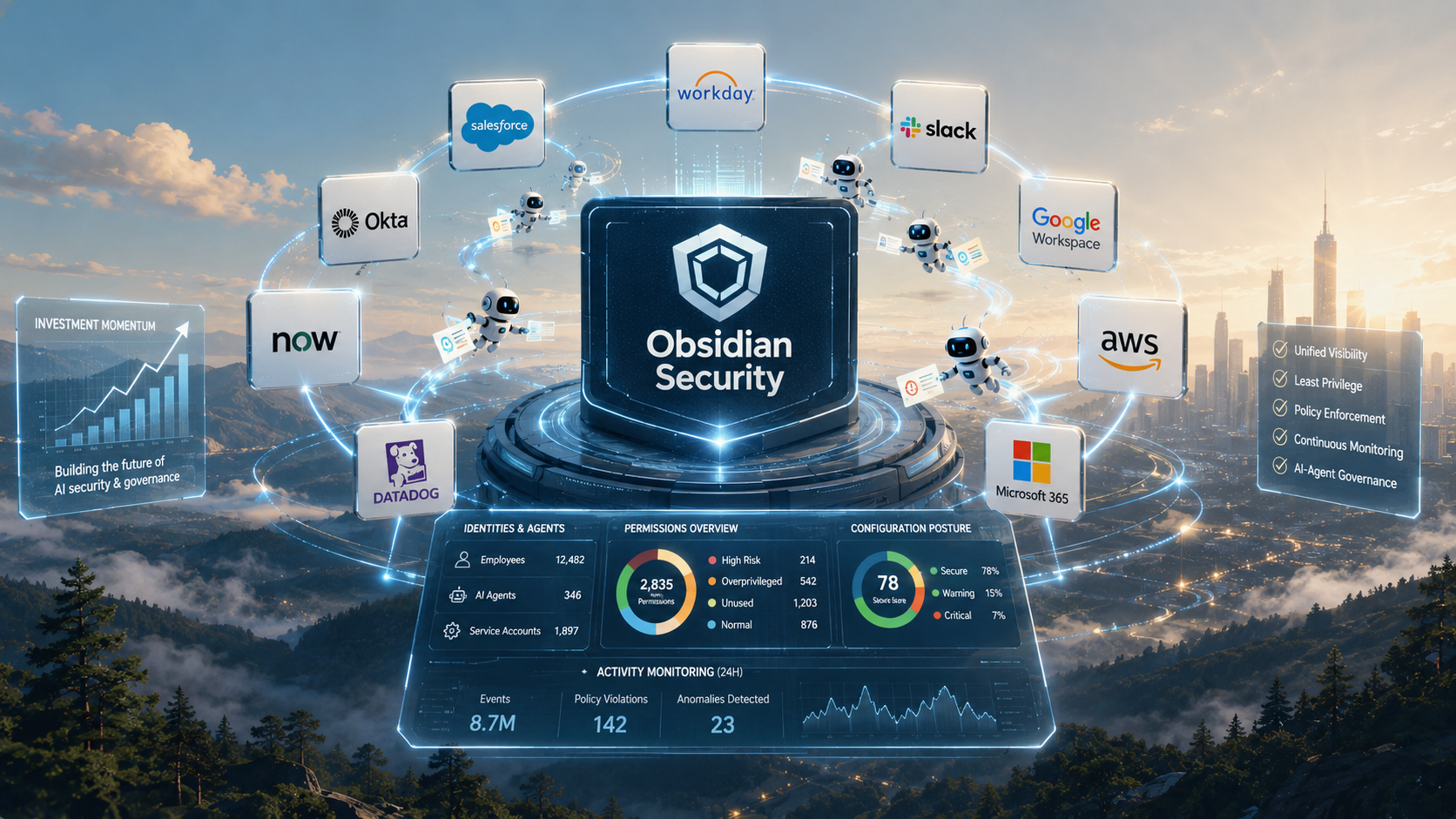
Some platforms focus mainly on documenting and managing risk. Others can also enforce certain policies while an AI system or agent is operating. That distinction matters more as agents start taking real actions instead of just generating text. The risk is already becoming visible in enterprise environments, where AI agents can accumulate permissions across SaaS applications without security teams necessarily having the same visibility they have into human users. Obsidian Security’s recent $85M raise is centered on addressing exactly this emerging agent-security problem.
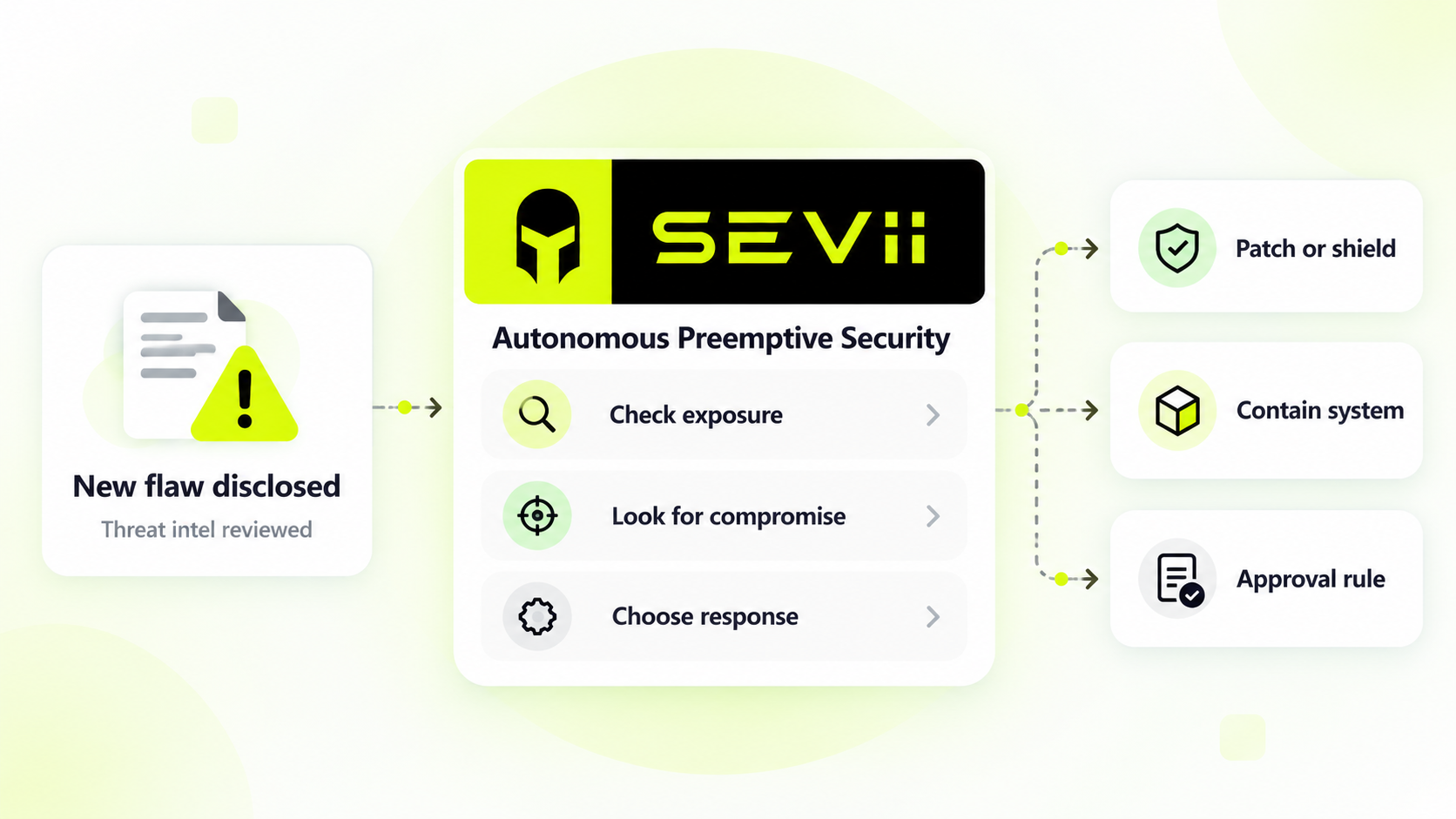
A documentation-first platform may alert you after an agent deleted a record it shouldn’t have. A platform with runtime enforcement may be able to stop a supported action before it happens. You should decide early which risk matters most to your team. However, enforcement will depend on the action, policy, permissions, and integrations the platform supports. The timing problem also exists at the output layer. CopySight is applying a similar before-release approach to AI-generated images and video, checking for similarities to protected characters, trademarks, and real people while the asset can still be changed.
| Question to ask: If an agent violates policy right now, can the platform stop the action, send it for approval, or just log it for later review? |
4. Shadow AI Discovery
Employees and business units adopt AI tools faster than most governance programs can track. Some platforms scan cloud accounts and SaaS integrations automatically to surface unapproved usage. Others depend on people self-reporting what they’re using.
That visibility gap also extends to employee devices, where AI agents, developer tools, and other software can appear without a centralized view. Glow is building specifically around that endpoint governance problem, continuously mapping what is running and assessing whether it should be there before it becomes a security incident. Self-reporting rarely captures the full picture, since people don’t report tools they don’t think to mention.
| Question to ask: How does the platform find AI tools nobody told you about? |
5. Integration with Your Existing Stack
A governance platform built around Microsoft or IBM’s ecosystem can save real setup time if that’s where your infrastructure already lives. The same platform may create friction in a multi-cloud environment with tools scattered across vendors.
What matters is whether the tools you actually use are covered, and covered deeply. A connector that only reads data is very different from one that can enforce a policy. You should check integration depth against the systems you run today, not the ones on a roadmap. That integration question can determine whether AI gets used at all. Harbor highlighted a law-firm rollout where an AI tool had already been tested and introduced before the firm discovered it was incompatible with its case-management system.
| Question to ask: Which of our current tools does this platform connect to natively, and which ones need custom work? |
6. Deployment Model and Data Residency
Some platforms only operate as SaaS. Others support private-cloud, self-hosted, or hybrid deployments. The deployment model alone does not show how your information is handled. Some platforms process only metadata and governance records. Others may also inspect or retain prompts, outputs, model artifacts, telemetry, or sensitive business data.
This matters most for organizations with strict data-residency or sovereignty requirements. Cloud-hosted platforms may still meet these requirements through regional hosting and contractual controls. However, organizations with strict on-premises requirements or that don’t allow data to leave their environment need solutions that support those policies.
The broader push toward infrastructure sovereignty is showing up elsewhere in enterprise AI as well. Prime Intellect’s $130M raise reflects growing demand from enterprises that want more control over the models and infrastructure their AI workloads depend on. If data residency is a strict requirement, you need to confirm deployment and data-handling options early.
| Question to ask: Where does our data actually go once it enters your platform, and can we keep it inside our own environment? |
Now that we’ve looked at the factors, let’s look at the platforms.
10 Top AI Governance Platforms To Consider in 2026
The right platform for you depends on the risk you’re managing, the regulations you’re exposed to, and how much control you need over live AI activity.
Below, we have listed the ten leading platforms, along with what each one does well, who it fits best, and where it falls short.
- Credo AI
- IBM watsonx.governance
- OneTrust
- Holistic AI
- Fiddler AI
- Microsoft Purview
- ModelOp
- DataRobot
- Securiti AI
- Domo
Let’s have a look at each of them.
1. Credo AI – Best for regulated enterprises running multiple AI and agent programs across departments
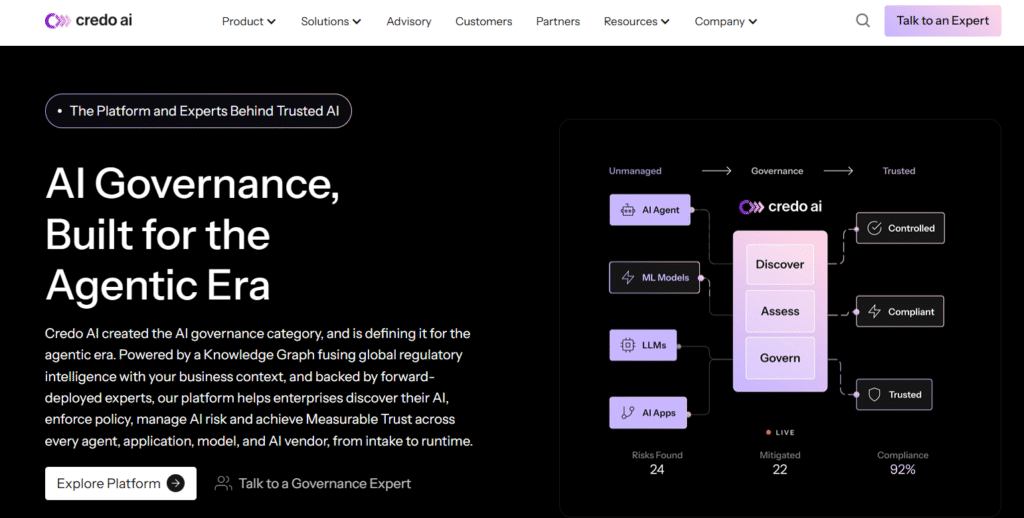
Credo AI is built for enterprises that need to govern more than a handful of models. It brings models, applications, agents, and vendors into one registry, giving your organization a clearer view of what is being used, who owns it, and which risks and controls apply.
The platform also connects assessments, policies, evidence, and audit records, making it particularly useful when several departments are running AI programs at once.
Source – Credo AI
GAIA, its governance assistant, helps automate intake, identify relevant risks, and recommend controls. Credo AI has also introduced Agent Governor, which can allow, block, escalate, or advise on an agent’s actions before they execute. Runtime control is becoming a category of its own as agents receive more authority.
NeuralTrust approaches that problem by watching an agent’s behavior throughout a task, including the information tools return before the agent acts on it. However, it is still in Research Preview. This means it is an early-access capability rather than a generally available product, and it currently runs with Claude Code.
Notable Features
- AI Registry: Catalogs models, applications, agents, and vendors.
- Policy packs: Maps requirements and controls across major frameworks.
- GAIA: Automates intake, risk identification, and control recommendations.
- Agent Registry: Maps agents, models, tools, data, and dependencies.
- Agent Governor: Applies runtime controls in Research Preview.
- MCP server: Designed to connect customer-built agents with governance workflows, with preview availability planned.
Integrations
Credo AI connects with AWS, Azure, GCP, Databricks, Snowflake, ServiceNow, Jira, GitHub, MLflow, LangChain, and CrewAI. SaaS and self-hosted deployment options are available.
Notable Customers
Mastercard, Amazon, Databricks, Cigna Healthcare.
Analyst Recognition
Credo AI was named a Leader in The Forrester Wave: AI Governance Solutions, Q3 2025, receiving 5/5 in 12 criteria. Fast Company ranked it 6th in Applied AI in 2026.
Strengths
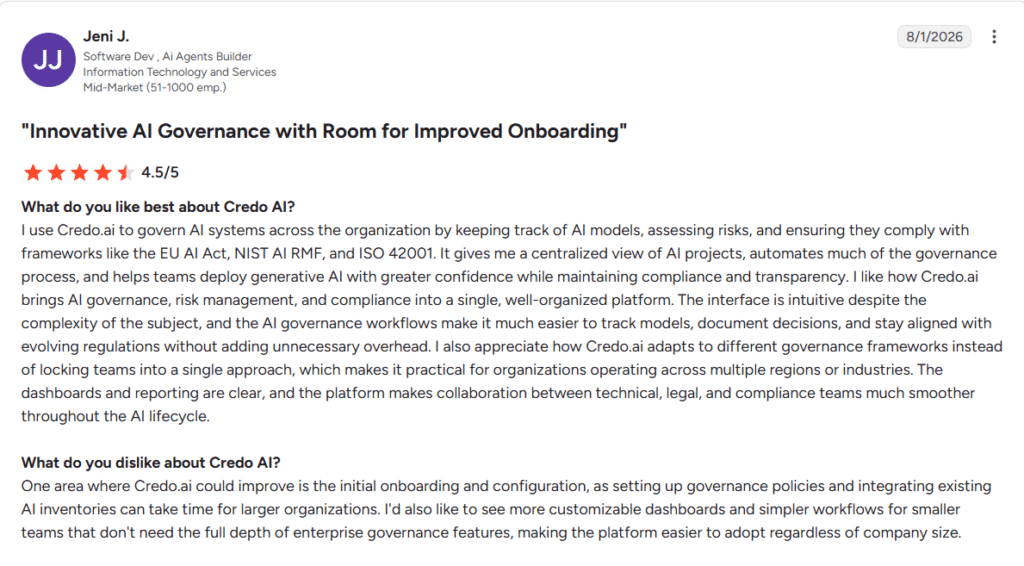
Credo AI stands out in three areas, based on user reviews:
- Centralized AI governance: Reviewers value the platform having AI models, risks, policies, and compliance activity managed in one place. This gives governance teams a clearer view of AI use across the organization.
- Flexible framework alignment: Users appreciate the ability to work across different regulatory and governance frameworks. This is particularly useful for companies operating across multiple industries or regions.
- Clear workflows and reporting: Reviewers highlight the platform’s dashboards, structured workflows, and reporting capabilities. These features also make collaboration easier across technical, legal, risk, and compliance teams.
Source – G2
Limitations
Reviewers pointed out the following limitations:
- Onboarding could be smoother: One reviewer noted that the initial onboarding experience could be improved, even though the platform becomes easier to use once users understand the workflow.
- Little feedback on large-scale implementation: They also mentioned that existing reviews provide limited detail on deployment effort, integrations, customer support, and performance across complex enterprise environments.
- Limited runtime enforcement coverage: Agent Governor currently supports only Claude Code. Teams using other agent environments cannot yet apply the same controls across their full agent estate.
Rating
G2: 4.4/5, based on 5 reviews.
Pricing
Credo AI does not publish standard pricing. You can contact their team for details.
2. IBM watsonx.governance – Best for regulated enterprises in the IBM ecosystem
IBM watsonx.governance is built for enterprises that need AI governance to connect with broader risk, compliance, and model-monitoring programs. Its Governance Graph brings AI systems, policies, risks, controls, and regulatory requirements into one view. This makes it easier for organizations to understand how each part of the governance program relates to the others.
Source – IBM watsonx.governance
The platform also brings together AI Factsheets, continuous monitoring, compliance workflows, and evidence collection. IBM reports support for more than 200 regulatory frameworks through its compliance ecosystem.
It can monitor models for drift, bias, quality, and safety, while its FedRAMP-authorized AWS GovCloud edition makes it relevant for US federal and other highly regulated deployments. Agent monitoring is available as well, although this capability is newer than IBM’s established model-governance features.
Notable Features
- Governance Graph: Maps AI systems, risks, controls, and policies.
- AI Factsheets: Records ownership, evaluations, approvals, and lifecycle metadata.
- Continuous monitoring: Tracks drift, fairness, quality, and safety.
- Automated compliance: Maps obligations and collects audit-ready evidence.
- Lifecycle workflows: Governs AI assets from request through production.
Integrations
IBM connects watsonx. governance with OpenPages, OpenScale, watsonx.ai, watsonx Orchestrate, and Guardium AI Security. It can also govern models hosted on AWS and Microsoft Azure.
Notable Customers
Zurich, Infosys, US Open, and Bank of Brazil.
Analyst Recognition
IBM was named a Leader in The Forrester Wave: AI Governance Solutions, Q3 2025 and Gartner’s June 2026 Magic Quadrant for AI Governance Platforms.
Strengths
IBM watsonx.governance stands out in three areas, based on public reviews:
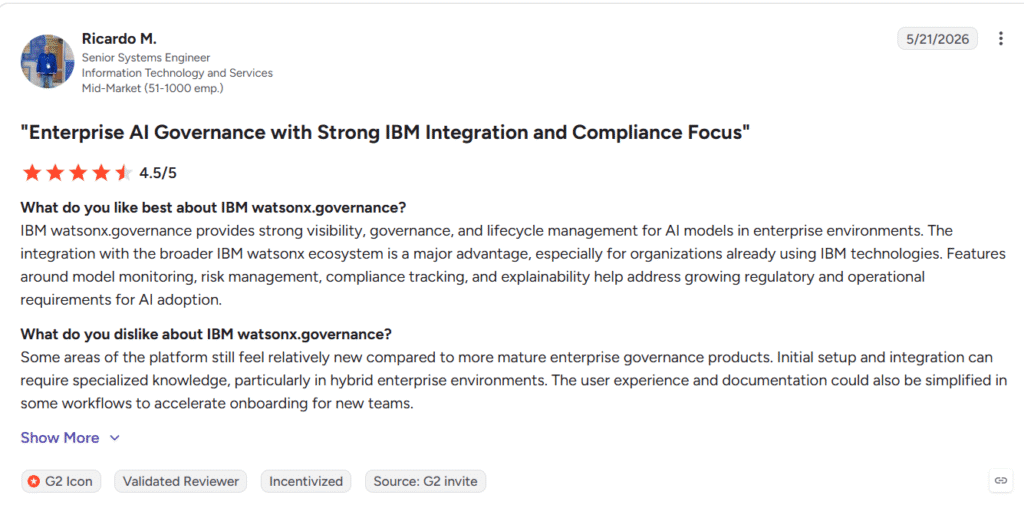
- Centralized AI governance: Reviewers value managing models, risks, policies, approvals, and documentation in one place. This gives organizations clearer visibility across the AI lifecycle.
- Monitoring and transparency: Users highlight bias detection, performance monitoring, explainability, and audit trails. These capabilities help regulated organizations maintain oversight after deployment.
- Compliance automation: Reviewers appreciate AI Factsheets, automated workflows, and policy controls that reduce manual documentation. This makes reporting and audit preparation easier as AI use expands.
Source – G2
Limitations
As per user reviews, the limitations buyers should consider are:
- A complex initial setup: Reviewers say configuring roles, workflows, and controls requires significant upfront effort. Organizations should not expect a plug-and-play implementation.
- A steep learning curve: Users mention that the number of features can feel overwhelming at first. Non-technical stakeholders may need additional training.
- Integration and cost concerns: Some reviewers report extra effort when connecting non-IBM tools and describe the platform as expensive. This may limit its appeal for smaller organizations.
Rating
G2: 4.3/5, based on 77 reviews.
Pricing
IBM offers a free Lite plan and pay-as-you-go pricing starting at USD 0.64 per evaluation. Governance plans start at USD 795 per instance, while on-premises pricing is based on virtual processor cores. You can contact IBM for exact pricing details.
3. OneTrust – Best for enterprises already using OneTrust for privacy and third-party risk
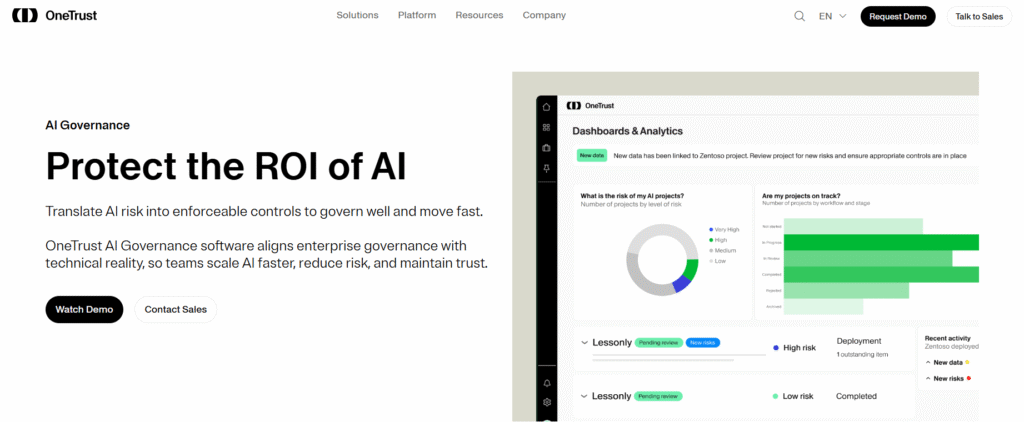
OneTrust makes the most sense for companies already using its privacy or third-party risk products. It manages AI projects, models, datasets, agents, and vendors in one system, with intake workflows, approvals, regulatory mapping, evidence collection, and continuous monitoring.
Source – OneTrust
The platform now goes beyond documentation. OneTrust can apply runtime controls across prompts, outputs, data access, and agent actions, including purpose-based permissions in MCP environments. Those permissions matter because an agent may be authorized to complete a task without being authorized to make every decision inside it. CookieYes is already confronting that question with browser agents and cookie consent, where an agent may be allowed to complete a booking but not necessarily make a privacy choice for the user.
Notable Features
- AI inventory: Tracks models, datasets, agents, vendors, ownership, and lifecycle status.
- Risk workflows: Automates intake, risk tiering, approvals, and evidence collection.
- Component mapping: Shows dependencies across AI systems and supporting assets.
- Continuous monitoring: Tracks drift, safety, performance, and quality signals.
- Runtime controls: Applies policies to AI interactions, data access, and agent actions.
Integrations
OneTrust connects with Databricks Unity Catalog, Google Vertex AI, Amazon SageMaker, and its broader privacy and third-party risk suite.
Notable Customers
GOL Airlines, Air Canada, MillerKnoll, and British Council.
Analyst Recognition
OneTrust was named a Visionary in the 2026 Gartner Magic Quadrant for AI Governance Platforms.
Strengths
OneTrust earns consistent praise in three areas, based on public reviews:
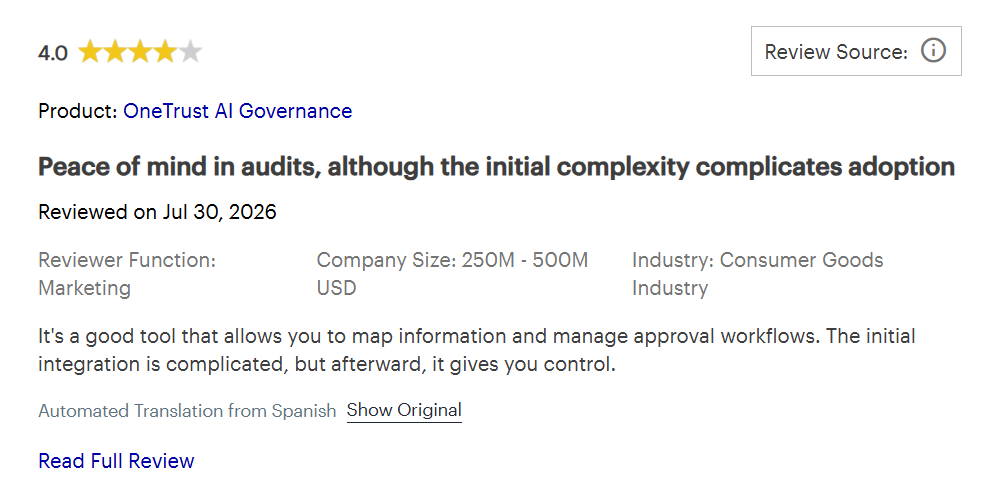
- Centralized AI governance: Reviewers value having AI use cases, risks, compliance obligations, and documentation managed in one place. This improves visibility and consistency across business units.
- Structured governance workflows: Users highlight the dashboards, questionnaires, and trackable workflows for documenting use cases and assessing risks. These features make reviews, approvals, and audit preparation easier to manage.
- Flexible regulatory alignment: Reviewers appreciate the configurable assessments and mappings to regulatory frameworks. This helps enterprises adapt the platform to their own policies and compliance requirements.
Source – Gartner
Limitations
User reviews also point to a few areas buyers should evaluate carefully:
- A configuration-heavy setup: Reviewers say the initial setup can feel overwhelming and requires organizations to align the platform with internal processes. Organizations may need established governance practices before they can realize its full value.
- A learning curve for non-technical users: Some workflows and features can be difficult for stakeholders without governance experience. Additional training may be required before employees can use the platform confidently.
- Post-implementation effort and cost: Some reviewers mention ongoing configuration work, an uneven user experience, and a high total cost of ownership. This could make the platform harder to justify for smaller or less mature governance teams.
Rating
Gartner Peer Insights: 4.0/5, based on 9 ratings.
Pricing
Pricing is based on admin users and AI inventory size. You can contact OneTrust for details.
4. Holistic AI – Best for enterprises prioritizing bias, fairness, and technical risk testing
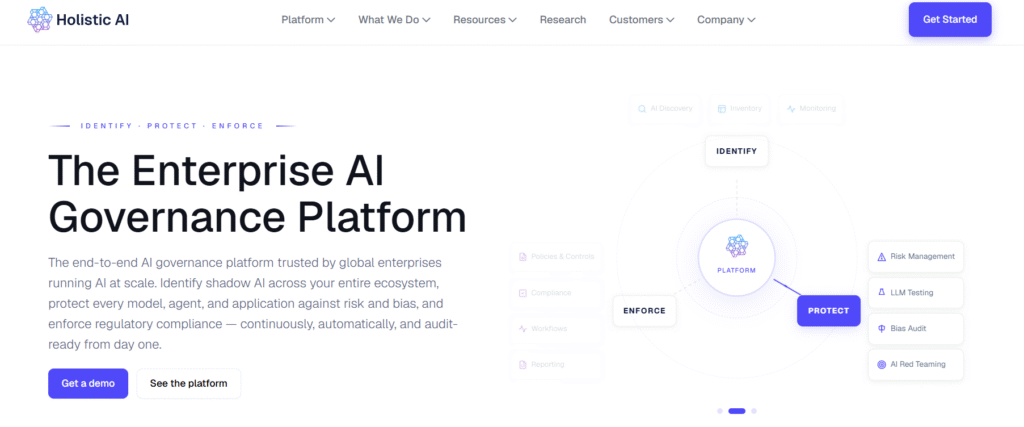
Holistic AI is built for enterprises that want to test how AI systems actually behave, rather than only documenting whether they meet a policy. It runs more than 40 tests covering bias, fairness, toxicity, hallucination, prompt injection, jailbreak resistance, robustness, and explainability.
Source – Holistic AI
The platform also extends that oversight into production through Guardian Agents. Sentinel Agents monitor agent behavior and flag risks, while Operative Agents can intervene inline when defined thresholds are crossed. This makes Holistic AI particularly relevant for organizations that need continuous technical testing alongside governance and regulatory compliance.
Notable Features
- Automated testing: Runs 40+ tests across bias, safety, security, and performance.
- Guardian Agents: Combines continuous monitoring with inline intervention.
- AI discovery: Detects models, agents, APIs, pipelines, and shadow AI.
- Regulatory mapping: Supports the EU AI Act, NIST AI RMF, ISO 42001, and NYC Local Law 144.
- Agent Graph: Maps agents, tools, models, and data flows.
Integrations
Holistic AI connects with AWS, Azure, Google Cloud, GitHub, Databricks, OpenAI, Anthropic, LangGraph, CrewAI, and ServiceNow.
Notable Customers
Unilever, Wikimedia Foundation, Starling Bank, and MindBridge.
Analyst Recognition
Holistic AI was the only challenger in Gartner’s 2026 Magic Quadrant and ranked first for AI Risk and Compliance.
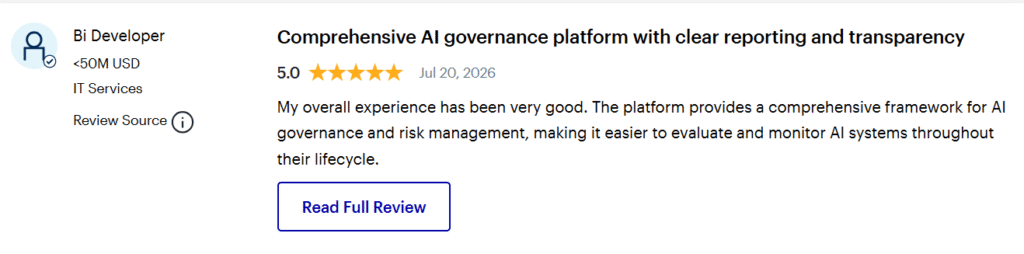
Strengths
Public reviews indicate Holistic AI performs particularly well in the following three areas:
- AI monitoring and visibility: Reviewers highlight its ability to monitor models and AI systems after deployment. This helps organizations detect issues and maintain oversight as system behavior changes.
- Regulatory compliance management: Users value the platform’s strong focus on governance and regulatory requirements. This helps organizations structure and manage their responsible AI programs.
- Risk assessment and audit readiness: Reviewers appreciate its risk assessment, reporting, and audit-ready capabilities. These features make it easier to document decisions and prepare compliance evidence.
Source – Gartner
Limitations
According to user reviews, these are the main limitations:
- A complex initial setup: Reviewers say implementation can require careful planning and configuration. Organizations may need more time before the platform is fully operational.
- A learning curve: Some users find the platform difficult to master at first. Governance and technical teams may require training to use its broader capabilities confidently.
- Integration and customization challenges: Reviewers mention complex integrations and limited flexibility in some areas. This may create additional work for organizations with highly specific workflows.
Rating
Gartner Peer Insights: 4.0/5, based on 9 ratings.
Pricing
Holistic AI does not publish standard pricing. You can contact their team for details.
5. Fiddler AI – Best for ML and engineering teams needing real-time production monitoring
Fiddler AI is built for organizations that care most about what happens after a model or agent goes live. It continuously watches production systems for drift, bias, hallucinations, toxicity, PII leakage, prompt injection, and jailbreak attempts. It then helps them trace problems back to the model, agent, or workflow that caused them.
Source – Fiddler AI
Its main strength is still observability, but Fiddler AI now goes beyond simply flagging problems. Its guardrails can block or redact unsafe prompts and responses inline, while every enforcement decision is recorded for later audits. This makes it a stronger fit for engineering and ML teams than for companies looking primarily for intake questionnaires and regulatory approval workflows.
That distinction between observing a problem and containing it before it acts is appearing in other high-stakes AI systems too. dxFeed applies it to AI-generated trading code, validating scripts and restricting where they can run before the product moves closer to automated execution.
Notable Features
- Real-time monitoring: Tracks drift, bias, hallucinations, and policy violations.
- Inline guardrails: Blocks unsafe content in under 80 milliseconds.
- Explainability: Provides feature attribution and root-cause analysis.
- Agent dashboards: Tracks actions, usage, costs, and performance.
- Continuous evaluations: Supports more than 100 predefined and custom metrics.
Integrations
Fiddler AI supports OpenTelemetry, Amazon Bedrock, Azure OpenAI, LangGraph, LiteLLM, and Kong Gateway. It offers SaaS, VPC, and on-premises deployment.
Notable Customers
Mastercard, Nielsen, LendingPoint, and American Family Insurance.
Analyst Recognition
Fiddler AI appears in 2026 Forrester and Gartner reports covering agent control planes, responsible AI, and AI observability.
Strengths
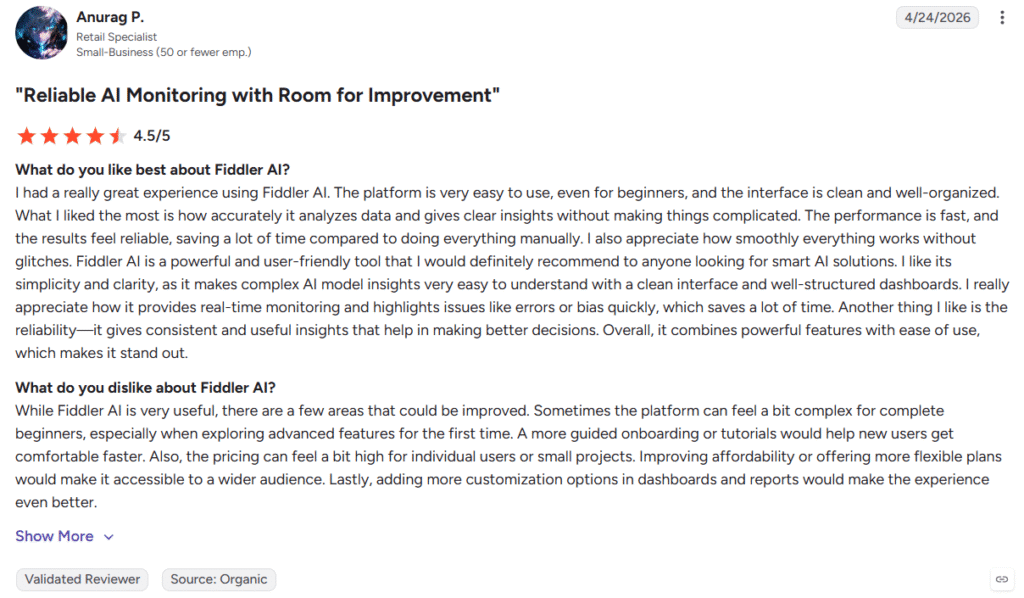
Fiddler AI receives the strongest positive feedback for the following three capabilities, based on user reviews:
- Real-time model monitoring: Reviewers value how quickly Fiddler identifies errors, bias, drift, and other performance issues. This reduces the manual effort required to monitor models after deployment.
- Clear explanations and dashboards: Users highlight its model-explanation features and well-organized dashboards. These tools make complex model behavior easier to investigate and communicate.
- Centralized AI observability: Reviewers appreciate having LLM and machine-learning monitoring in one place, along with useful integrations. This gives organizations a more complete view of production performance.
Source – G2
Limitations
Reviewers also point to the following limitations:
- A learning curve for new users: Advanced monitoring features can be difficult for people new to AI observability. More guided onboarding and tutorials could make adoption easier.
- Limited dashboard customization: Some reviewers want more flexibility when building dashboards and reports. Organizations with specific reporting requirements may need additional work.
- Pricing concerns for smaller teams: Reviewers say the platform can feel expensive for individuals and smaller projects. Its value may be easier to justify for larger production deployments.
Rating
G2: 4.3/5, based on 3 reviews.
Pricing
The Free plan includes real-time guardrails. Developer costs USD 0.002 per trace, while Enterprise pricing is customized.
6. Microsoft Purview – Best for organizations standardized on Microsoft 365 and Azure
Microsoft Purview is the most natural choice for companies already running Microsoft 365 and Azure. Instead of introducing a separate AI governance layer, it extends the data security and compliance controls those organizations already use to Copilot, AI apps, and agents.

Source – Microsoft Purview
Purview helps you see which AI tools employees are using, identify sensitive information entering prompts and responses, and apply DLP, retention, audit, and compliance policies. It also supports selected third-party AI apps and custom agents. However, its coverage remains strongest inside Microsoft’s ecosystem, so organizations with a heavily mixed cloud and AI stack may still need additional governance tools.
Notable Features
- DSPM for AI: Shows AI usage and sensitive-data exposure.
- Data classification: Identifies sensitive information in prompts and responses.
- Policy enforcement: Applies DLP rules to support AI interactions.
- Compliance Manager: Provides assessments for AI regulations.
Integrations
Microsoft Purview connects with Microsoft 365, Azure, Defender, Entra, and Copilot Studio. Data Map also supports Amazon S3, Google BigQuery, and Snowflake.
Notable Customers
Grupo Bimbo, Rabobank, and Fannie Mae.
Strengths
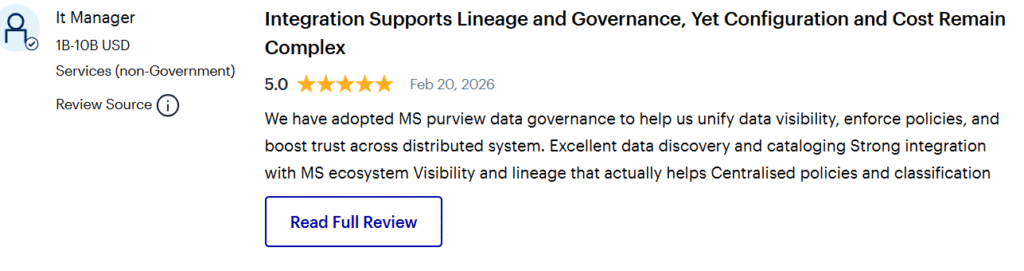
Based on public reviews, Microsoft Purview stands out for three key strengths:
- Strong Microsoft ecosystem integration: Reviewers consistently highlight how well Purview connects with Microsoft 365 and Azure. This makes it easier to apply the same classification, DLP, and compliance policies across tools organizations already use.
- Automated data discovery and classification: Users value Purview’s ability to locate sensitive information, assign classifications, and map data ownership and lineage. This reduces manual tagging and gives governance teams a clearer view of where sensitive data lives.
- Centralized compliance and protection: Reviewers appreciate having data discovery, policy enforcement, audit trails, and compliance controls in one platform. This makes investigations and regulatory reporting easier to manage.
Source – Gartner
Limitations
Public reviews also highlight the following drawbacks:
- A complex setup and learning curve: Reviewers say configuring permissions, labels, policies, and data sources requires considerable planning. Organizations may need specialist knowledge before they can use Purview effectively.
- Performance issues at enterprise scale: Some users report that scans, content searches, and eDiscovery tasks can take longer than expected. These delays become more noticeable across large data environments.
- Less flexibility outside Microsoft: Reviewers find Purview easiest to use within Microsoft 365 and Azure. Integrating other environments or adapting the platform to highly customized governance models may require additional effort.
Rating
Gartner Peer Insights: 4.2/5, based on 106 ratings.
Pricing
Microsoft Purview combines user-based licensing with pay-as-you-go pricing. Consumption-based services include In Transit Protection at USD 0.50 per 10,000 requests, while other charges vary by capability and usage. You can contact Microsoft for an exact quote.
7. ModelOp – Best for enterprises managing large, diverse AI portfolios across many teams
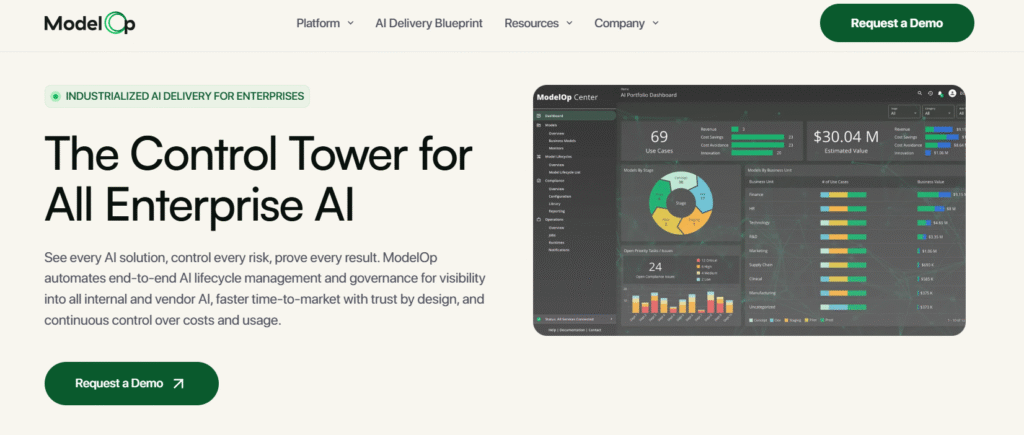
ModelOp is designed for enterprises where AI is spread across different departments, platforms, and development teams. It brings traditional machine-learning models, generative AI applications, agents, and third-party AI into one system of record, so governance teams can see what is running, who owns it, and which controls apply.
Source – ModelOp
The platform then helps move each AI use case through risk assessment, approval, testing, deployment, monitoring, and retirement. Risk tiers and required controls are assigned based on company policy, while evidence and model cards are generated throughout the lifecycle.
For agentic systems, ModelOp can also inventory MCP and A2A assets and block unapproved agent traffic at the network level. This makes it a strong fit for large organizations that want one governance layer across a fragmented AI estate without replacing their existing tools.
Notable Features
- Automated risk tiering: Assigns controls according to policy.
- Agent governance: Inventories agents and blocks unapproved traffic.
- Lifecycle automation: Covers intake through retirement.
Audit evidence: Generates model cards, assessments, and test records.
Integrations
ModelOp lists 50+ integrations across AI, cloud, data, IT, and GRC tools.
Notable Customers
Prudential Financial, RBC Capital Markets, and BBSI.
Analyst Recognition
ModelOp was named a Visionary in Gartner’s 2026 Magic Quadrant for AI Governance Platforms.
Strengths
User reviews suggest ModelOp Center delivers the most value in these three areas:
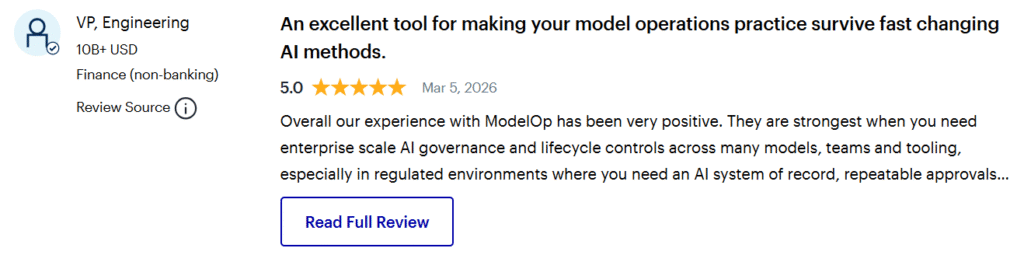
- Enterprise-wide lifecycle governance: Reviewers value having one system for inventory, approvals, audit records, and ongoing monitoring. This helps large organizations apply the same governance process across models, teams, and business units.
- Compatibility with existing tools: Users highlight its ability to work with existing CI/CD, source-control, incident-management, and scheduling systems. This allows enterprises to strengthen governance without replacing their established technology stack.
- Faster model delivery: One reviewer reported reducing the time required to move models into production from months to weeks. Automated approvals and continuous monitoring can prevent governance from becoming a delivery bottleneck.
Source – Gartner
Limitations
Reviewers identify the following limitations buyers should consider:
- A lengthy initial implementation: Reviewers say integrating ModelOp with existing systems and onboarding new business units can take longer than expected. Enterprises should plan for a phased rollout rather than a quick deployment.
- Significant technical requirements: Some users mention extensive coding and specialist knowledge during implementation. This makes ModelOp less suitable for organizations expecting a primarily no-code governance platform.
- Dependence on professional services: One reviewer noted that professional services were required for deployment. Buyers may need to budget for implementation support in addition to the software subscription.
Rating
Gartner Peer Insights: 4.9/5, based on 3 ratings.
Pricing
ModelOp does not publish standard pricing. You can contact their team for details.
8. DataRobot – Best for enterprises already using or planning to adopt DataRobot
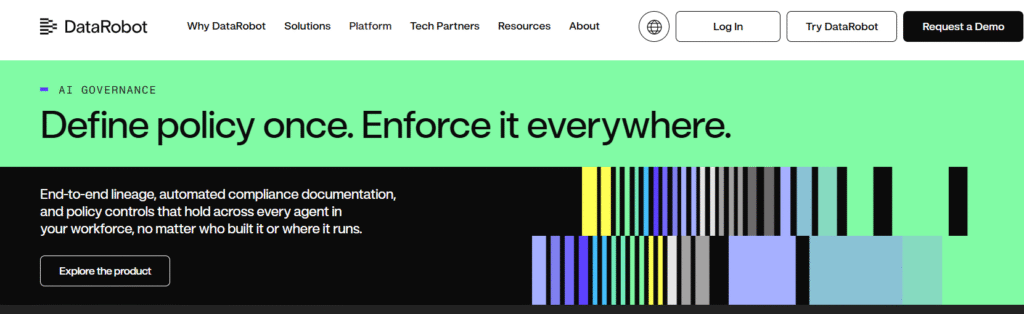
DataRobot sits inside the broader DataRobot platform, so organizations can build, deploy, monitor, and govern AI in one place. Its registry covers predictive models, LLMs, agents, applications, and tools, including assets built elsewhere.
Source – DataRobot
Organizations can define policies once, automate compliance documentation, and apply real-time guards for PII leakage, prompt injection, hallucinations, toxicity, and bias. This suits organizations that want governance embedded in AI delivery.
Notable Features
- Centralized registry: Tracks AI assets, ownership, lineage, and approvals.
- Real-time guardrails: Blocks unsafe prompts and outputs.
- Automated compliance: Generates documentation and audit evidence.
- AI red teaming: Tests for jailbreaks, bias, and toxicity.
Integrations
DataRobot connects with AWS, Azure, Google Cloud, Snowflake, Databricks, SAP, OpenAI, LangChain, Airflow, and MLflow.
Notable Customers
Chevron, Personify Health, Financiera Efectiva, and Noritiz.
Analyst Recognition
DataRobot was named a Leader in Gartner’s 2026 Magic Quadrant for Data Science and Machine Learning Platforms.
Strengths
According to public reviews, DataRobot excels in the following three areas:
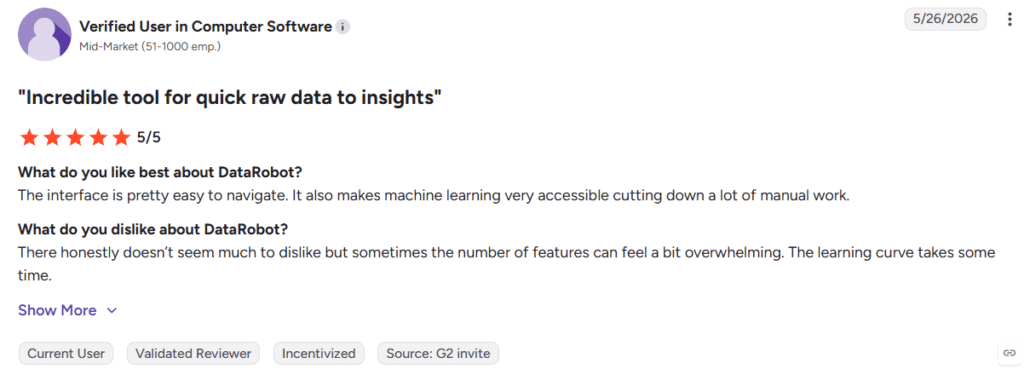
- Faster model development: Reviewers praise AutoML, automated feature engineering, and model comparison. These tools help teams move from experimentation to deployment faster.
- Accessible explainability: Users value the visual interface, feature importance, and prediction explanations. This makes model results easier to understand and share with business teams.
- End-to-end model operations: Reviewers appreciate having deployment, monitoring, drift detection, and governance in one platform. This reduces the need for separate tools.
Source – G2
Limitations
User reviews also identify the following limitations:
- High pricing: Reviewers describe DataRobot as expensive, especially for smaller teams or limited-use projects.
- Less flexibility for advanced users: Experienced data scientists sometimes want more control over pipelines, custom code, and model portability.
- Data and integration effort: Users note that data preparation, APIs, and custom integrations can still require significant technical work.
Rating
G2: 4.4/5, based on 31 ratings.
Pricing
DataRobot does not publish standard pricing. You can contact their team for details.
9. Securiti AI – Best for enterprises most worried about sensitive data flowing into AI tools
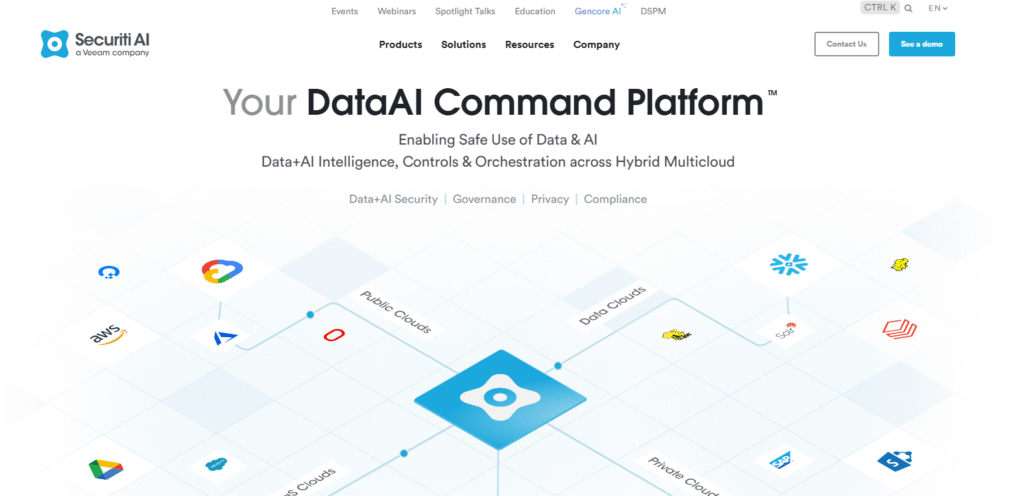
Securiti AI starts with a question many AI governance tools address later: what data is feeding the model or agent, and should it be there? It discovers and classifies sensitive data across hybrid multicloud environments, then maps that data to AI systems and processing flows.
Source – Securiti AI
The platform can govern training data, prompts, retrieved content, and responses through data controls and context-aware LLM firewalls. It also supports AI discovery, risk assessments, and compliance mapping, but its clearest advantage is connecting AI activity to the sensitive data behind it.
Notable Features
- Sensitive data intelligence: Discovers structured and unstructured data.
- Data and AI mapping: Connects AI systems with data sources, risks, and obligations.
- LLM firewalls: Control prompts, retrieved content, and responses.
- AI discovery: Catalogs sanctioned and shadow AI.
Integrations
Securiti offers 1,000+ integrations, including AWS, Azure, GCP, Snowflake, Databricks, Microsoft 365, and ServiceNow.
Notable Customers
QuinStreet.
Analyst Recognition
Securiti was a 2024 Gartner Peer Insights Customers’ Choice for DSPM and a Leader in the 2026 GigaOm Radar for DSPM. These recognitions cover data security rather than AI governance specifically.
Strengths
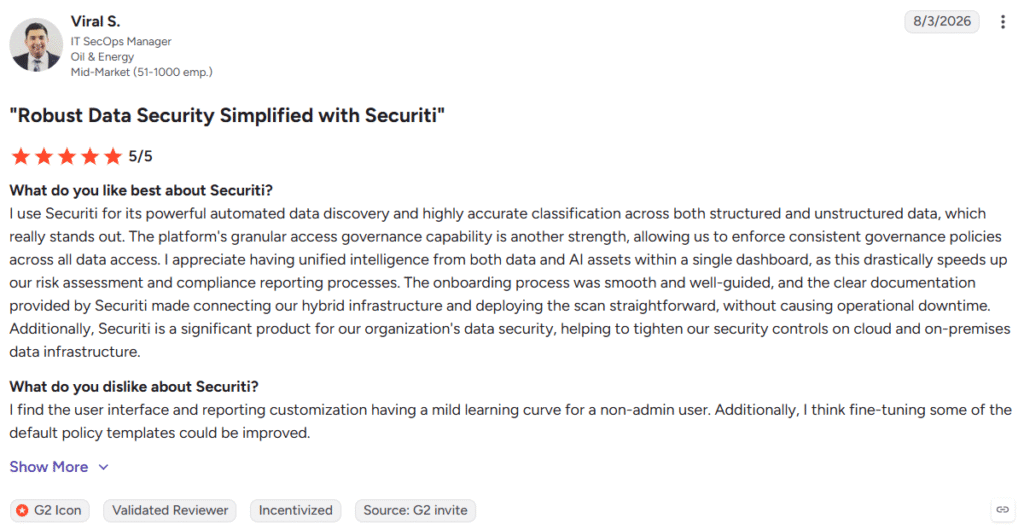
Securiti AI stands out in three areas, according to public reviews:
- Sensitive data discovery: Reviewers value its ability to find and classify sensitive data across multiple systems. This gives security teams clearer visibility into data exposure.
- Unified data controls: Users appreciate managing privacy, security, compliance, and data governance from one platform. This reduces reliance on disconnected tools and workflows.
- Implementation support: Reviewers frequently mention responsive customer support and technical guidance. This helps teams manage the complexity of enterprise-wide deployments.
Source – G2
Limitations
Based on user reviews, buyers should keep these limitations in mind:
- A broad and complex platform: Reviewers say the number of modules and capabilities can feel overwhelming. Teams may need time to understand which features they actually require.
- Classification tuning: Some users report that automated classifications still need manual validation and adjustment. Governance teams should expect ongoing tuning after deployment.
- Initial configuration effort: Reviewers mention that integrations, scans, and policies require careful setup. Organizations with complex data environments may need dedicated implementation resources.
Rating
G2: 4.6/5, based on 108 reviews.
Pricing
Securiti uses personalized, module-based pricing. You can contact their team for details.
10. Domo – Best for existing Domo customers extending governance into analytics workflows
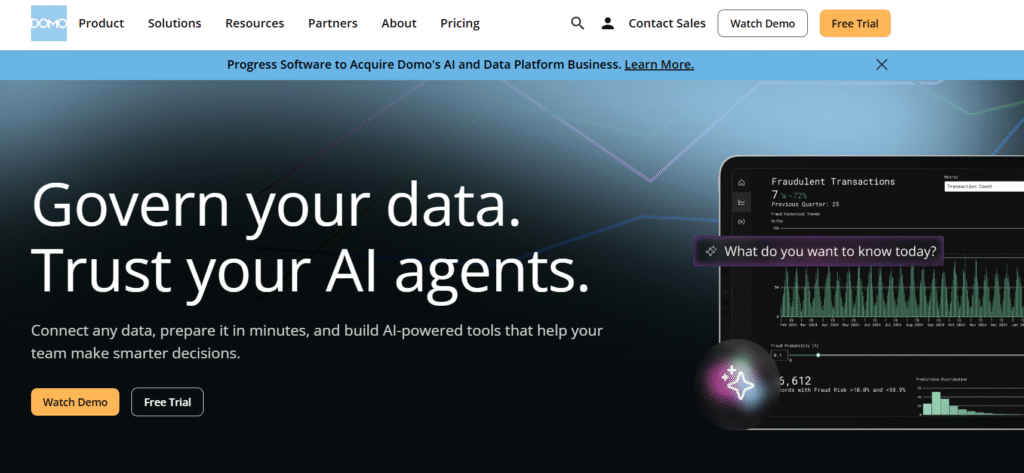
Domo is a practical choice for companies already using it for analytics. Teams can manage AI models, permissions, certified datasets, workflows, and governance reporting without adding a separate system.
Source – Domo
The platform stores internal and third-party models, tracks ownership, and controls who can use them. Its SQL assistant sends dataset schemas, not table data, to the AI service. That claim applies only to this feature.
Notable Features
- AI model management: Stores and compares internal and external models.
- Access controls: Manages execution, sharing, and administrator permissions.
- Certified data: Identifies trusted datasets and dashboard content.
Integrations
Domo offers 1,000+ connectors and supports OpenAI, Hugging Face, Snowflake, AWS, Azure, and Google Cloud.
Notable Customers
Nexon Omniverse, Lenovo, Yamaha, and Disparti Law.
Analyst Recognition
Domo won six 2025 Dresner Technology Innovation Awards, including Agentic AI and ModelOps.
Strengths
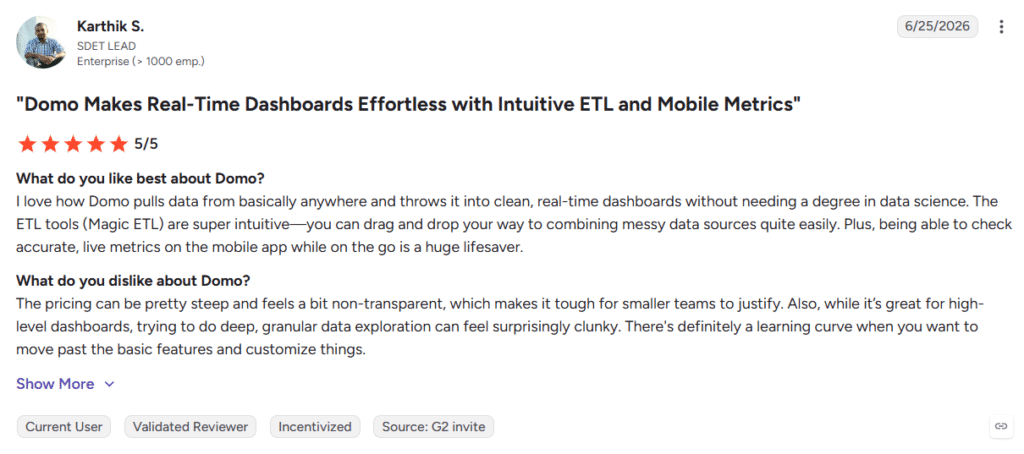
Based on public reviews, Domo stands out in three key areas:
- Broad data connectivity: Reviewers value Domo’s large connector library and ability to bring data from different systems into one place. This makes it easier to build governance reporting without creating a separate data pipeline.
- Governed self-service analytics: Users appreciate being able to explore data while still working with certified datasets, permissions, and shared standards. This gives business teams flexibility without removing central oversight.
- Strong visual reporting: Reviewers frequently praise Domo’s dashboards, alerts, and collaboration features. Existing customers can use these tools to make AI governance activity easier to track and communicate.
Source – G2
Limitations
According to user reviews, buyers should consider the following limitations:
- Unpredictable credit usage: Reviewers say Domo’s credit-based pricing can be difficult to estimate as workflows and data volumes grow. Teams need to monitor consumption closely.
- A learning curve for advanced work: Basic dashboards are accessible, but complex data models, workflows, and governance configurations require more training and technical knowledge.
- Limited flexibility in some areas: Some users want more control over dashboard design, custom reporting, and data portability. Highly specialized use cases may require additional workarounds.
Rating
G2: 4.3/5, based on more than 1,060 reviews.
Pricing
Domo offers a 30-day free trial and custom, credit-based pricing with unlimited users. You can contact its sales team for details.
How the 10 AI Governance Platforms Compare
Finding the right platform comes down to more than features. The table below gives you a side-by-side view of all 10 platforms across the factors that matter most during evaluation: who each platform is built for, how broad its integrations are, what users actually rate it, and where pricing starts.
Use it as a quick reference before you go deeper on any shortlisted option.
| Platform | Best For | Integrations | User Rating | Pricing Entry Point |
| Credo AI | Regulated enterprises running multiple AI and agent programs across departments | AWS, Azure, GCP, Databricks, Snowflake, and more | 4.4/5 | Not available |
| IBM watsonx.governance | Regulated enterprises in the IBM ecosystem | OpenPages, watsonx.ai, AWS, Azure, and more | 4.3/5 | Free Lite plan; paid from USD 0.64/evaluation |
| OneTrust | Enterprises already using OneTrust for privacy and third-party risk | Databricks, Google Vertex AI, Amazon SageMaker, and more | 4.0/5 | Based on admin users and inventory size |
| Holistic AI | Enterprises prioritizing bias, fairness, and technical risk testing | AWS, Azure, Google Cloud, Databricks, and more | 4.0/5 | Not available |
| Fiddler AI | ML and engineering teams needing real-time production monitoring | OpenTelemetry, Amazon Bedrock, Azure OpenAI, and more | 4.3/5 | Free plan available; Developer from USD 0.002/trace |
| Microsoft Purview | Organizations standardized on Microsoft 365 and Azure | Microsoft 365, Azure, Defender, Entra, and more | 4.2/5 | From USD 0.50 per 10,000 requests |
| ModelOp | Enterprises managing large, diverse AI portfolios across many teams | 50+ across AI, cloud, data, IT, and GRC | 4.9/5 | Not available |
| DataRobot | Enterprises already using or planning to adopt DataRobot | AWS, Azure, Google Cloud, Snowflake, and more | 4.4/5 | Not available |
| Securiti AI | Organizations most concerned about sensitive data flowing into AI tools | 1,000+ including AWS, Azure, GCP, and more | 4.6/5 | Module-based |
| Domo | Existing Domo customers extending governance into analytics workflows | 1,000+ including OpenAI, Snowflake, AWS, and more | 4.3/5 | 30-day free trial; custom pricing |
Final Takeaway
Every platform on this list solves a real governance problem, just not the same one. The right fit depends on where your AI program stands today, which regulations you’re actually exposed to, and who will be running governance day to day.
Before you commit to anything, take one real compliance workflow and run it through the platform using your own data, your own integrations, and your actual approval process. That single test will tell you more than any demo or feature comparison ever will.
Disclaimer: This article is based on publicly available information including product documentation, analyst reports, third-party reviews, and pricing data sourced from G2, Gartner, Forrester, and Capterra. All G2 quotes are verbatim from verified reviewer submissions, with reviewer names, company sizes, and review dates included for verification. We have not independently tested any of the platforms listed. Pricing information was accurate at the time of research but may have changed. Always verify pricing and feature details directly with vendors before making a purchasing decision.