| TL;DR: Some SaaS platforms integrate a major payment provider early, then never revisit whether the commercial terms still make sense as volume grows. The infrastructure works, but the economics behind it may not have kept up. Paymath is targeting that gap, helping platforms embed, optimize, and monetize payments without hiring a payments team to do it. |
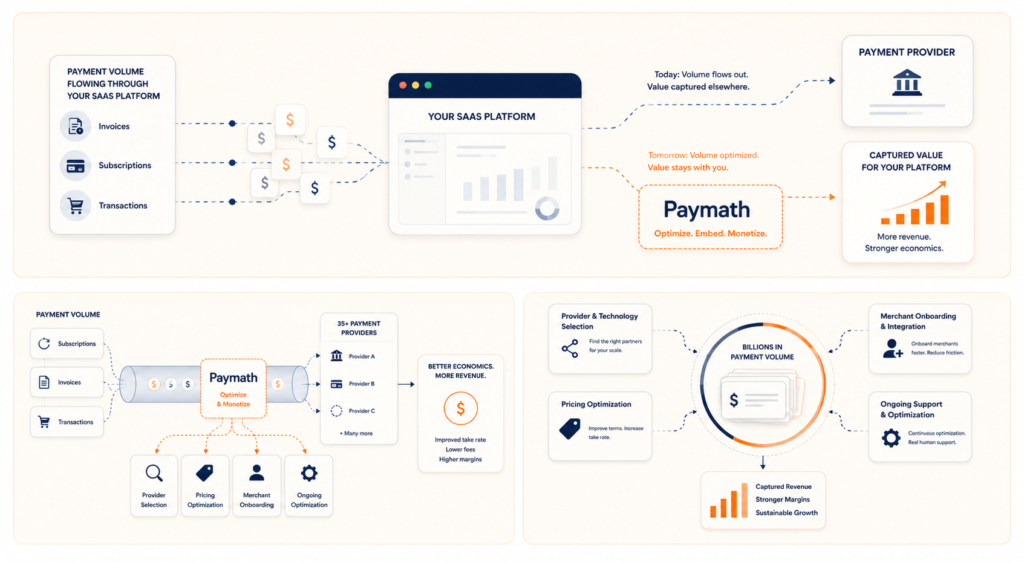
There is a number some SaaS founders have never looked up. It is not revenue, ARR or churn. It is the total payment volume flowing through their platform every month. Think about every invoice paid, every subscription collected, and every transaction processed inside the software, all adding up to one number.
A 2026 benchmark of hundreds of vertical SaaS platforms found annual payment volumes ranging from under $10 million to more than $10 billion. For mature, high-performing platforms in the same study, payments accounted for a median 35% of total revenue. A revenue line that large is hard to justify treating as an afterthought.
And yet, for some platforms, the commercial structure sitting underneath all that volume has not been revisited since the product first shipped. Paymath is betting that this gap is still wide open, and it is moving quickly to close it.
The Model Some SaaS Companies Are Still Running
When a SaaS company needs to accept payments, the default move is fast and obvious. Pick a processor, complete the integration, and ship.
Stripe, for example, offers simple pay-as-you-go pricing for businesses getting started, while separately offering custom pricing and volume discounts for companies with larger payment volumes. That simplicity makes sense early on. However, as payment volume grows, it is worth asking whether the original commercial model still makes sense.
The upside from getting payments right can become substantial. In Rainforest’s 2026 study, 76% of vertical SaaS operators described embedded payments as a critical revenue driver. For companies that are not actively managing their payments structure, that opportunity can remain largely unexplored.
What Paymath Is Doing Differently
To be clear, Paymath is not a payment processor. Depending on the platform, it can optimize the existing payment setup or help select and integrate a different provider entirely. It works as an independent organization across more than 35 payment providers, giving it flexibility that most internal teams would struggle to build on their own.
The company positions itself as the payments department behind its SaaS partners, covering provider and technology selection, integration, merchant onboarding, pricing, customer support, and ongoing optimization.
In other words, it takes on many of the operational responsibilities a SaaS company would otherwise need payments expertise to manage internally.
You see, Paymath helps evaluate and restructure the commercial setup around the platform’s actual scale. That process can reveal a gap between the terms a platform has today and what may be available at its current size.
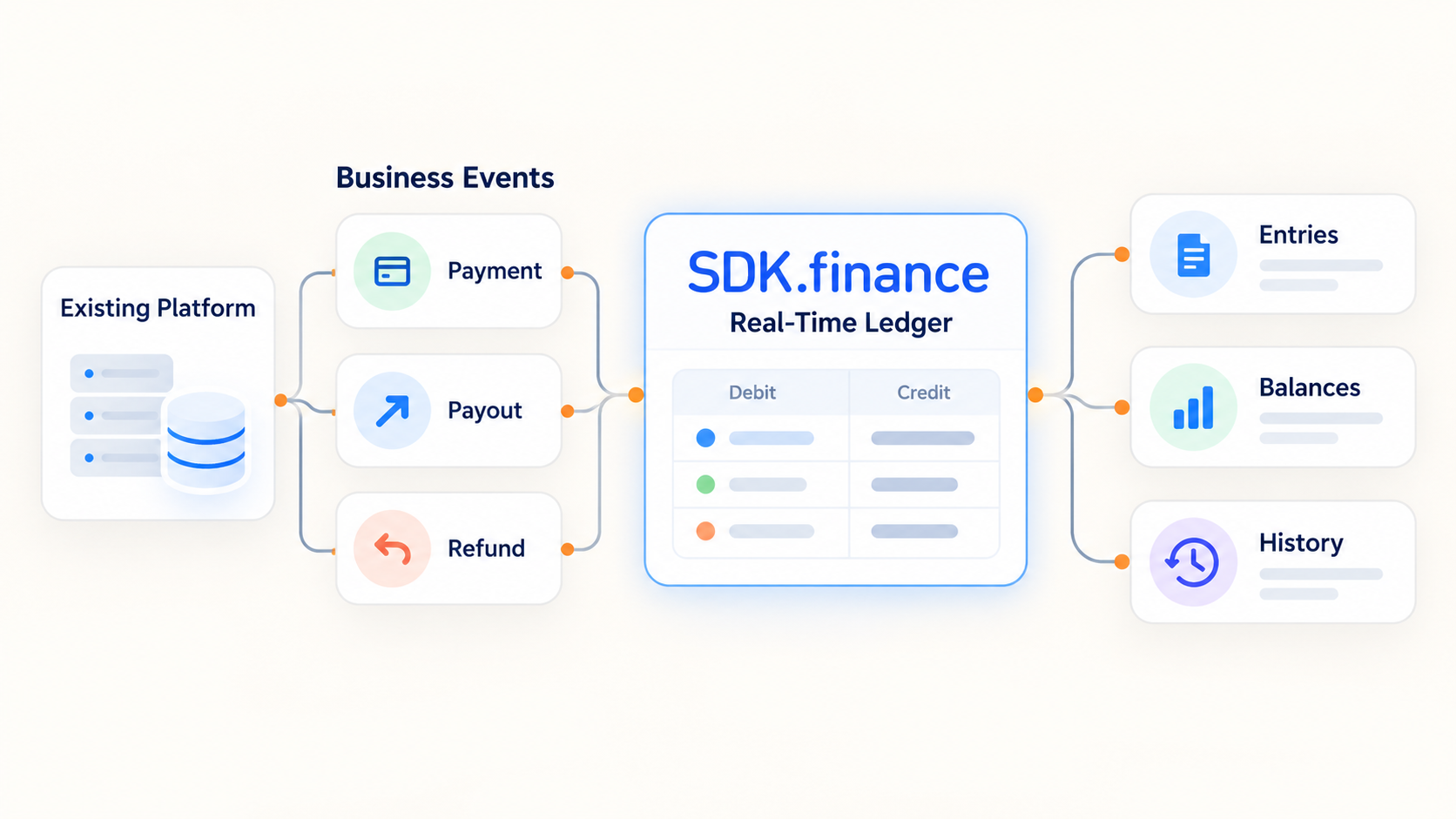
For merchants inside the platform, the change is less visible but just as meaningful. Bringing payment and reconciliation into the same software can reduce manual handoffs between invoicing, payment status, and reconciliation. The experience thus becomes more seamless without asking merchants to change how they work. That still leaves the accounting layer behind those transactions. SDK.finance’s real-time ledger is designed to record how payment events such as fees, payouts, and refunds affect the accounts while the existing payment system keeps processing them.
Paymath itself says it processes more than $2 billion annually across its customer base, giving it a substantial base of real-world platform economics to work from.
The Model Works. Now Paymath Is Scaling It Across Canada.
Paymath is not at the concept stage. The model is already running with NotaBene Legal, a management platform built for legal professionals in Canada.
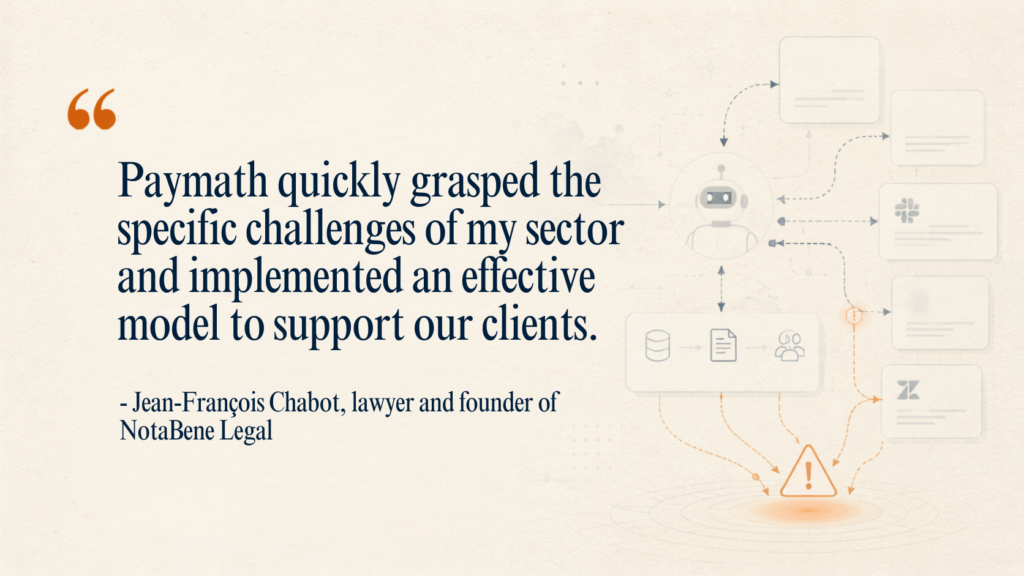
Jean-François Chabot, lawyer and founder at NotaBene Legal, described what working with Paymath looked like in practice:
He also pointed to the onboarding process and after-sales support as the parts of the experience that stood out. For legal professionals, where client trust and operational reliability matter as much as functionality, that kind of hands-on support is hardly a small detail.
The NotaBene engagement is one early proof point. Paymath is already working with several other SaaS companies beyond NotaBene, so the model is already being applied across more than one platform and vertical.
To accelerate that expansion, Paymath has brought on Calvin White as Director of Partnerships. His focus is identifying SaaS companies across Canada where Paymath believes there may be opportunities to embed, optimize, or monetize payment volume.
Embedded Payments Are No Longer Optional
Embedded payments are already moving into the SaaS mainstream. BCG reported in 2025 that more than half of relevant North American software vendors already offered embedded payments, while Tidemark found the median payments attach rate among vertical SaaS platforms had doubled in just one year. As software takes a bigger role in how businesses get paid, it can also influence which processor those businesses use. Helcim’s $53M raise is built around giving merchants more freedom to choose a processor without changing the software they already rely on.
The scale of that shift is significant. Software providers with integrated payments already account for 36% of SME acquiring revenue, with BCG projecting that figure will reach 45% by 2028. Meanwhile, 87% of vertical SaaS companies offering fintech products now include payments, up from just 30% the previous year.
However, adoption inside those platforms still varies sharply. Rainforest’s 2026 benchmark found 78% of platforms were targeting payment adoption above 71%, while only 25% had reached it.
For some platforms, simply adding payment acceptance was only the first step. The harder part is getting merchants to adopt it, optimizing take rate, supporting them over time, and turning payments into a meaningful revenue line. AI shopping is pushing that same infrastructure question into a new interface. Shoppable has spent 15 years building the commerce layer that can turn an AI recommendation into an actual purchase, including product matching, inventory, order routing, and checkout across retailers.
The companies treating payments as a managed revenue line, not just a functional feature, are the ones capturing that upside. As that becomes harder to ignore, more platforms have a reason to ask whether their existing payments structure is still the right one for where they are today.