| TL;DR: On a construction project, a subcontractor’s bill can show more work than the progress report. OpenSpace Track measures visible work from 360° jobsite walkthroughs and compares it with the construction schedule without requiring a BIM model. When the numbers differ, reviewers can see which sections were measured and when, then check the quantities still in dispute before approving the bill. |
A framing subcontractor sends its monthly bill for 800 linear feet of interior walls, but the general contractor’s progress report shows 650.
Someone now has to explain the 150-foot difference. Perhaps the framing crew finished more work after the last site walk. Or maybe the contractor and subcontractor measured different sections of the wall. Without a building information model, or BIM to check against, the project manager has to take the drawings back to the site and measure everything again.
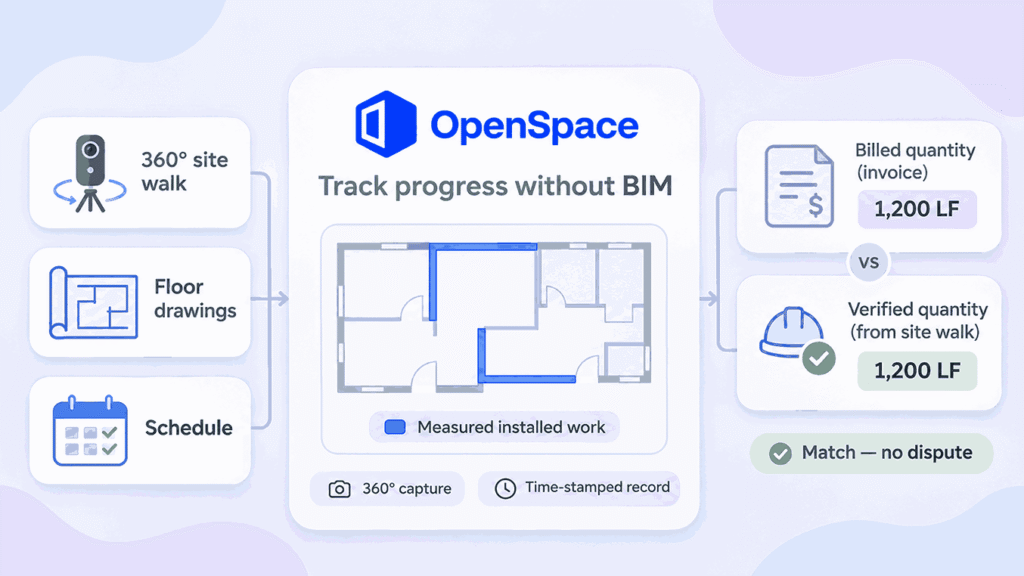
OpenSpace Track aims to reduce the need for that second round of manual measurements. In fact, contractors can use it as construction progress tracking software without BIM, although projects can still add a model if they have one.
Track measures installed quantities from 360° jobsite walkthroughs and compares them with the construction schedule. But here’s the bigger question: what can a project manager do with those quantities when it’s time to pay?
Progress Tracking without BIM Starts with Drawings and a Schedule
For contractors looking for construction progress tracking software that doesn’t require a BIM model, OpenSpace Track is one option worth evaluating. A BIM is a digital representation of a building and its individual components.
Some construction software uses this model to measure completed work. For instance, Doxel compares 360° video with the project’s 3D model whereas OpenSpace takes a different approach. Its Track software can work with just drawings and a construction schedule.
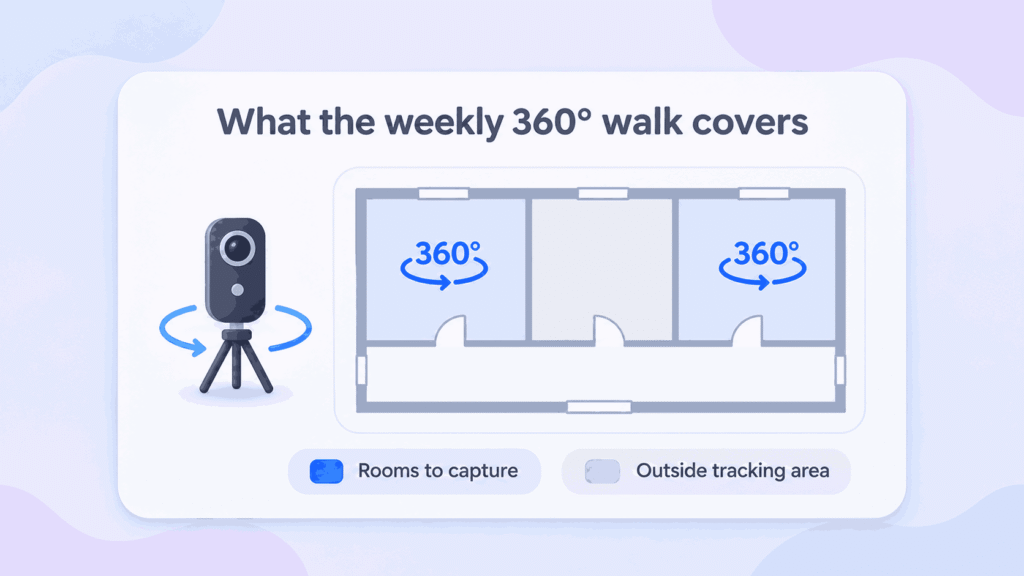
Before tracking begins, the contractor and OpenSpace decide which parts of the project and which tasks need to be measured. The contractor’s staff or OpenSpace’s capture service typically walks these areas once a week using a 360° camera.
OpenSpace requires the walkthrough to cover every room in the selected areas so the camera captures all visible surfaces. The company estimates a capture takes about 10 minutes per 25,000 square feet.
For contractors considering 360° construction progress tracking, the time and effort involved in each walkthrough are worth checking before choosing a platform. There’s also the turnaround time to consider. OpenSpace delivers updates within about 48 hours of capture. Contractors should factor this in when planning progress reviews and project meetings.
Each 360° Walk Shows What’s Installed and When It Was Measured
Back on the framing job, a field engineer walks the floor on Tuesday. OpenSpace uses AI to analyze the captured images, while trained specialists review the results. Once the review is complete, the project manager can see how much framing went in across the captured areas.
Field service teams are using photographs for a similar kind of verification. ServicePower checks technicians’ installation photos against defined quality standards while they are still on site.
If the subscription includes markups, the drawings also show which areas are complete and which still need work. This also gives project managers a way to view progress by floor and trade and identify where work is falling behind schedule.
A percentage shows planned vs. actual construction progress, while linear feet help the project manager check what the subcontractor billed. When it comes to construction installed quantity tracking, the measurement unit matters just as much. Framing might be measured in linear feet, while finishing work could be measured in square feet. After all, a percentage alone won’t help a project manager verify either quantity.
The Tuesday walkthrough also gives project managers a record of when those quantities were measured. If the framing crew finished another section on Wednesday, the report and the bill could both be right for different days.
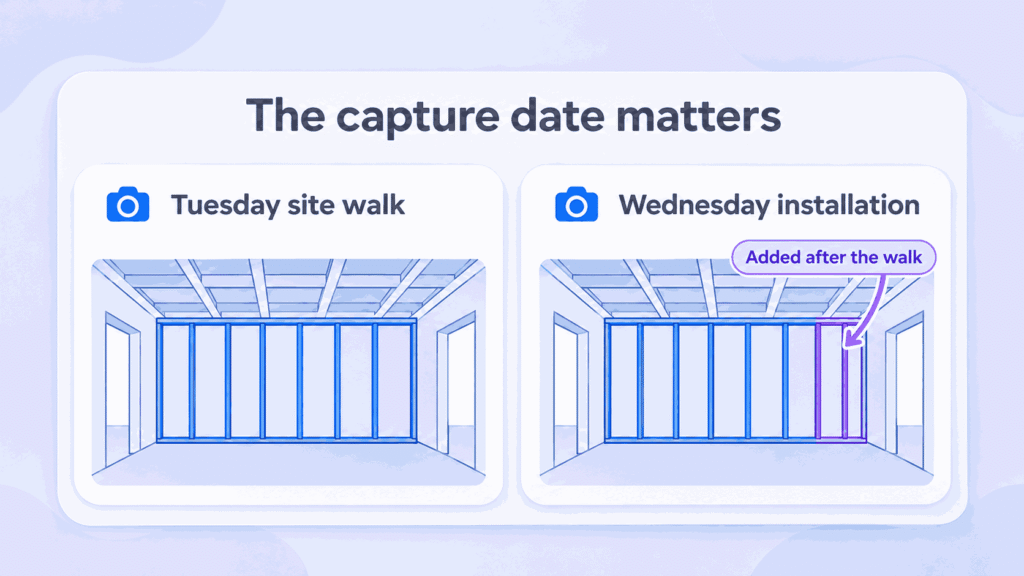
Capturing evidence while the work happens can avoid reconstruction later. CodeROI takes that approach in software development, recording engineering activity as it occurs rather than asking teams to recreate the history months afterward.
If the walkthrough missed a room, OpenSpace says Track flags the gap. However, there’s a harder problem to consider. If the crew covers the framing with drywall before the next walkthrough, Track can only measure what it captured earlier. Buyers will want to know how the software reports work it can no longer see.
Track Measurements Give Invoice Reviews a Starting Point
Checking what’s been built is one part of a much larger administrative job. And the time involved can add up. Construction finance software provider Rabbet reported in 2025 that general contractors spend 65 hours a month on payment administration.
The American Institute of Architects’ standard payment forms show why invoice reviews involve more than checking completed work. Reviewers may also need to account for stored materials, contract changes, previous payments, and money withheld under the contract. That’s where Track’s role becomes clearer. It focuses on completed work, which is the specific issue behind the framing dispute.
The same problem appears in other finance workflows when a number needs explaining. Datarails Desk brings invoice and payment records into the request so an employee can check the evidence before responding.
At Waypoint 2026, OpenSpace customer ibens showed how it connects measured progress with its schedule of values. This document assigns a dollar value to each part of the construction project. By bringing these two together, ibens gives its project managers and subcontractors a common reference when reviewing invoices. This lets them compare the work measured on-site with the quantities included in an invoice.
Michaela Rhile, a group product manager at OpenSpace, used her Waypoint session to show the Track API. It can send progress data to finance and project management systems. At the time of the event, the API was in beta, and ibens was exploring it to automate more of its billing.
For a project manager with 650 feet on the report and 800 on the bill, Track’s measurement is a starting point. The drawings and capture date help identify which sections were included in the measurement. So, if the subcontractor has newer evidence, both sides can review those specific sections instead of walking the entire floor again.
A Disputed Invoice is the Fairest Test of Progress Tracking
Contractors evaluating construction progress tracking software without BIM should see it work on their own drawings, not a sample project.
A good place to start is with one trade, such as framing. The vendor should show each measured quantity alongside the corresponding site images and scheduled work. This makes it easier to check whether the measurements match what was actually installed.
It’s also worth seeing the Excel progress report that comes with each weekly update, which lets the numbers travel beyond the platform. Track is available as an add-on to an OpenSpace Core or Enterprise subscription. Contractors can also request quantity tracking and markups as needed.
The 800-foot bill and the 650-foot report make a useful test case. A strong demo shows which sections make up the 650 feet and when each one was captured. Ultimately, the value lies in a time-stamped visual record of completed work that reviewers can compare with a subcontractor’s bill, even without BIM. For contractors, that makes progress tracking more than a weekly reporting exercise, giving them a way to connect what’s built with what’s billed.