| TL;DR: Deciding whether a process change worked requires checking what caused the improvement and whether it is worth keeping. MoreSteam’s EngineRoom guides quality professionals through choosing statistical tests, checking their data, and understanding results. Its simulation tools let users explore changes before introducing them at work. AI assistant Hexie explains which tools to use and why. As MoreSteam expands its coaching role, the challenge is helping users make sound decisions as more of the analysis becomes automated. |
A quality manager adjusts how a production line runs, and a few weeks later fewer products are failing inspection. The early numbers look good, so the business wants to know whether to keep the new setup.
However, the numbers don’t tell the whole story. The drop could just as easily come from a new batch of materials or a different crew on shift. Even if the adjustment did work, a small gain might not justify asking people to work differently.
Statistical software can help answer those questions. But getting a result is one thing. Knowing whether it’s worth acting on is another.
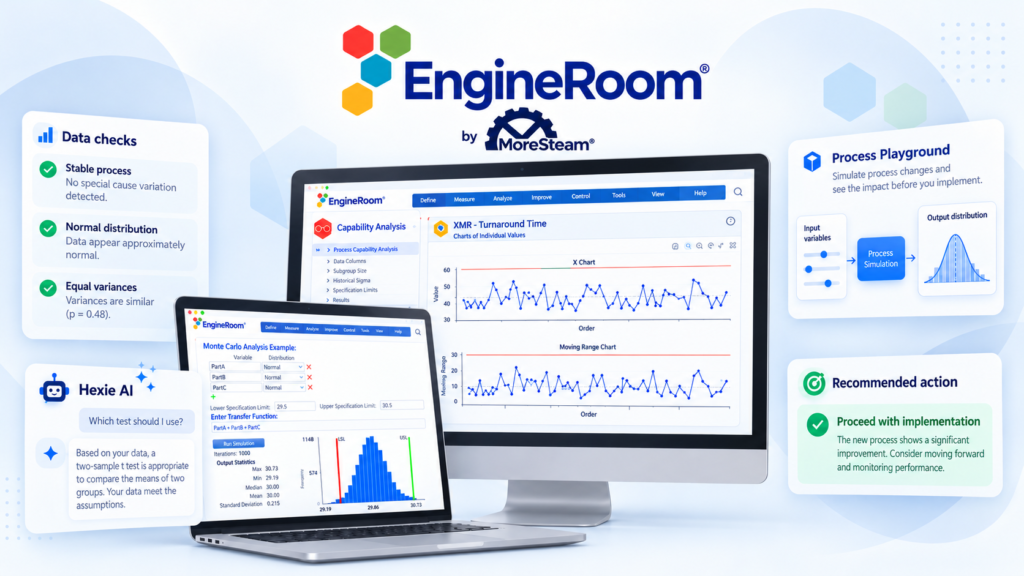
MoreSteam’s EngineRoom aims to bridge that gap. The browser-based software combines statistical analysis with process modeling and guides users through both.
As AI takes on more analysis, companies face a bigger challenge in making these tools accessible to more employees without compromising the quality of their decisions. Can software make statistics accessible to non-experts without teaching them to trust results they don’t fully understand?
Quality Expertise Has to Reach More People
Finding skilled people has become a problem across manufacturing. In a Censuswide survey commissioned by Octave, 78% of 2,263 manufacturing managers and directors said labor or skills shortages affect them.
That shortage leaves manufacturers with a practical question: how can they make the most of the expertise they already have? An experienced specialist may know how to diagnose a production problem, but teaching others to do the same takes time and support.
Bill Hathaway, MoreSteam’s CEO, says EngineRoom is built for people well beyond statisticians and engineers. It’s meant for anyone who has to use data to find the root cause of a problem and decide what to change.
The challenge, he says, is making the software easy for beginners to use without sacrificing its analytical capabilities.
The Important Choices Come Before the Result
EngineRoom explains statistical results in plain language, so users can understand the findings without interpreting every number themselves. The detailed statistics are still available for those who want to dig deeper. Hathaway says this part is quick, since a couple of clearly worded sentences can sum up a finished test.
However, getting a useful answer starts well before the test. Users first need to define what they want to learn and how much improvement would make a difference. They then choose a statistical test that fits the question and check whether their data meets its assumptions. They also need to decide how much risk of drawing the wrong conclusion they’re willing to accept.
For the production manager, that means answering two questions before running a test.
First, the manager needs to decide how much the failure rate must fall to justify keeping the new setup. Then they need to check whether the before-and-after data was collected under comparable conditions. The second is whether the before-and-after numbers came from similar conditions, with the same materials and crews. Only then does the analysis have a clear question to answer.
Hathaway says EngineRoom’s guided workflow helps users make these choices. NIST’s statistical handbook explains why checking the data matters. The standard measures of whether a process meets its specifications assume two things. The process has to be stable, and the data has to follow a normal, bell-shaped spread.
A clear conclusion tells users what the data suggests. After all, the result is only useful if the test was set up correctly.
A similar problem appears when AI helps with business planning. Market Logic’s DeepSights checks proposed plans against company research, giving employees evidence that can support or challenge the assumptions behind them before money is committed.
Familiar Software Creates Its Own Switching Costs
Switching statistical software isn’t as simple as choosing a cheaper alternative. Teams already know their existing tools, have training materials in place, and follow established ways of sharing results.
Enterprise AI rollouts run into similar adoption problems. Harbor found that firms can train employees and deploy a new tool without ensuring it fits their everyday work, while integration problems can make switching harder after rollout.
Hathaway told SaaSTake:
You can see why that matters in practice. Hathaway compares switching from familiar software to pushing a boulder across flat ground. It takes considerable effort to get moving, so teams need a clear reason to make the switch. Hathaway says EngineRoom’s payoff comes from ease of use and a lower total cost. In his math, cost covers IT and admin support as well as the license. He argues that simpler software can also reduce training and support costs.
Capterra’s listings show the gap in price and ease of use. EngineRoom’s single-user license costs $495 a year, against $1,851 for Minitab and $1,390 for JMP, two long-established statistics packages. EngineRoom has a 4.7 out of 5 ease-of-use rating on Capterra, compared with 4.2 for both Minitab and JMP.
For a department that needs licenses for many people, that price gap adds up quickly.
Reviewers who moved from Minitab describe the same calculation. One Lean Six Sigma Master Black Belt wrote that the cost gap, weighed against the features, no longer justified staying. Another longtime user said people switching from competing tools need time to adjust because EngineRoom approaches some tasks differently.
Simulation Lets Users Test a Change Before Making It
EngineRoom also includes Process Playground, which models how work moves through a production process. It can simulate steps such as parts arriving at an inspection station and waiting to be checked. Hathaway says this kind of capability is uncommon in analytics software.
Here’s where simulation adds another dimension. Users can model their existing workflow and test different configurations on screen. For example, a plant considering an extra inspection station could simulate how it might affect waiting times and output before installing one.
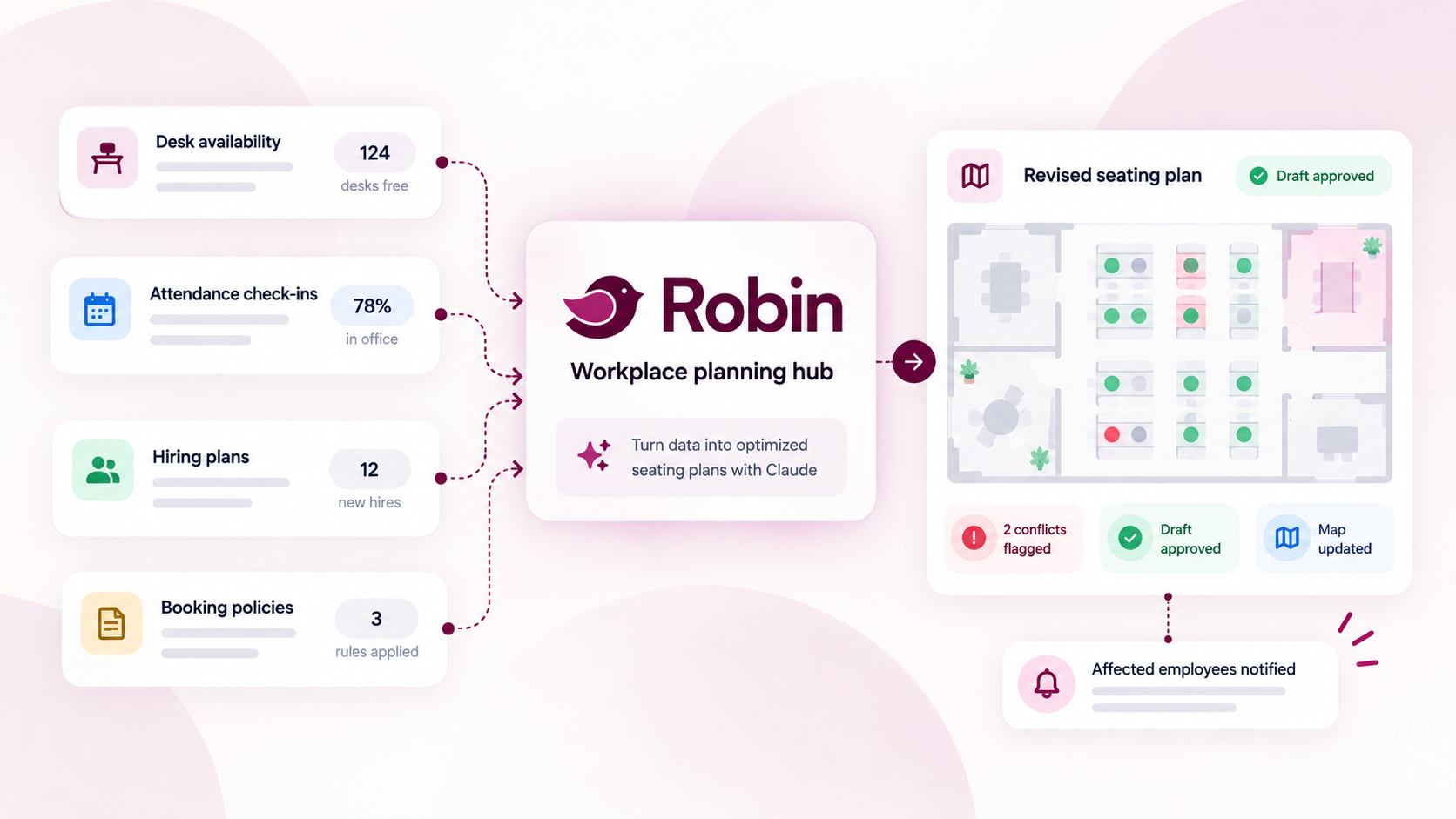
Workplace planning is moving in a similar direction. Robin lets managers prepare office changes in Claude, review the proposed layout and any conflicts, and approve the plan before the live workplace map changes.
For Hathaway, simulation fills a gap that statistical analysis alone cannot address. He added:
Statistical analysis helps teams understand what has already happened. Process Playground adds another option: they can model a proposed workflow and see how it might perform before changing the real operation.
Hexie’s Next Step is Helping Users Think Through the Analysis
Hexie, EngineRoom’s AI statistics assistant, helps users choose the right tool for a problem. But how much of the analysis should it handle itself?
Hathaway says MoreSteam wants users to develop their critical-thinking skills. He’s concerned that people may rely on AI so heavily that they stop questioning its analysis.
“In an ideal world, Hexie would operate solely in a Socratic fashion, guiding by questioning while checking for errors. But not every user is aligned with that approach,” he said.
MoreSteam wants Hexie to explain why it recommends a particular tool, rather than simply naming one. Hathaway says the assistant will also take on more tasks, such as identifying patterns in data and reviewing users’ analyses.
Hathaway says many MoreSteam customers lack access to experienced coaches. He sees Hexie helping fill that gap.
As Hexie takes on more analytical work, the line between answering and coaching gets harder to draw. For MoreSteam, success will mean helping users build the judgment to assess the answers they receive.