| TL;DR: Payment companies need to assess fraud risk while keeping customers’ money moving. SEON is bringing those checks into systems businesses already use. DeeMoney adopted its platform without pausing payments, while Plumery and Exist offer other routes to adoption. Alongside these partnerships, SEON is expanding the evidence teams can examine and making it available in AI tools such as Claude. These moves put fraud checks closer to where businesses make decisions about customers and their payments. |
Imagine a customer opens a money transfer app to send money home. They enter the amount and confirm the payment. From their side, the next thing that matters is when the money arrives.
Behind that transaction, the payment company has a decision to make. Is the account still being used by its owner? Does the payment fit their usual activity? A new device might be harmless, but it could also be a warning sign.
Those checks must happen while the customer is waiting. Changing the software behind them adds another task: keeping payments moving through the switch.
In September, Thailand’s DeeMoney made that switch, moving its fraud and compliance checks to SEON. Its customers kept sending money home the whole time. Getting there took more than a new fraud tool, and the reason points to a shift in where these checks happen.
DeeMoney Switched Providers without Pausing Payments
DeeMoney sends money from Thailand to more than 85 countries and receives payments through over 70 global partners. At that scale, any delay or outage in those checks can hold up someone’s money.
SEON’s announcement credits real-time checks and a single rules engine for the choice. SEON also carried over the fraud rules DeeMoney had been running with its previous provider. Those rules reflect what DeeMoney had already learned about suspicious activity in its own payments.
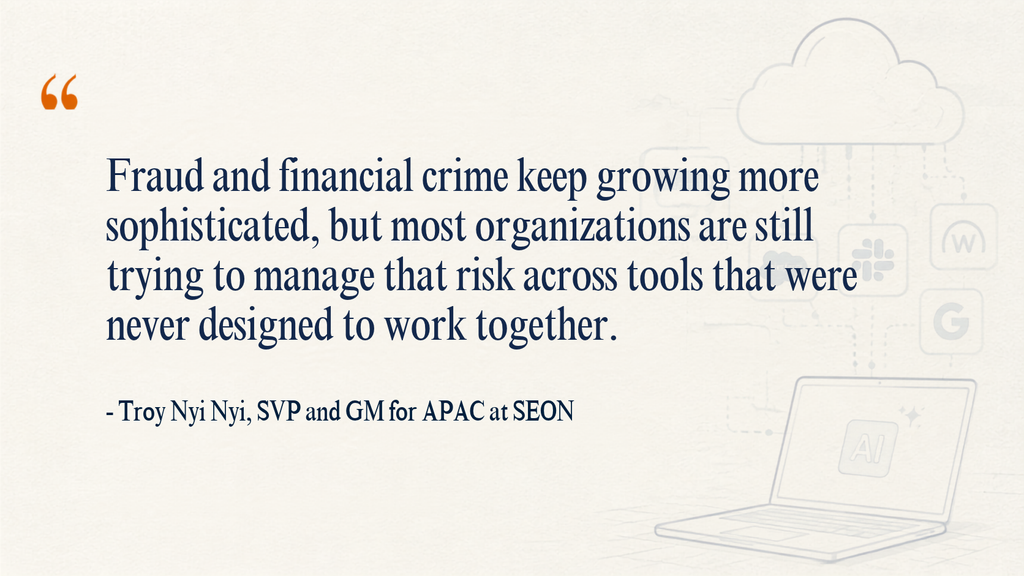
“We built this implementation around DeeMoney’s actual transaction patterns and data,” Troy Nyi Nyi, SEON’s SVP and GM for APAC, said in the announcement.
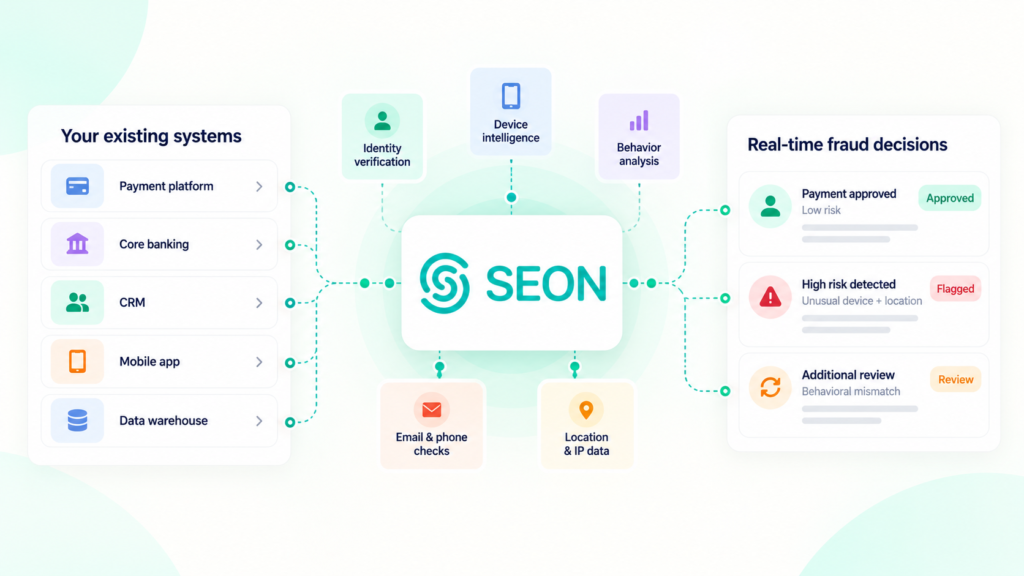
DeeMoney needed stronger screening without disrupting the systems it already used. That is where SEON’s other recent partnerships show another way businesses can bring those checks into the tools they already use.
Plumery and Exist Give Businesses Two More Ways to Adopt SEON
In July, banking software company Plumery integrated SEON’s device checks into its platform. Banks building their mobile and web apps on Plumery can now check device details and user behaviour at account opening.
The Philippines’ Exist Software Labs offers a different route. Through a September partnership, Exist’s engineers now connect SEON’s fraud and compliance tools to the systems their clients already run.
Nyi Nyi stated in the Exist announcement:
Neither route asks a business to build fraud detection itself. The checks come through a banking platform or an integration partner instead. For these businesses, fraud prevention integration means adding checks to the systems they already use.
Fraud Risk Doesn’t End Once an Account is Verified
A check at account opening only covers the start of a customer relationship. TransUnion’s analysis of Philippine digital activity found suspected fraud rates in 2025 peaked at login, at 6.1%. Account creation came in at 4.5% and financial transactions at 1.1%.
The riskiest point came after the account already existed. That problem extends beyond payments. Incognia has been looking at what happens when a previously verified account starts behaving differently, using changes across devices, locations, and behavior to judge whether the same person is still behind it.
SEON’s own analysis of betting and gaming customers during the 2026 World Cup shows how that plays out. It found cases where the account holder’s identity no longer matched the information on file. Previously verified profiles returned on unfamiliar devices and tried to make high-value withdrawals.
The findings concern gambling operators, but the same question comes up elsewhere: what has changed since this account was last trusted?
Answering it takes more than a single check. After all, a business needs evidence from across an account’s history, and it needs that evidence at the moment of the decision.
Small Details Can Expose a Fake Identity
SEON’s September 16 Signal Intelligence expansion gives businesses more signals to work with.
Phone checks can now flag SIM swaps and carrier transfers. Address tools can also spot when different accounts use the same location despite formatting differences. Session monitoring follows activity from login through payment.
No single detail proves much on its own. A shared address may have an ordinary explanation. However, paired with repeated device details and unusual account activity, it may deserve a closer look.
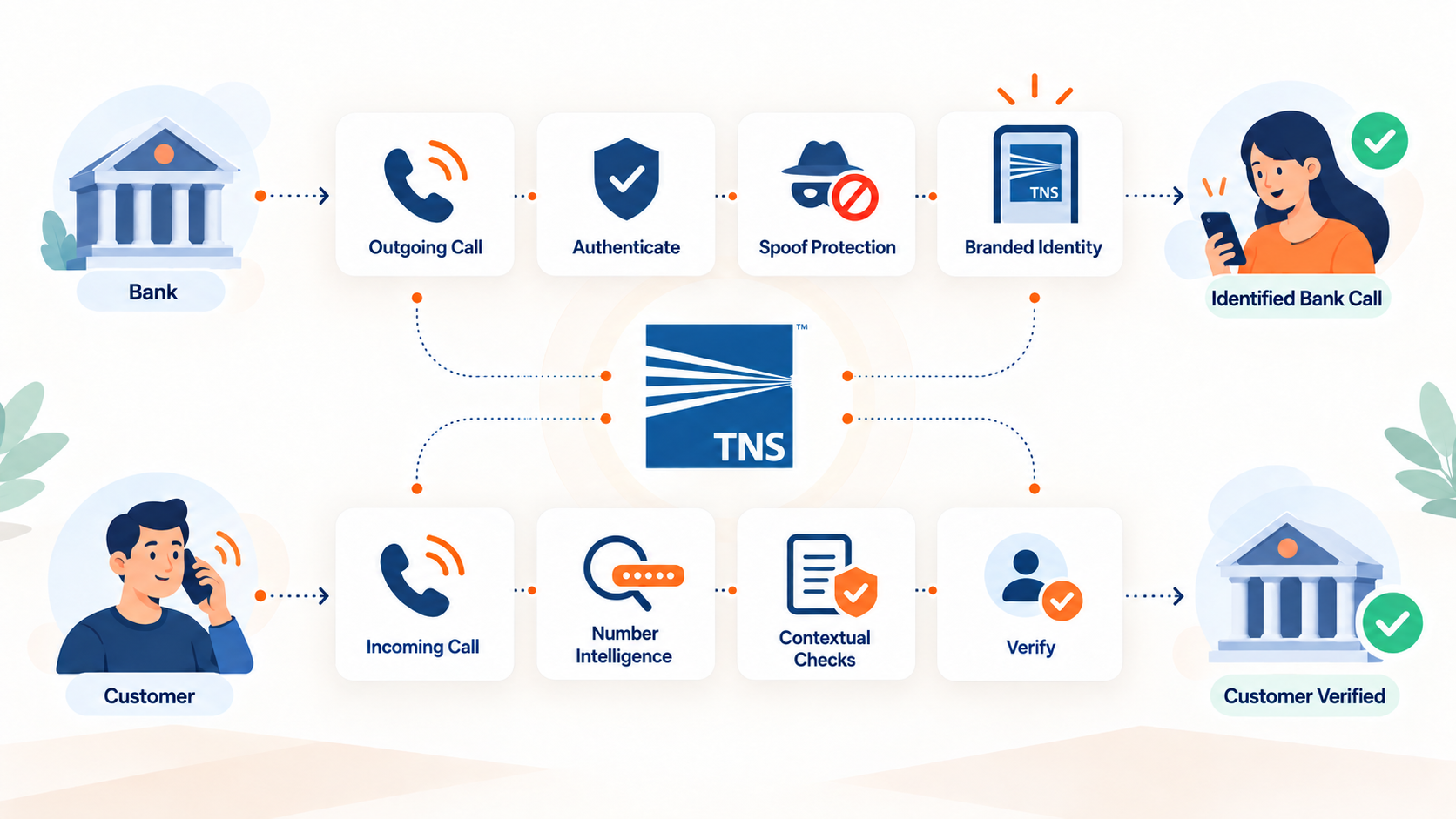
Single checks are also easier to fool. The same weakness appears when fraudsters copy signals people have learned to trust. TNS is tackling that problem in phone fraud, where a familiar bank number can be spoofed even though it once gave customers a reason to trust the call.
The Financial Action Task Force has documented criminals pairing stolen identity documents with made-up details to open accounts. Some of these combinations get past customer checks, including facial recognition.
SEON’s CEO and co-founder Tamas Kadar argues that this is where fraud checks need to go further:
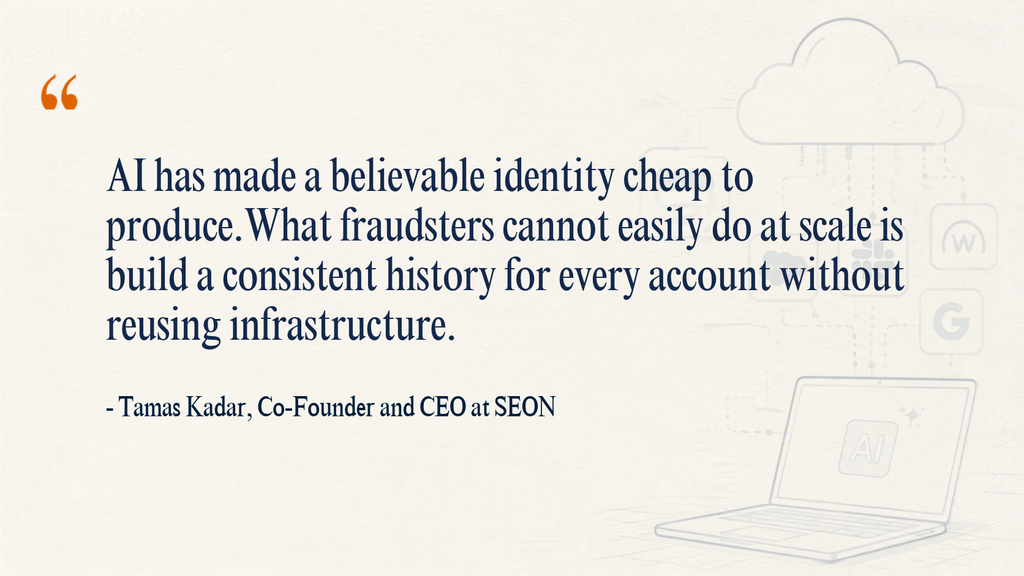
That reuse can be easy to miss. SEON says one investigation used a screen-brightness reading to connect thousands of accounts in a fraud ring operating on Android devices.
Analysts Can Follow the Evidence without Switching Tools
Gathering that evidence creates another practical question: how does it reach the person reviewing the case?
SEON’s June release lets analysts bring its risk data into outside AI tools such as Claude. It works through Model Context Protocol, a standard way for AI tools to pull information from other software.
That same standard is also becoming an important connection layer for enterprise AI. Salt Security has been looking at the security implications of MCP as agents gain more ways to reach company applications and data.
Eric Taylor, TurboTenant’s manager of trust and safety, described what changed for his company’s analysts in SEON’s announcement.
“Before, they had to manually pull data across multiple systems to piece together what happened,” he said. Now they can bring a user’s activity and SEON’s risk signals straight into Claude.
So, analysts have another way to use SEON’s data without moving between as many systems.
Fraud Prevention Has to Keep Pace With the Payment
SEON reported more than 80% growth in annual recurring revenue in 2025. API usage rose more than 250% from 2024. The API growth also points to greater use of SEON within customers’ existing workflows.
For fraud prevention, timing matters just as much as the evidence itself. Evidence that explains a suspicious transfer after the fact serves a different purpose from evidence used to decide whether to release it.
Ultimately, for the customer sending money home, the wait ends when the transfer goes through. The payment company’s opportunity to intervene comes before that moment.