
| TL;DR: Most enterprises cannot tell who has access to their systems in real time. Legacy identity tools were not built for a world where AI agents sit alongside humans inside company infrastructure. AI agents worsened the problem by arriving quickly, accumulating permissions, and sitting completely outside what traditional tools can see. Oak spoke with 100 CISOs and IAM leaders and found the same gaps everywhere. That’s why the company raised $60M to build an AI-native identity platform that governs humans, machines, and agents from a single control plane. |
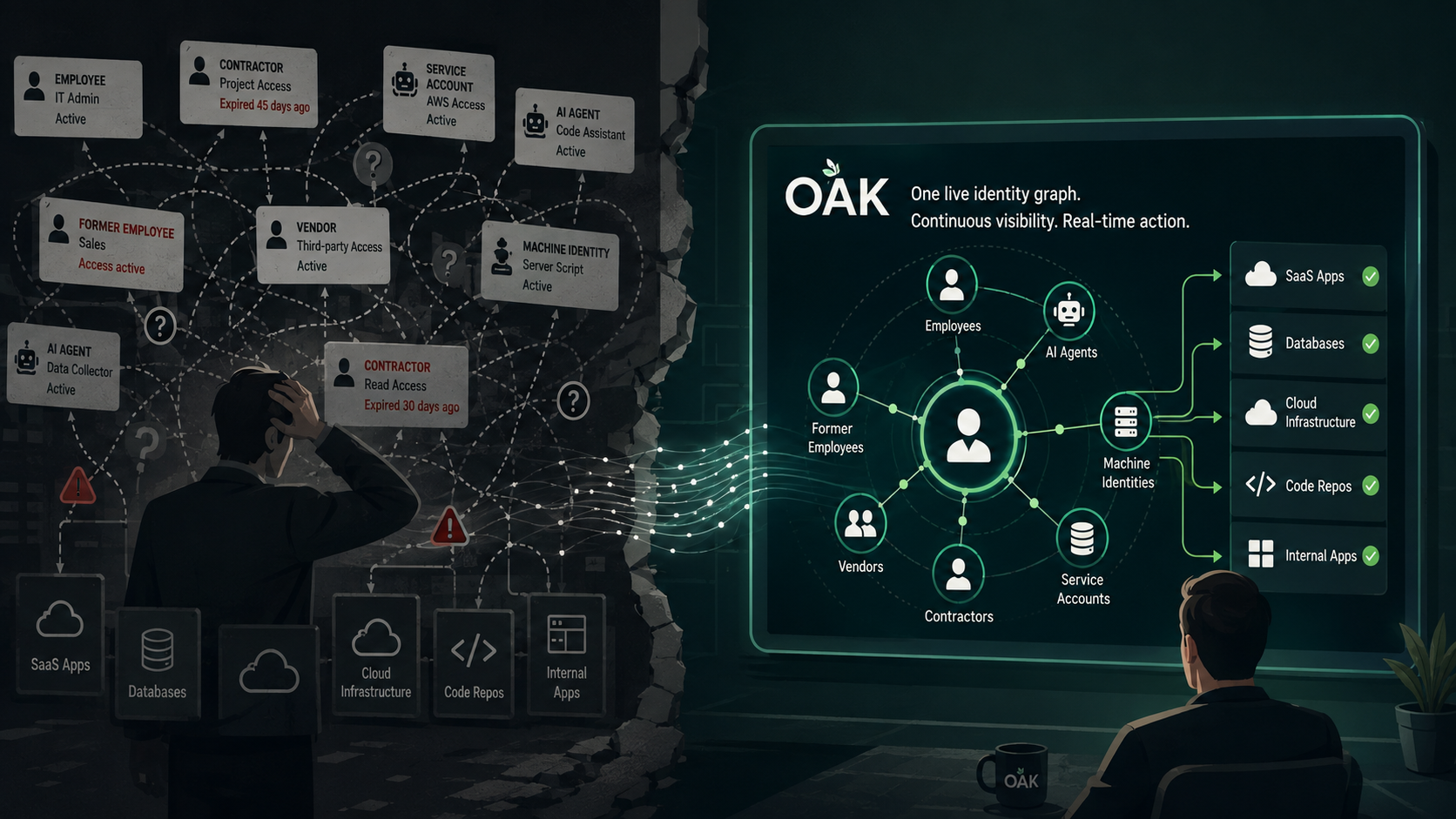
Many companies have an identity problem they have learned to live with. A manual review is often the only way to find out, and by the time it is complete, the picture has already changed.
The problem existed well before AI agents entered the enterprise. Cloud adoption, machine identities, and increasingly autonomous software have made it progressively harder to manage. That is the gap Oak raised $60 million to address, spending months building before making its product publicly available.
The Problem That Existed Before Anyone Wrote a Check
Identity and access management has a deceptively simple job: govern who gets into what and remove access when it is no longer needed.
Oak states that many legacy IAM tools fall short of providing the continuous visibility that modern environments require. Many of those tools were designed primarily for human users and comparatively static roles.
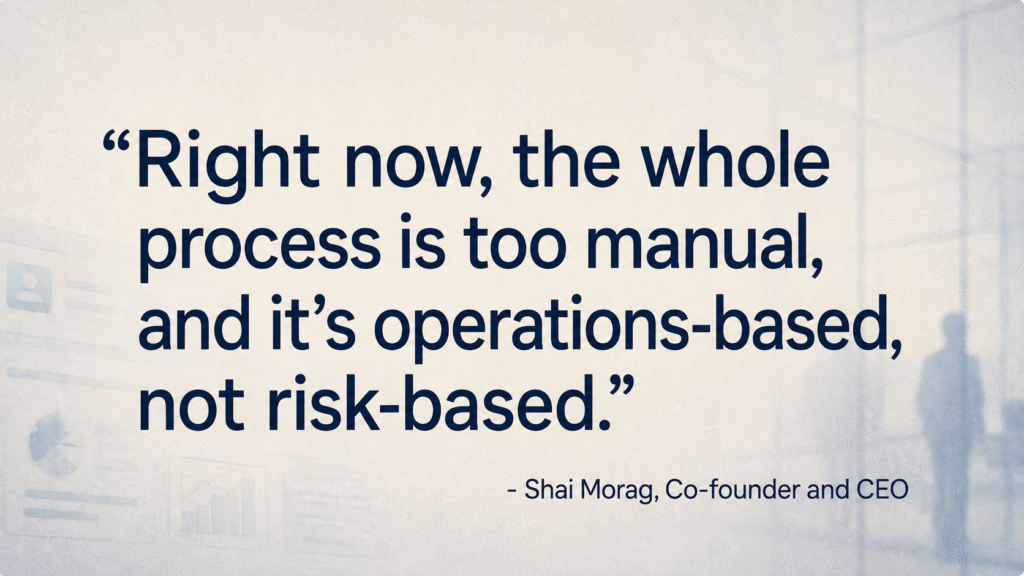
The company’s co-founder and CEO, Shai Morag, described what the current state looks like in practice:
Source – TechCrunch
For instance, there’s no trigger when an employee logs in from an unusual location. Before building anything, Oak’s co-founders spent months talking to more than 100 chief information security officers and identity and access management leaders.
What 100 Security Leaders Actually Said
Oak says those conversations repeatedly surfaced three core problems. Enterprises were running too many disconnected identity tools and could not clearly see how access was actually being used. On top of that, they had no effective way to govern AI agents entering their environments.
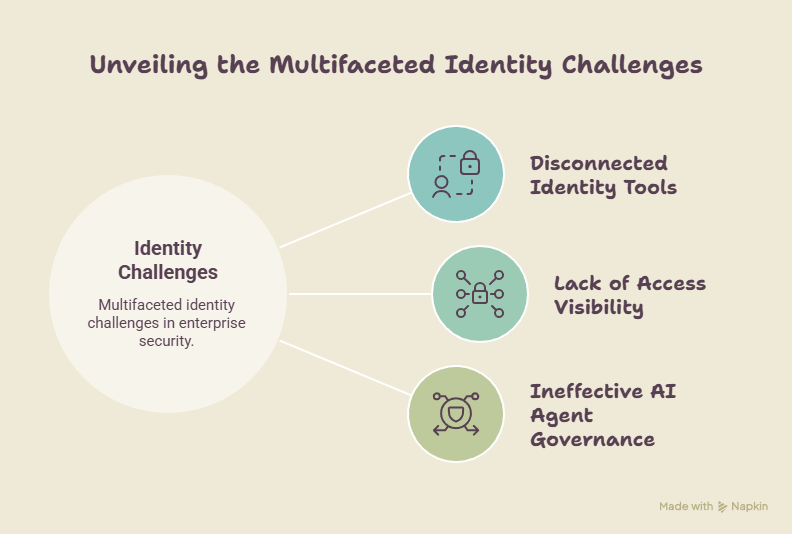
The issue was not that security leaders were unaware of these gaps. Most could describe them in detail. The problem was that legacy products operated in silos, leaving organizations without the consolidated view needed to address all three at once. Before Oak, enterprises had no single platform to address all three problems together. Incumbents each managed a slice of the identity problem without connecting it to the whole.
That is the business condition Oak was built to address: a longstanding set of identity gaps that fragmented tooling had never properly resolved.
Then the Agent Population Expanded
Those gaps became significantly harder to defer once AI agents began entering enterprise environments at scale.
Unlike human employees, AI agents do not go through standard onboarding and do not have HR records or predictable lifecycles. They arrive quickly, accumulate permissions to perform their tasks, and traditional IAM systems were simply not built to govern them.
Recent security research illustrates what can happen when agents receive broad access without adequate controls. In one proof-of-concept, researchers used prompt injection to make a misconfigured GitHub agent expose content from a private test repository. In a separate real-world case, researchers documented a ransomware operation. An AI agent handled much of the technical execution after a human operator initiated the attack.
Gartner predicts that by 2028, 70% of CISOs will use identity visibility and intelligence capabilities to shrink their IAM attack surface. That reflects how quickly governing AI agents has moved from a future consideration to a present requirement.
Why Updating Old Infrastructure Has Limits
Oak’s central argument is that adding AI features to existing platforms does not resolve the underlying architectural problem those platforms carry.
From the company’s perspective, a platform designed around periodic reviews does not automatically become a continuously updated governance system by layering AI capabilities on top. Oak says its own platform was built AI-native from the start.
Its connector framework is designed to reach any application, whether on-premise, cloud, SaaS, or internally developed. It builds a live identity graph from raw evidence and compares the access an identity holds against the access it actually uses.
The company also claims new connectors can be built in hours rather than the months it says legacy systems typically require. These are Oak’s stated capabilities and have not been independently verified in the public record.
The Switching-Cost Problem
Identity is not a category where buyers switch easily. Access policies, integrations, and workflows become deeply embedded in the existing system over time. The vendor lock-in runs particularly deep in this space.
That creates both an opportunity and a genuine challenge for Oak. The opportunity is that enterprises managing too many disconnected identity tools may be ready to consolidate. The challenge is convincing security buyers that the benefit of switching clearly outweighs the operational risk involved.
Both Oak’s co-founders and Accel, one of the round’s co-leads, expect the competitive field to fill quickly. Accel partner Andrei Brasoveanu pointed to the complexity of navigating the organizations that buy identity products, not just building the product itself.
What the Deployment Status Actually Shows
Oak’s product is not a roadmap pitch. It is generally available and deployed by enterprise customers, though the company has not disclosed client names or contract details.
A seed-stage company with its product already deployed by enterprise customers has moved beyond a purely conceptual proposition. That matters in a category where buyers are cautious, and security decisions carry real organizational accountability.
Oak says its platform builds a continuously updated identity graph from evidence of actual usage. It contrasts this with systems relying on static provisioning records and scheduled reviews. Whether that approach holds at enterprise scale remains to be demonstrated publicly.
What This Means If You Are a CISO Making This Decision
The case for staying with existing tooling is not irrational. Switching costs are real, and the track record of new entrants promising to replace established identity platforms is genuinely mixed.
What has changed is the scope of the problem itself. As enterprises deploy more AI agents, traditional IAM systems may struggle to provide the visibility and lifecycle controls those identities require. The tools built for human users and static roles were simply not designed with agents in mind.
Oak investigated that gap through conversations with more than 100 CISOs and IAM leaders before building the product. Its $60 million bet is that those gaps have become too costly to keep managing through disconnected tools and periodic reviews alone.
The question for security leaders is not whether the identity problem is real. Most already know it is. The question is whether the cost of fixing it now is lower than the cost of carrying it into a world where AI agents are no longer the exception but the default.