| TL;DR: AI can turn a trading idea into working code in seconds. It cannot tell you whether the idea was any good. With dxScript, a tool connected to the market data it supplies, dxFeed is betting the valuable part of the business has moved from writing code to knowing when not to trust it. |
A trader may recognize a promising market setup without knowing how to explain it to a computer.
They might ask a platform to mark candles that look tired, flag when large investors seem to be stepping in, or warn them when a price looks ready to break out. Another trader would probably know what they meant. A computer would not.
It needs numbers. How far must the price move? What counts as unusually heavy trading? How many days should the software look back before deciding?
Until recently, pinning those numbers down meant hiring someone who could write trading code. Now, AI has started to remove that step, turning ordinary sentences into rules a computer can follow.
In July 2026, market-data company dxFeed introduced dxScript, a tool built to make that translation for traders and the platforms they use.
It removes one of trading’s oldest bottlenecks: knowing how to code. However, once anyone can turn an idea into working code, who decides whether that idea deserves to run?
Plain-English Trading Is No Longer Unusual
dxFeed is not the first company to let traders describe a strategy in ordinary words.
Capitalise.ai, an automation platform for retail traders, lets users write a scenario in plain English and have it execute. TrendSpider, a charting and analysis tool, turns written conditions into indicators and alerts. Horizon Trade lets individuals describe a strategy, test it against past markets, then connect it to a brokerage account.
Writing code is no longer the starting point in trading software. A sentence is.
So a prompt box is easy to copy and hard to win on. The differences that matter show up after the sentence is submitted: whose data is behind the calculation, and what happens when the logic turns out to be wrong.
dxFeed Is Moving Beyond the Market Data Feed
dxFeed has spent years working behind the trading screen. It sells real-time prices and historical market data to brokerages and exchanges, who build the applications traders actually see. Its name rarely appears on those screens.
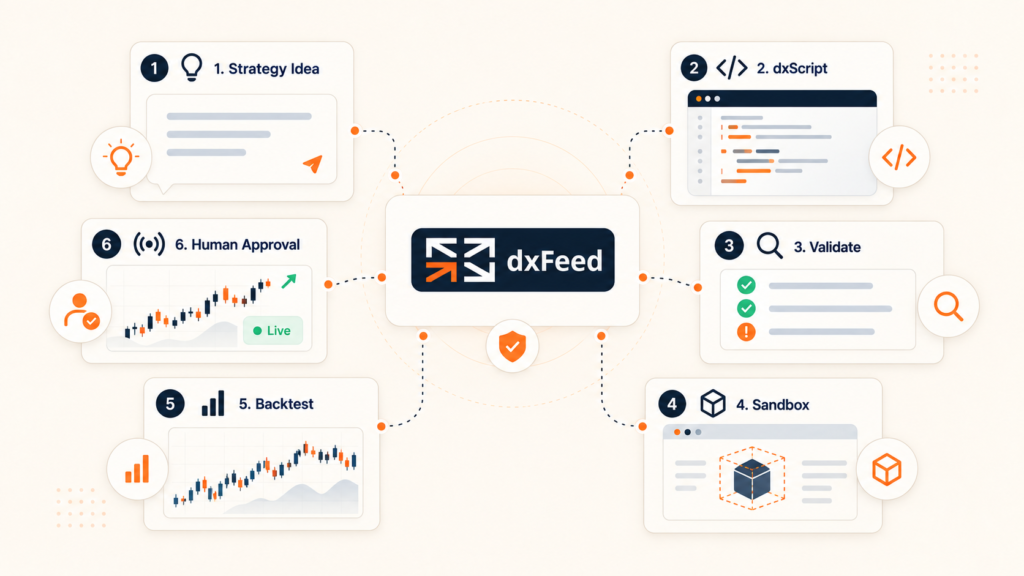
dxScript changes that position. dxFeed can now help customers turn the data into indicators, rather than simply supplying it. It might track which way a price is trending, or flag when trading volume climbs above its usual level.
Until now, that work happened on the customer’s side. A brokerage pulled dxFeed’s data, moved it into a separate coding tool, then carried the result back into its own platform. Each step belonged to someone else. That is changing.
Bringing more of that work in-house gives the company a chance to capture more of the value created after the data is delivered. It also explains who it is not competing with. Its buyer is still the brokerage, not the trader who ends up using the tool.
Working Code Does Not Mean a Working Strategy
A script can work exactly as intended and still lose money.
For instance, a trader may want to buy when a stock breaks above a recent high on heavy volume. AI can turn that into code in seconds. That part is easy. What it cannot do is tell the trader whether the pattern means anything, or whether it only sounds convincing.
dxFeed’s controls address a narrower problem. It built dxScript on JavaScript, a language AI models already know well. The generated scripts are checked before they run and executed inside a restricted space called a sandbox, which limits what the code can touch if something goes wrong.
That answers one question: will the code run safely? The harder one remains. Is the strategy any good?
Backtesting is the usual way to find out. On paper, it runs the idea against past market data to see how it would have done. However, keep adjusting the rules against the same stretch of history, and you can make almost anything look brilliant in hindsight.
Denis Krivolapov, Product Manager for dxScript at dxFeed, is upfront about that limit.
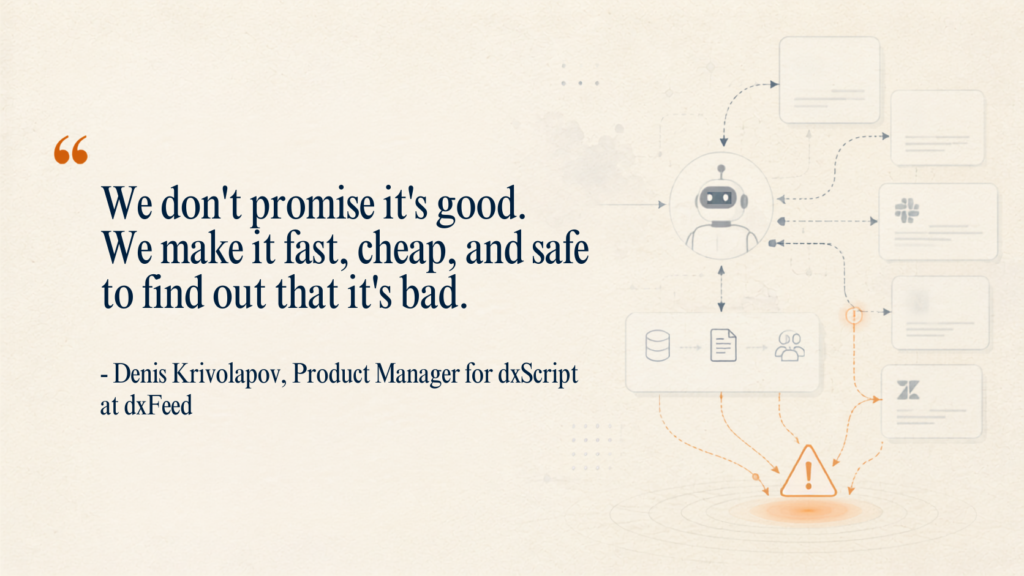
The Stakes Rise When a Signal Becomes an Order
Today dxScript mainly builds indicators. Its enterprise version adds historical testing, while automated alerts and full trading strategies are listed as coming soon.
The roadmap matters because an indicator cannot lose money by itself. Software that can trigger an order can.
Regulators are already watching that line, and their concern is with firms that rely on systems built elsewhere.
An August 2025 review by the UK Financial Conduct Authority looked at ten trading firms. It found that staff did not always understand how algorithms supplied by third parties had been developed. Some firms tested systems across varied market conditions and used small pilot trades. Others had poorly defined procedures or tested against too narrow a range of scenarios.
That responsibility sits with the trading firm, not the supplier. In practice, dxFeed’s customers may ultimately end up answering for controls that the company built.
The concern gets bigger as software starts acting on its own. In June, Bank of England Deputy Governor Sarah Breeden said existing rules were not written for systems that make their own decisions. Expecting a person to review every action, she added, is unrealistic. She suggested firms may need a way to shut such systems down quickly.
Easier Access Creates a New Duty
dxFeed still sells to institutions. What changed is who ends up using the product.
A brokerage will read documentation and tolerate rough edges. Its retail customers, meanwhile, expect the thing to work the first time. A system built for a handful of professional connections may now have to deal with thousands of people submitting vague instructions, changing their minds, and trying again.
Krivolapov adds:

That is the bigger shift behind the launch. dxFeed is moving from supplying information to shaping what people do with it, bringing the company closer to both the value and the responsibility.
Testing May Matter More than Generation
Turning a sentence into an indicator will soon be an expected feature rather than a reason to pick one platform over another.
The more valuable work starts after the strategy has been generated.
In 2012, newly installed software sent millions of erroneous orders from Knight Capital into the US market. The firm lost more than $460 million in about 45 minutes. The Securities and Exchange Commission later found weaknesses in its safeguards and testing.
The immediate failure was not that the software refused to run. Knight had deployed it without enough testing and safeguards. That lesson becomes more relevant as generating trading strategies gets easier.
So dxFeed’s opportunity is bigger than helping people write indicators without learning to code. By putting strategy creation, market data, and testing closer together, dxScript can give traders more room to examine an idea before it moves closer to execution.
As AI makes strategy generation increasingly ordinary, testing may become the part that carries more value. The advantage will be helping traders understand how an idea behaves, refine it against real market data, and make a better-informed decision about whether it deserves to go any further.